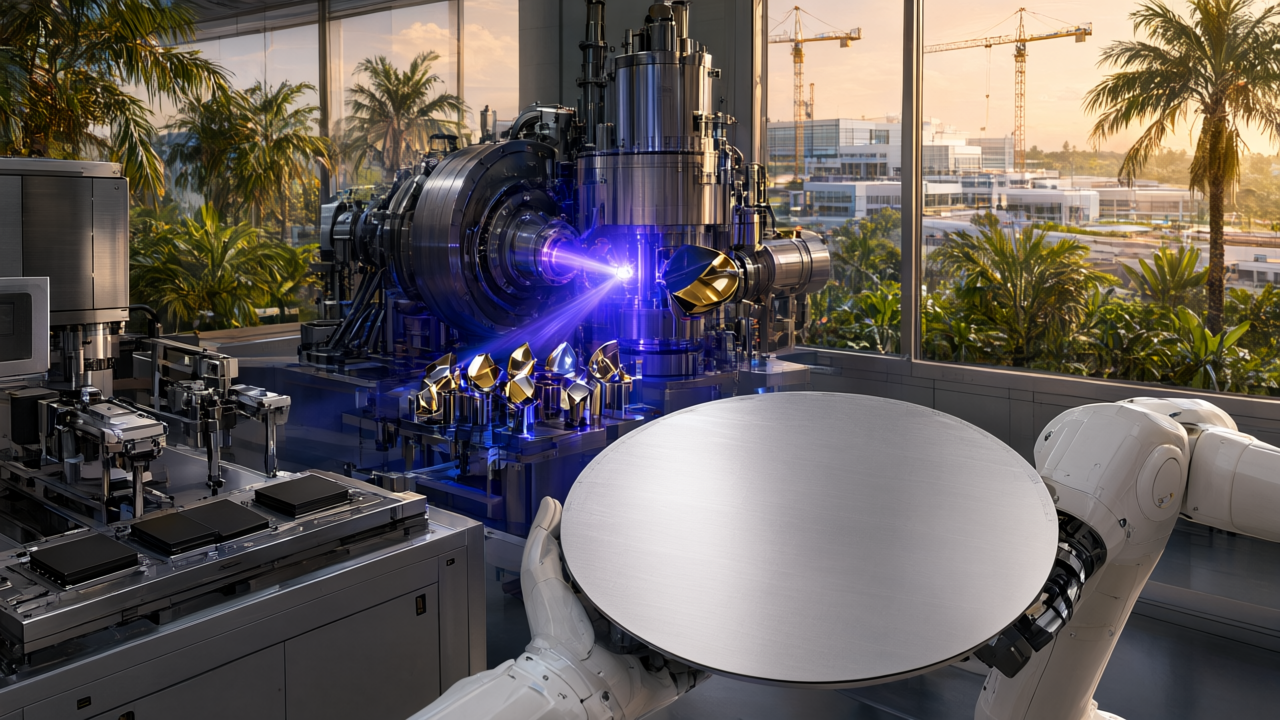
Physical AI Has a Data Problem — And No Single Chip Will Fix It
Semiconductor Engineering's latest analysis argues that scaling data movement for real-world AI systems requires workload-specific architectures, a shift with direct consequences for Malaysia's electronics corridor.
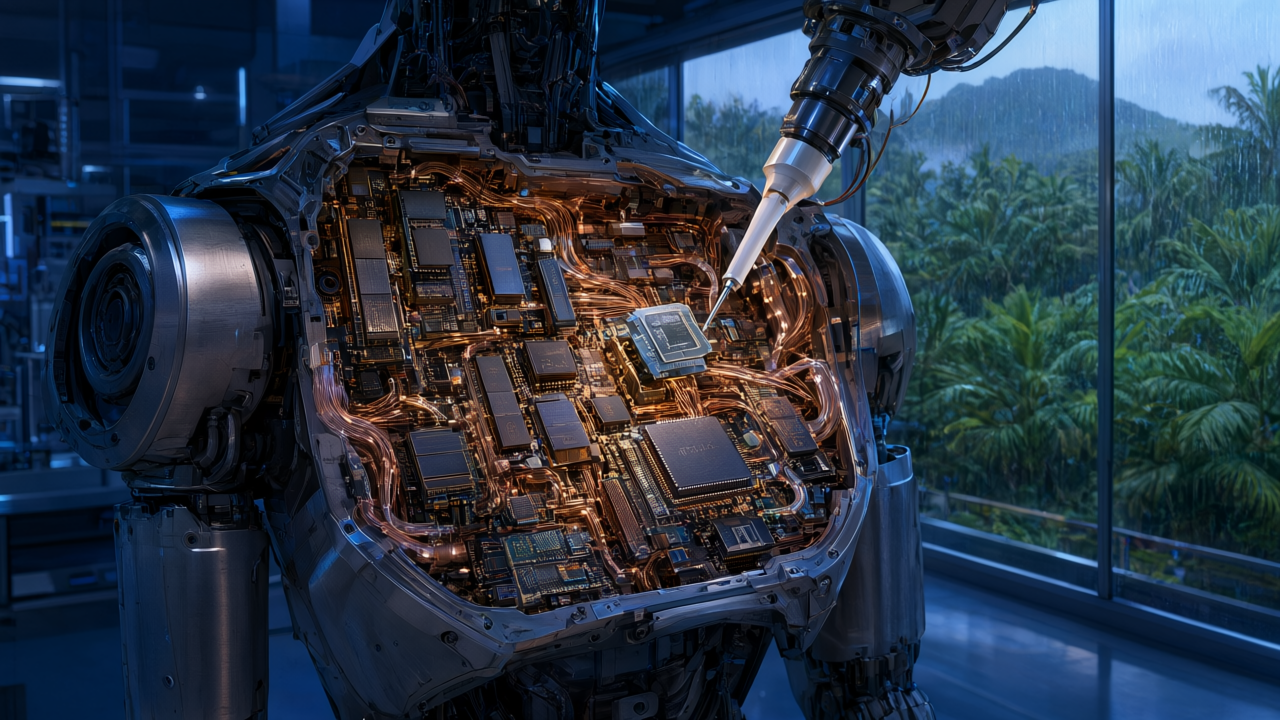
Semiconductor Engineering has published a technical analysis titled "Scaling Data Movement For Physical AI," and its core argument can be stated in four words: one size does not fit all. The piece addresses a problem that sits underneath every robot, autonomous vehicle, and smart factory system now being built — moving data between sensors, memory, and processors is becoming the main constraint on physical AI, not the processors themselves. Because different machines have wildly different power budgets, latency needs, and cost limits, the industry is diverging into multiple architectural approaches rather than converging on one. For Malaysian businesses, this matters most in Penang and Kulim, where the local semiconductor supply chain builds and tests the exact class of hardware this debate will shape.
AI Summary
Semiconductor Engineering has published a technical analysis titled "Scaling Data Movement For Physical AI," and its core argument can be stated in four words: one size does not fit all. The piece addresses a problem that sits underneath every robot, autonomous vehicle, and smart factory system now being built — moving data between sensors, memory, and processors is becoming the main constraint on physical AI, not the processors themselves. Because different machines have wildly different power budgets, latency needs, and cost limits, the industry is diverging into multiple architectural approaches rather than converging on one. For Malaysian businesses, this matters most in Penang and Kulim, where the local semiconductor supply chain builds and tests the exact class of hardware this debate will shape.
Key Takeaways
- The article's central claim is that data movement — not raw compute — is the scaling bottleneck for physical AI, and that no single interconnect or memory approach works across all use cases.
- "Physical AI" means AI embedded in machines that sense and act in the real world: robots, vehicles, drones, factory inspection systems. Their data constraints differ fundamentally from chatbots running in data centres.
- Architectural divergence is the practical consequence — a warehouse robot, an autonomous car, and a fixed industrial camera system will each justify different memory and data-routing choices based on power, latency, and cost.
- Malaysia's E&E sector, anchored in Penang and Kulim, sits in the middle of this shift: the packaging, test, and module work the country already does becomes more valuable when architectures fragment into more variants.
- For buyers of automation systems, the actionable point is simple: ask vendors where data gets processed and why, because that design decision now drives performance, power bills, and long-term flexibility.
What Happened
Semiconductor Engineering, a specialist publication covering chip design and manufacturing, published an analysis piece titled "Scaling Data Movement For Physical AI." Based on the article's framing and its accompanying tagline — "one size does not fit all" — the piece examines how the semiconductor industry should handle the growth in data traffic that physical AI systems generate and consume.
To unpack what that means: every AI system depends on moving information. Data travels from sensors to processors, between memory chips and compute chips, and between components inside a machine. In cloud-based generative AI, that movement happens inside massive data centres where engineers can throw power and cooling at the problem. In physical AI, the same problem appears inside a robot arm, a delivery drone, or a car — machines with tight power budgets, little room for hardware, and no tolerance for delay. A robot that takes two seconds to decide whether it has hit an obstacle has already crashed.
The article's stated thesis is that this problem cannot be solved with a single universal approach. Different physical AI applications impose different demands, so the industry is developing segmented solutions rather than one standard architecture. Readers wanting the full technical detail — the specific technologies and trade-offs discussed — should consult the original piece directly; this analysis works from the article's central argument and places it in context.
Why It Matters
Here is the engineering reality behind the debate, explained plainly. For years, processor performance improved faster than the speed and efficiency of the connections between chips. The result is what engineers sometimes call a data movement wall: processors frequently sit idle, waiting for data to arrive, and moving a piece of data often costs more time and energy than computing on it. In a data centre, you can absorb that cost. In a battery-powered robot or a machine on a factory floor running 24 hours a day, you cannot.
Physical AI makes this worse in a specific way. A chatbot generates text only when a user types something. A physical AI system ingests continuous streams from cameras, microphones, lidar units, and vibration sensors — all day, every day — and must make safety-relevant decisions in milliseconds. The volume of raw sensor data is enormous relative to the small amount that actually matters. This is why the "one size does not fit all" argument carries weight: a fixed inspection camera with mains power can afford to stream everything to a powerful processor, while a mobile robot must filter and compress data near the sensor because every milliwatt and every millisecond counts.
The market consequence is architectural fragmentation. Instead of a few standard chip configurations, the industry is moving toward a wider variety of packaging, memory, and interconnect options tuned to specific workload classes. For chipmakers, that means more product variants and shorter design cycles. For buyers, it means the automation systems you purchase in 2026 will be more specialised than the ones you purchased in 2023 — and compatibility between vendors becomes a harder question to answer.
What This Means for Malaysia
Malaysia's electronics and semiconductor sector is one of the country's largest export earners, and its centre of gravity is the Penang–Kulim corridor, where global chipmakers and a deep network of contract manufacturers, assemblers, and test houses operate. The industry's shift toward varied, workload-specific architectures plays directly to the kind of work concentrated there: as chip designs fragment into more variants — different memory configurations, different packaging styles, specialised modules — the demand for flexible assembly, test, and module integration grows. That is a defensible opportunity for Malaysian suppliers, and it aligns with the direction set out in national industrial policy, including the New Industrial Master Plan's push to move local E&E activity up the value chain.
For Malaysian manufacturers adopting AI, the message is practical rather than abstract. When a factory in Shah Alam or Batu Pahat buys a machine-vision inspection system or an autonomous mobile robot for material handling, the question of where data is processed — on the device, on an on-site server, or in a cloud — determines the system's speed, reliability, and running cost. A fragmented architecture market means buyers cannot assume anything. Vendor A's system may process everything at the edge; Vendor B's may stream video to a cloud account with recurring fees and a hard dependency on internet uptime. Under the Personal Data Protection Act, if those camera streams capture identifiable people — workers on the line, for instance — data location and processing choices also carry compliance weight.
There is also a talent angle. Architecture divergence creates demand for engineers who understand both the AI software layer and the hardware constraints beneath it. Malaysian engineering graduates and upskilled technicians who can specify, integrate, and maintain edge AI systems will find their skills appreciating, particularly in Penang, Kulim, and the Klang Valley.
How Your Business Can Use This
If you run or specify automation projects, treat data movement as a design decision you own, not a technical detail you delegate. A practical starting sequence for this quarter:
- Audit your sensor data flows. For every existing or planned AI system — vision inspection, predictive maintenance sensors, robotics — map where data originates, where it is processed, and where it is stored. Most companies discover they are moving far more data than the application needs.
- Classify workloads by latency. Decisions that affect safety or machine control must happen on or near the device. Decisions that tolerate minutes or hours — trend analysis, reporting, model retraining — can stay in the cloud or on a central server. Split accordingly.
- Interrogate vendors. Ask three questions: What percentage of processing happens on-device? What happens to the system if the network fails? What are the recurring data costs? A vendor who cannot answer clearly is selling you someone else's architecture problem.
- Pilot one edge deployment. Pick a single line or process and trial on-device processing for a latency-sensitive task, such as defect detection, and compare cost and reliability against your cloud-dependent setup.
For SMEs without in-house engineering, the realistic move is contractual: make on-device or local processing a written requirement in your next automation procurement, and get the vendor to commit to network-failure behaviour in the acceptance criteria.
The Agentic AI Angle
The obvious role for autonomous AI agents here is as data-flow traffic controllers. An agentic system — software that plans, decides, and acts across multiple steps without a human approving each one — can sit between your sensors and your compute infrastructure and make routing decisions continuously: send this vibration anomaly to the central server for deep analysis, handle this routine camera frame entirely on-device, discard this stream as redundant, escalate that pattern to a maintenance engineer with a parts list attached.
Picture a Malaysian electronics factory running several machine-vision lines. A supervisory agent monitors each line's edge model. When one line's defect rate drifts upward, the agent doesn't just raise an alert — it pulls recent classified images, coordinates a retraining job on the on-site server during a production gap, validates the new model against a held-out sample set, and stages the update for human sign-off before deployment. Every step reduces unnecessary data movement because the agent decides what deserves to travel. This is how the "one size does not fit all" hardware argument gets operationalised in software: the architecture becomes adaptive, with an agent assigning workloads to wherever processing is cheapest and fast enough.
The same logic applies to fleets. A manager overseeing automated guided vehicles across a warehouse can use an agent layer to balance which vehicles process locally, which share findings with each other, and which sync to headquarters — conserving battery and bandwidth without a human re-planning routes and data policies by hand.
Risks and Limitations
This article draws on a summary of the Semiconductor Engineering piece; readers making investment or engineering decisions should read the original analysis for its full technical detail, which we have not independently verified. The core thesis — architectural divergence — is a credible industry direction, but which specific approaches win commercially is unsettled, and betting on any one vendor's stack carries lock-in risk.
On the ground, Malaysian adopters should expect the failure mode of edge AI projects to be unglamorous: data pipelines, sensor calibration, and integration with legacy equipment, not model quality. And where camera or sensor data captures identifiable employees, PDPA obligations around notice, purpose, and security apply regardless of whether processing happens on a device in Penang or a server in Singapore. Bring your compliance officer into the architecture conversation early.
The Bottom Line
The constraint on physical AI has shifted from computation to data movement, and the industry's answer is specialisation, not standardisation. Remember one thing: in your next automation project, the most important question is not which AI model runs — it is where the data goes and who decided that. Malaysian firms that learn to ask this question, and to put the answer in contracts, will buy better
Sources & References
AIBlog summarises and analyses published information. We do not reproduce full source text. Analysis is editorial and not financial or legal advice.