PCIe Retimer Reach: What the Spec Sheet Won't Tell You About Your AI Server
A new Semiconductor Engineering analysis explains why real-world signal reach depends on four interacting factors — and why buyers of AI hardware in Malaysia should care.
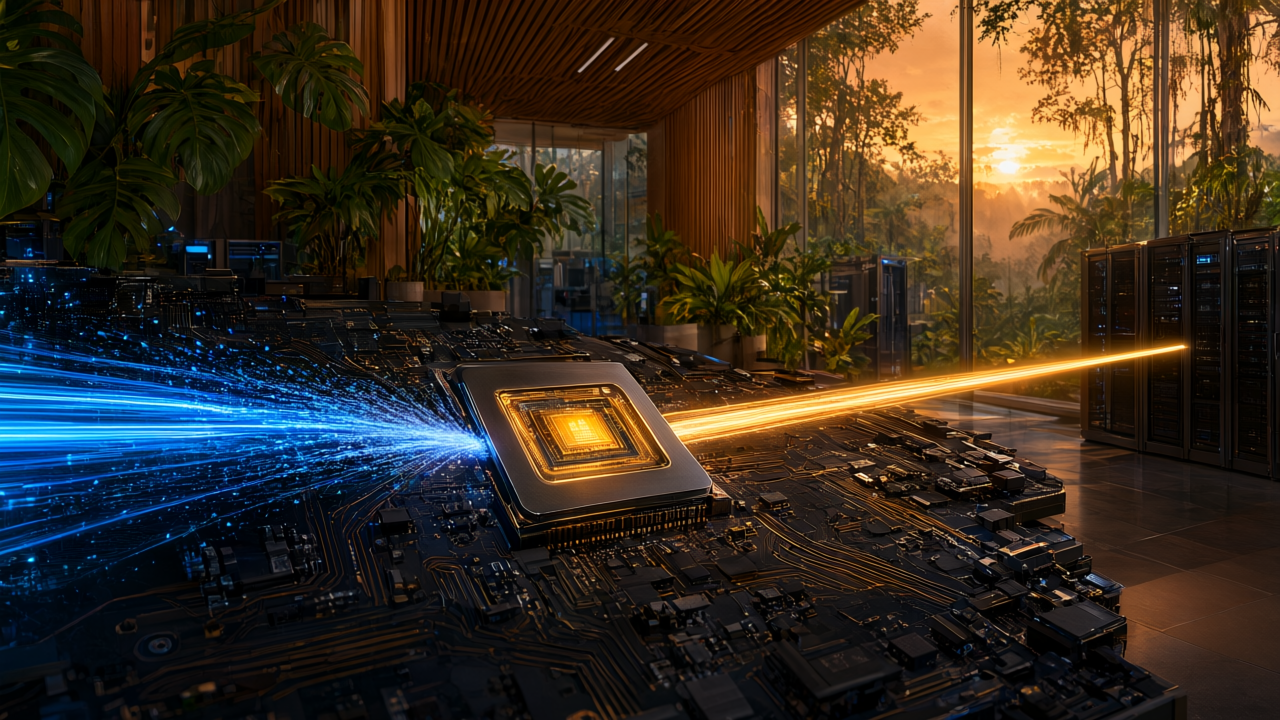
Semiconductor Engineering has published an analysis arguing that the usable reach of a PCIe retimer — the chip that cleans and regenerates high-speed data signals inside servers — cannot be judged from the specification sheet alone. The article identifies four interacting factors that decide actual reach: the silicon design of the retimer itself, the intelligence of its controller, the quality of the channel it sits in, and the transmission medium carrying the signal. For Malaysian businesses buying or building AI servers, the practical lesson is that a component that works in one machine can fail in another with a different board layout or cabling. Procurement and validation processes need to change accordingly.
AI Summary
Semiconductor Engineering has published an analysis arguing that the usable reach of a PCIe retimer — the chip that cleans and regenerates high-speed data signals inside servers — cannot be judged from the specification sheet alone. The article identifies four interacting factors that decide actual reach: the silicon design of the retimer itself, the intelligence of its controller, the quality of the channel it sits in, and the transmission medium carrying the signal. For Malaysian businesses buying or building AI servers, the practical lesson is that a component that works in one machine can fail in another with a different board layout or cabling. Procurement and validation processes need to change accordingly.
Key Takeaways
- Retimer reach is an outcome of interacting factors — silicon design, controller intelligence, channel quality, and transmission medium — not a single specification number you can compare on a datasheet.
- The same retimer chip will deliver different usable distances in two different servers, because PCB material, connectors, and cable quality change the equation.
- Controller intelligence matters: retimers that adapt their signal compensation to actual channel conditions behave differently from ones with fixed settings.
- Malaysian buyers of GPU servers — especially firms building AI clusters in the Johor and Klang Valley data centre boom — should demand channel-level validation from integrators, not just component specs.
- Agentic AI systems can operationalise this: agents that audit server configurations before purchase and monitor PCIe link health after deployment.
What Happened
Semiconductor Engineering, a specialist outlet covering chip design and engineering, published a piece titled "Beyond The Specification: What Really Determines PCIe Retimer Reach?" Its core finding: multiple interacting factors span silicon design, controller intelligence, channel quality, and the transmission medium itself — and these, working together, determine how far a PCIe signal can actually travel.
Some background for readers outside the chip world. PCIe, short for Peripheral Component Interconnect Express, is the standard highway that carries data between a processor and everything else in a server — GPUs, network cards, storage drives. AI workloads push enormous volumes of data across this highway. As each PCIe generation raises the data rate, the electrical signal degrades faster over distance, the way a radio station fades as you drive out of range.
A retimer is the fix. It receives a weakened, distorted signal, reconstructs it, and re-transmits it cleanly down the next stretch of the link. Think of a long relay race where each runner hands over a baton: the retimer is a checkpoint where the baton is straightened and cleaned before the next leg.
The article's point is that you cannot look at a retimer datasheet, see a maximum reach figure, and assume you will get that distance in your system. That number was measured under specific conditions. Change the conditions and the reach changes. (Note: the four-factor framing comes from the source; the relay analogy and the general engineering explanations here are this publication's analysis, added for readability.)
Why It Matters
The retimer has quietly become a load-bearing component of the AI economy. AI servers connect GPUs to each other, to CPUs, and to network cards over long, dense board routes — exactly the conditions under which signals struggle. Every large GPU deployment relies on signal-conditioning silicon somewhere in the chain. If reach falls short in practice, links drop to lower speeds, retrain, or fail outright, and expensive GPUs sit idle waiting for data.
The comparison worth making is to fuel efficiency in cars. A manufacturer quotes litres per 100km, but your real consumption depends on the driver, the load, the road, and the weather. The spec is a starting point, not a promise. The Semiconductor Engineering analysis says the same about retimers, and the four factors it names map cleanly: silicon design is the engine, controller intelligence is the driver adapting to conditions, channel quality is the road, and the transmission medium is the fuel grade.
This matters commercially because it shifts risk onto system buyers. If you are specifying an AI server, a storage appliance, or a network switch, and you select components by comparing datasheet numbers, you may build a system that fails validation late in the process — after boards are fabricated and money is spent. The industry trend is also moving against easy answers: as data rates climb with each PCIe generation, margins tighten, and the gap between "works in the vendor's reference design" and "works in your configuration" widens.
What This Means for Malaysia
Malaysia sits close to this problem in two ways. First, supply: the Penang–Kulim corridor is a centre of semiconductor assembly, test, and packaging, with major multinationals and local players feeding the global chip supply chain. Demand for signal-integrity knowledge — simulation, test, characterisation — grows as retimers and other high-speed interconnect silicon become more central to AI infrastructure. Under the New Industrial Master Plan's push to move Malaysia up the semiconductor value chain, signal integrity is exactly the kind of specialised engineering capability worth building locally rather than importing.
Second, demand: Malaysia's data centre buildout, particularly in Johor, means more AI servers landing on Malaysian soil, configured by local integrators and operated by local teams. A data centre operator in Nusajaya or an enterprise in Cyberjaya buying GPU servers faces the exact risk this article describes. If an integrator assembles a configuration that differs from the reference design — longer traces, cheaper PCB material, different cables — the retimer reach assumed in the datasheet no longer applies. AI automation Malaysia deployments live or die on hardware that actually trains and serves models at full speed, not at degraded link rates.
For the AI industry Malaysia is trying to grow, the lesson is that infrastructure literacy is a procurement skill, not just an engineering one.
How Your Business Can Use This
If your organisation buys AI servers, storage, or networking hardware this quarter, treat signal reach as a validation item, not a footnote. Three steps:
- Ask integrators for channel-level detail, not component specs. Request the board design assumptions behind any quoted configuration — trace lengths, PCB material grade, cable types, and where retimers sit in the chain. If the vendor cannot answer, that is a red flag.
- Demand pre-deployment link validation. Before accepting delivery of GPU servers, have PCIe link training verified at the
Sources & References
AIBlog summarises and analyses published information. We do not reproduce full source text. Analysis is editorial and not financial or legal advice.