Texas's AI Data Center Boom May Be Ending — and Electricity Is Why
America's fastest-growing data center market is faltering. The signal for Malaysia: power, not chips, now decides where AI infrastructure money lands.
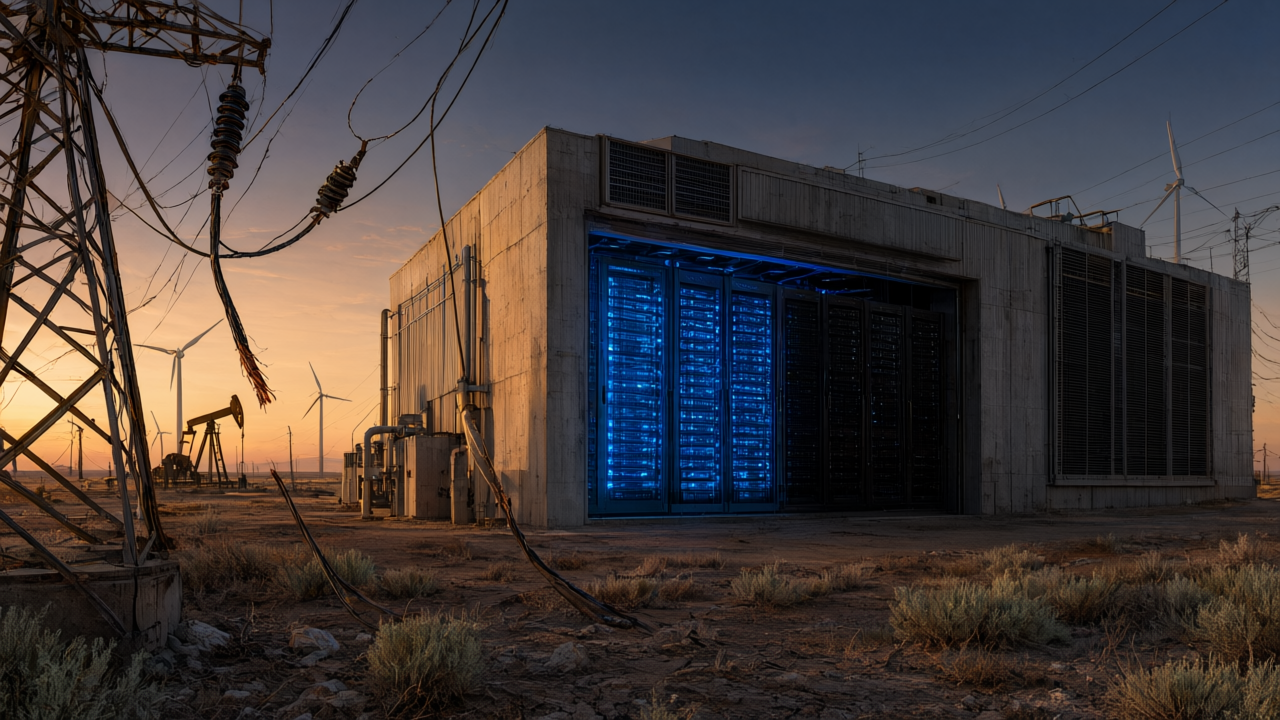
MIT Technology Review's daily newsletter, The Download, reports that Texas — the fastest-growing data center market in the US and the self-declared epicenter of the AI infrastructure buildout — may see that boom come to an abrupt end. The report pairs this with shifts in US energy policy, and that pairing is the story: AI's growth is now limited less by chip supply and more by access to electricity. For Malaysian businesses, this matters because global compute pricing follows energy costs, and because markets with power headroom — Johor among them — become more attractive when the biggest US market stumbles.
AI Summary
MIT Technology Review's daily newsletter, The Download, reports that Texas — the fastest-growing data center market in the US and the self-declared epicenter of the AI infrastructure buildout — may see that boom come to an abrupt end. The report pairs this with shifts in US energy policy, and that pairing is the story: AI's growth is now limited less by chip supply and more by access to electricity. For Malaysian businesses, this matters because global compute pricing follows energy costs, and because markets with power headroom — Johor among them — become more attractive when the biggest US market stumbles.
Key Takeaways
- Texas is the fastest-growing data center market in the US and was "ground zero" for Big Tech's AI buildout — and MIT Technology Review reports that boom "might be kaput."
- The newsletter runs this story alongside US energy policy shifts, signalling that power availability and policy direction are now the binding constraints on AI data centre construction.
- When the largest AI buildout market stalls, capital and hyperscaler attention look for jurisdictions with surplus electricity, land, and stable policy — conditions Malaysia's Johor corridor currently offers.
- Malaysian enterprises should expect AI cloud and API pricing to stay sensitive to energy costs; cost-per-task, not cost-per-seat, is the budget line to watch.
- The lesson for Malaysian planners is to avoid Texas-style fragility: fast data centre approvals without matching grid and water investment create a boom that can reverse.
What Happened
In its 5 November edition of The Download, MIT Technology Review's weekday technology newsletter delivers a blunt assessment of the AI infrastructure race in the United States. The facts it reports are simple. Texas had become the new epicenter of the AI data center buildout. It is the fastest-growing data center market in the country. It is, in the newsletter's words, ground zero for Big Tech's construction push.
The headline's second clause is the sting: "That might be kaput." The boom that made Texas the centre of the AI infrastructure world may be over, or at least in serious jeopardy. The full edition also covers shifts in US energy policy, and the newsletter's own framing — pairing a fragile AI boom with energy policy in one issue — tells you how the two stories connect. Data centers that train and run large AI models consume enormous amounts of electricity, and when energy policy or grid capacity turns hostile, the buildout economics turn hostile with it.
It is worth being precise about what we know. The source is a newsletter roundup, and the summary available to us does not itemise every cause of the Texas stall. What is confirmed: the market's status as America's fastest-growing, its role as Big Tech's favoured construction site, and the report's judgement that the boom is now fragile to the point of possible collapse, reported alongside US energy policy changes. Everything beyond that in this article is analysis, clearly labelled as such, built on that foundation.
Why It Matters
Here is the analytical chain. For two years, the AI industry's story was about chips — who could get GPUs, and how many. That shortage eased as supply chains scaled. The next bottleneck is electricity. Training large models and running inference for millions of users requires hundreds of megawatts per site, sustained around the clock. A data center without guaranteed power is a very expensive shed.
Texas attracted the buildout because it offered cheap land, permissive permitting, and its own electricity grid. If even that market — the best-positioned in the US — is faltering, the message to the industry is that power, not capital or chips, now gates AI growth. Energy policy shifts in Washington can redirect or freeze hundreds of billions in infrastructure spending with a single regulatory turn.
The second-order effect matters more than Texas itself. AI capacity is not evenly distributed; it pools wherever electricity is available and policy is predictable. When the biggest pool hits a wall, three things follow: hyperscalers intensify their search for alternative jurisdictions, existing compute becomes more valuable (which supports higher pricing for AI services), and governments everywhere start treating electricity planning as AI policy. The AI supply chain you depend on — your cloud region, your API provider, your model host — is downstream of decisions made in power markets.
What This Means for Malaysia
Malaysia sits on the right side of this story, for now. Johor has become one of Southeast Asia's most active data centre markets, pulling in hyperscaler and colocation investment, partly because Singapore constrained its own new approvals for a period and demand flowed across the Causeway. Malaysia has land, submarine cable connectivity, and — critically — a national utility in Tenaga Nasional Berhad that can negotiate large power agreements at scale. If the Texas buildout genuinely stalls, markets like Johor move up the shortlist for displaced capital. That is the opportunity.
The warning is embedded in the news itself. Texas had cheap land, its own grid, and fast permitting — and it still hit a wall. Malaysia's National Energy Transition Roadmap sets the direction for grid investment, but the practical lesson from Texas is that data centre approvals must be paced against actual generation and transmission capacity, plus water for cooling. A boom that outruns the grid produces price spikes for local industry, public backlash, and ultimately cancelled projects. State and federal authorities — and agencies like MDEC that court digital investment — should read the Texas story as a planning document, not a curiosity.
For Malaysian enterprises, the connection is direct: your AI costs are energy costs wearing a disguise. Whether you use a US cloud region or one in Singapore or Johor, the price of AI services reflects the price and availability of the electricity behind them. Businesses serious about data residency under PDPA, or about latency for ASEAN customers, now have an additional argument for regional capacity — and a stake in whether that regional capacity gets built carefully.
How Your Business Can Use This
Start with a workload audit
Sources & References
AIBlog summarises and analyses published information. We do not reproduce full source text. Analysis is editorial and not financial or legal advice.