Report looks at advances in autonomous mobile robots
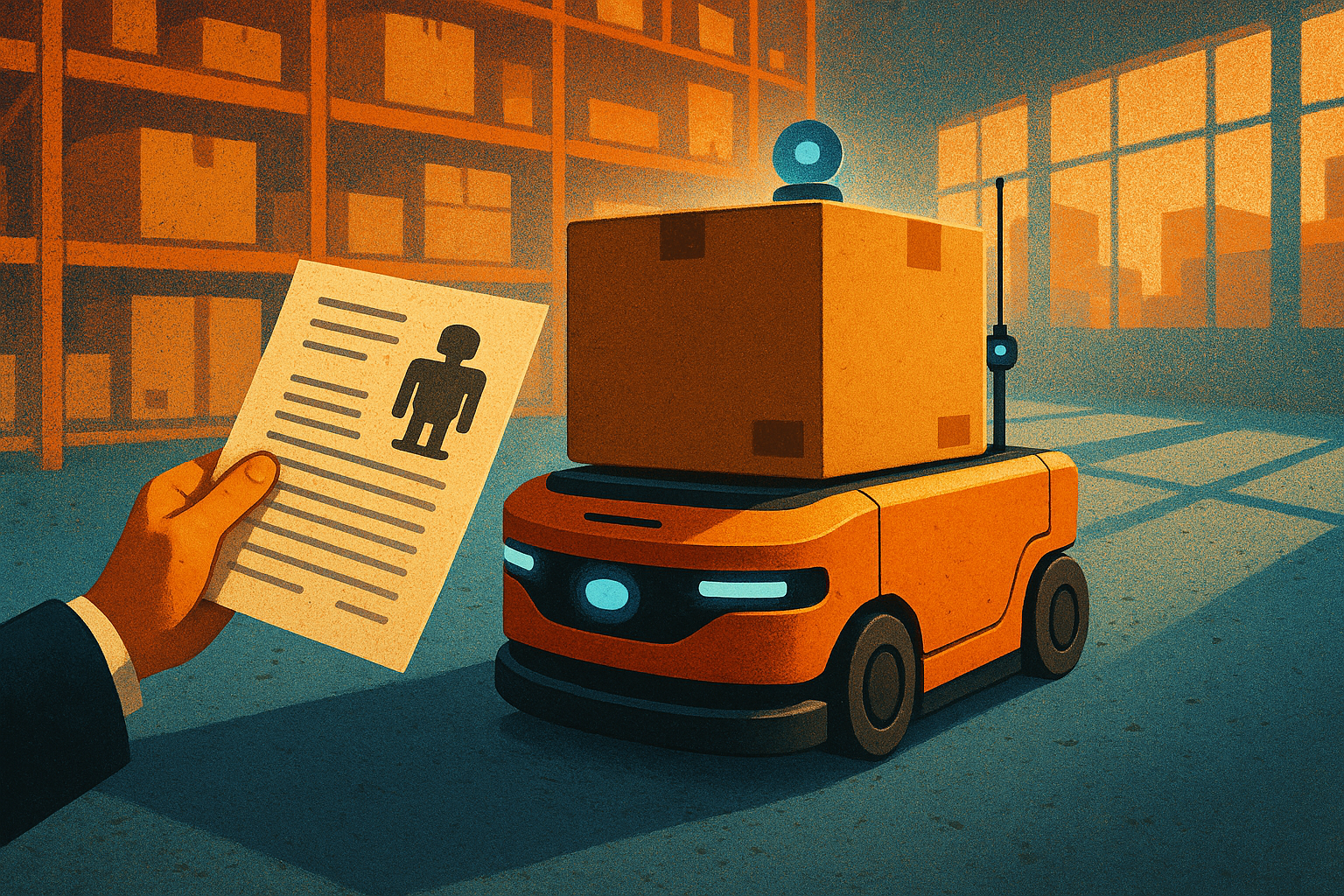
A new report highlighted by The Robot Report examines recent advances in autonomous mobile robots (AMRs) — self-navigating machines that move goods through warehouses, factories, and distribution centres without human drivers or fixed tracks. The report focuses specifically on material handling and automated storage applications, two areas where AMRs are replacing older, less flexible automation like conveyor belts and fixed-path guided vehicles. For Malaysian businesses, this signals that the cost and complexity barrier to deploying warehouse robotics is dropping, opening the technology beyond large multinationals to mid-sized logistics providers, e-commerce fulfilment operators, and manufacturers in Penang, Selangor, and Johor.
Autonomous Mobile Robots Are Getting Smarter at Moving Things — What This Means for Malaysian Warehouses and Factories
AI Summary
A new report highlighted by The Robot Report examines recent advances in autonomous mobile robots (AMRs) — self-navigating machines that move goods through warehouses, factories, and distribution centres without human drivers or fixed tracks. The report focuses specifically on material handling and automated storage applications, two areas where AMRs are replacing older, less flexible automation like conveyor belts and fixed-path guided vehicles. For Malaysian businesses, this signals that the cost and complexity barrier to deploying warehouse robotics is dropping, opening the technology beyond large multinationals to mid-sized logistics providers, e-commerce fulfilment operators, and manufacturers in Penang, Selangor, and Johor.
Key Takeaways
- AMRs differ from earlier factory robots because they navigate dynamically. They use sensors, cameras, and software to map environments and route around obstacles, rather than following magnetic strips or wires embedded in floors.
- The report zeroes in on material handling and automated storage — the high-volume, repetitive movement of goods that dominates warehouse, port, and factory logistics work.
- Advances are making AMRs more capable and accessible — better navigation, better coordination between fleets, and better integration with warehouse management software.
- Mid-sized Malaysian operators are the realistic next wave of adopters, not just the DHLs and Shopees. Third-party logistics (3PL) firms, e-commerce SMEs, and electronics manufacturers stand to benefit.
- AMRs are a natural pairing with agentic AI — autonomous software agents can orchestrate fleets of physical robots, deciding which robot handles which task and when.
What Happened
The Robot Report, a long-running publication covering the robotics industry, highlighted a downloadable report that surveys recent advances in autonomous mobile robots. The report focuses on two application areas: material handling and automated storage.
Material handling covers the movement of raw materials, work-in-progress items, and finished goods within a facility. This includes tasks like moving pallets from a receiving dock to storage, transporting components to an assembly line, or carrying finished products to a packing station. Automated storage refers to systems that store and retrieve goods — think high-density shelving systems where robots fetch items rather than human workers walking aisles.
The distinction between AMRs and older automation matters here. Traditional automated guided vehicles (AGVs) follow fixed paths — magnetic tape on the floor, embedded wires, or laser-tracked routes. They are effective but inflexible. If a warehouse layout changes, the physical guidance infrastructure has to move too. AMRs, by contrast, build their own maps of a facility and navigate autonomously. If an aisle is blocked, they reroute. If a new shelving unit appears, they incorporate it into their map. This flexibility is what makes them suitable for environments where layouts shift — which describes most modern e-commerce and distribution warehouses.
The report documents how these capabilities are advancing — better sensor fusion, more sophisticated fleet management software, and tighter integration with the warehouse management systems (WMS) that track inventory and orders. This is a factual account drawn from the source summary. The report itself would contain vendor examples, deployment case studies, and technical specifications, but these details were not included in the source material provided.
Why It Matters
The practical significance of AMR advances is straightforward: they reduce the cost and complexity of warehouse automation while increasing flexibility. For years, warehouse robotics required significant capital expenditure, specialised engineering teams, and long deployment timelines. A company might spend months installing guidance infrastructure and tuning software before a single robot moved a single box.
AMRs compress that timeline. A modern AMR can often be unboxed, shown around a facility, and put to work within hours or days rather than weeks. The robot builds its own map by being walked (or driven) through the space. This is not a theoretical improvement — it changes the economics of who can adopt the technology.
A large e-commerce company operating a 100,000-square-metre fulfilment centre in Singapore has always been a viable robotics customer. A mid-sized Malaysian 3PL operator running a 5,000-square-metre warehouse in Shah Alam probably was not — until recently. Lower deployment costs, simpler setup, and increasingly standardised integration with common warehouse management platforms shift the addressable market downward.
There is also a labour dimension. Warehouse work is physically demanding, and turnover rates are high across the logistics sector globally. Malaysian warehouse operators report persistent difficulty hiring and retaining workers for picking, packing, and material movement roles. AMRs do not eliminate human workers — they typically handle the movement of goods while humans focus on picking, packing, quality checks, and exception handling. The result is often described as "collaborative" or "cobotic" operations, where robots and people each do what they are best at.
The broader trend signal here is that physical AI — intelligence embedded in machines that move through the real world — is maturing from experimental to operational. The same advances in sensors, compute, and AI models that are driving autonomous vehicles and drones are flowing into warehouse robots. The warehouse is simply an easier, more constrained environment to automate than a public road.
What This Means for Malaysia
Malaysia's logistics and manufacturing sectors are directly exposed to this trend. The country is a major electronics manufacturing hub — Penang and Kulim host semiconductor packaging, testing, and electronics assembly operations that involve substantial internal material movement. Selangor and the Klang Valley are the centre of e-commerce and parcel logistics, with large volumes of goods flowing through distribution centres daily. Johor's growing logistics sector, boosted by the Johor-Singapore Special Economic Zone, adds another concentration of warehousing and fulfilment activity.
For Malaysian SMEs in these sectors, the relevant question is whether AMRs have crossed the threshold of affordability and ease of use for their scale of operation. Based on the trajectory described in the report, the answer is moving from "no" to "possibly" for mid-sized operators and is already "yes" for larger ones. Companies like Shopee, Lazada, and major Malaysian 3PLs are already deploying some degree of warehouse automation. The new opportunity is one tier down — regional distributors, specialised manufacturers, and growing e-commerce players.
Government policy aligns with this direction. The MyDIGITAL blueprint and related Industry4WRD initiatives encourage manufacturing and logistics companies to adopt digital technologies. MDEC's digital economy programmes and Budget incentives for automation exist to help companies offset capital costs. A Malaysian SME considering AMRs should check whether automation grants or tax incentives apply — the capital expenditure that once looked prohibitive may be partly subsidised.
There is also an ASEAN competitive dimension. Singapore, Thailand, and Vietnam are all investing heavily in warehouse automation. Malaysian logistics operators competing for regional contracts — particularly in electronics and e-commerce fulfilment — need productivity levels that match regional peers. Falling behind on automation adoption is not just a domestic efficiency issue; it affects whether Malaysian facilities win or lose regional business.
How Your Business Can Use This
If you operate a warehouse, distribution centre, or manufacturing facility in Malaysia, here is a practical approach to evaluating AMRs:
Step 1: Map your material movement. Before looking at any robot, document how goods move through your facility today. Where do items start? Where do they end? How far do they travel? How many person-hours per week go into moving things that a robot could carry? This data tells you whether AMRs are worth pursuing and where to deploy them first.
Step 2: Identify the highest-ROI use case. The best initial AMR deployment is usually a repetitive, predictable movement task — moving pallets from receiving to storage, transporting totes between zones, or feeding materials to a production line. Pick a task that is high-frequency, low-complexity, and easy to measure. Do not try to automate your most complex workflow first.
Step 3: Request demonstrations from multiple vendors. The AMR market has numerous players, and capabilities vary. Ask vendors to demonstrate their robots in your actual facility. A credible vendor should be able to map your space, show a robot navigating it, and give you a clear sense of integration requirements within a single visit.
Step 4: Pilot before scaling. Deploy a small fleet — two to five robots — in one area of your operation. Measure the impact over 60 to 90 days. Track pick rates, error rates, labour hours saved, and any integration issues. Use this data to build the business case for a larger rollout.
Step 5: Plan for integration, not just hardware. The robot is the visible part. The harder work is connecting AMR fleet management software to your warehouse management system or ERP so that orders, inventory, and robot tasks are coordinated. Budget time and resources for this integration — it is often the difference between a successful deployment and a stalled one.
The Agentic AI Angle
This is where the story gets genuinely interesting. AMRs are physical robots — but agentic AI adds a layer of intelligence on top that transforms how they operate.
Today, most AMR fleets are managed by central fleet management software that assigns tasks based on relatively simple rules: nearest available robot gets the job, shortest path wins, battery level triggers a charging detour. This works, but it is rigid. An AI agent — a software system that can reason about goals, evaluate options, and make decisions across multiple steps — can do considerably more.
Imagine an agentic AI system overseeing a warehouse operation. A customer order arrives. The agent checks inventory, identifies the optimal pick path, assigns the task to the AMR closest to the relevant shelf, schedules a packing station slot, and routes the packed order to the correct outbound dock — all while continuously rebalancing the fleet based on real-time conditions. If a robot breaks down, the agent reroutes. If a surge of orders hits, the agent prioritises high-value shipments. If a human worker calls in sick, the agent adjusts workflows.
This is not theoretical. The building blocks exist: warehouse management systems that track inventory in real time, AMRs that accept task assignments via API, and large language models that can reason about multi-step problems. The gap today is integration and reliability — getting all these systems to work together dependably in a production environment. But the direction of travel is clear. Malaysian companies that invest in AMRs now should evaluate vendors not just on robot hardware but on the sophistication of their software stack and their roadmap for AI-driven orchestration.
Risks and Limitations
AMRs are not a plug-and-play solution. Integration with existing warehouse management systems can be complex, particularly for companies running older or customised ERP platforms. Robot performance can degrade in environments with poor lighting, reflective floors, or dense, constantly changing layouts — conditions common in older Malaysian warehouses.
Capital cost remains a barrier for smaller SMEs, even with grants and incentives. A single AMR can cost tens of thousands of ringgit, and a meaningful fleet requires multiple units plus software licensing and integration services. The return on investment depends on high utilisation — a robot that sits idle half the day will not pay for itself. Maintenance and support are ongoing costs, and vendor reliability in the Malaysian market varies.
There is also a workforce consideration. While AMRs do not typically replace human workers wholesale, they do change job requirements. Workers need training to operate safely alongside robots, and some roles shift from manual movement to robot supervision and exception handling. Companies that do not invest in this transition risk both safety incidents and employee resistance.
The Bottom Line
Autonomous mobile robots are moving from the domain of large multinationals to the reach of mid-sized Malaysian operators. The technology is maturing, costs are declining, and the business case in material handling and storage is increasingly clear. For Malaysian logistics, manufacturing, and e-commerce companies, the question is shifting from "Is this relevant to me?" to "When and how should I start?"
The recommended action this quarter: if you run a warehouse or production facility, conduct a material movement audit and identify one high-frequency, repetitive task that an AMR could handle. Use that as the basis for a vendor conversation and a pilot scope. The companies that start building operational experience with AMRs now will be better positioned to layer agentic AI orchestration on top as that capability matures — and that combination is where real competitive advantage will come from over the next three to five years.
FAQ
What is the difference between an AMR and an AGV? An AGV (automated guided vehicle) follows fixed paths like magnetic tape or embedded wires. An AMR (autonomous mobile robot) navigates dynamically using sensors and software, allowing it to reroute around obstacles and adapt to layout changes without physical infrastructure changes.
Are AMRs affordable for Malaysian SMEs? For mid-sized SMEs with meaningful material movement volumes, AMRs are becoming viable — especially with Industry4WRD grants and automation tax incentives. Smaller SMEs with low throughput may still find the capital cost hard to justify. A material movement audit is the first step to determining whether the numbers work.
How do AMRs connect to agentic AI? Agentic AI acts as an intelligent orchestration layer on top of AMR fleets. Instead of simple rule-based task assignment, an AI agent can reason about order priorities, robot availability, inventory locations, and real-time conditions to coordinate the entire warehouse workflow dynamically.
Sources / References
- The Robot Report — "Report looks at advances in autonomous mobile robots" (https://www.therobotreport.com/report-looks-at-advances-in-autonomous-mobile-robots/). Provided the factual basis for this article: the existence of a report examining AMR advances in material handling and automated storage applications. The Robot Report is a recognised industry publication covering commercial and industrial robotics.
Sources & References
AIBlog summarises and analyses published information. We do not reproduce full source text. Analysis is editorial and not financial or legal advice.