Walden Robotics and Toyota Bet on Practical Humanoids, Not Hype
Toyota's backing of a practical-humanoid robotics company marks the industry's shift from viral demos to machines that must earn their keep — and Malaysian manufacturers should track it.
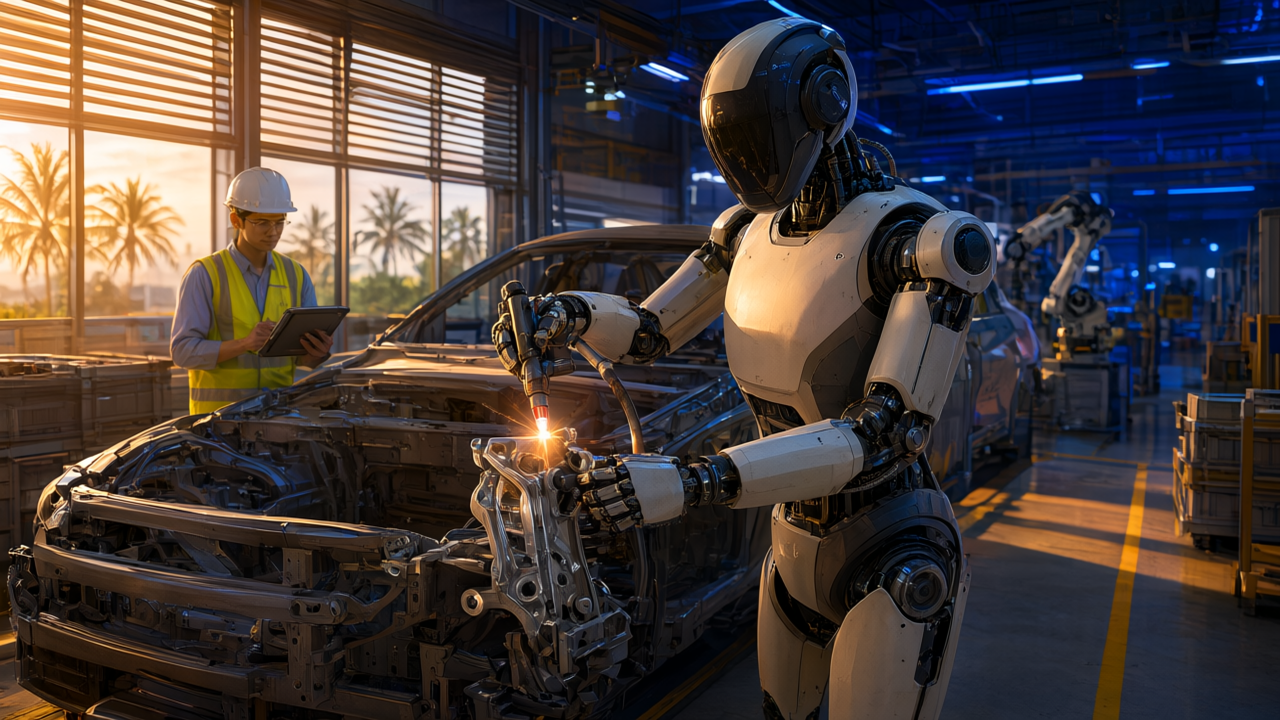
IEEE Spectrum reports that Walden Robotics has partnered with Toyota to develop practical humanoid robots. The deal lands at a telling moment: after a couple of years of explosive humanoid hype, the robotics industry is going through a broad reality check. The early rush, as the report frames it, was driven mostly by what was technically possible and what attracted funding — not by realistic near-term uses. Some of the momentum and technical progress from that boom has survived, but the money and the buyers are now demanding practicality. For Malaysian businesses, the signal is clear: humanoid robotics is maturing from spectacle toward deployment, and manufacturers in our supply chains will feel that correction first.
AI Summary
IEEE Spectrum reports that Walden Robotics has partnered with Toyota to develop practical humanoid robots. The deal lands at a telling moment: after a couple of years of explosive humanoid hype, the robotics industry is going through a broad reality check. The early rush, as the report frames it, was driven mostly by what was technically possible and what attracted funding — not by realistic near-term uses. Some of the momentum and technical progress from that boom has survived, but the money and the buyers are now demanding practicality. For Malaysian businesses, the signal is clear: humanoid robotics is maturing from spectacle toward deployment, and manufacturers in our supply chains will feel that correction first.
Key Takeaways
- Walden Robotics is working with Toyota on humanoids built around practical use — a deliberate contrast to the demo-first humanoid wave of the past few years.
- The humanoid sector is sobering up. The early boom was fuelled by feasibility and capital, not proven near-term applications, according to IEEE Spectrum's reporting.
- Toyota's involvement matters because it is one of the world's largest manufacturers — its name attached to "practical" tells you where demand-side interest is heading.
- Malaysian manufacturers should spend the next 12 months on task audits and data digitalisation, not on buying humanoid robots that don't yet exist for their workflows.
- Agentic AI systems — software agents that plan and execute multi-step work — will likely orchestrate humanoid hardware before the humanoids themselves become fully autonomous.
What Happened
Walden Robotics, a robotics company focused on humanoid machines, has entered a partnership with Toyota, as reported by IEEE Spectrum. The focus of the collaboration is practical humanoids — robots designed to do useful, defined work rather than to impress on stage or online.
The report places this deal inside a larger story. For a couple of years, the robotics industry rushed headlong into humanoid robots. The reason, as IEEE Spectrum describes it, was simple: it was possible, and it was lucrative. Funding flowed, videos circulated, expectations climbed. What was often missing were near-term goals that made business sense.
That period produced real technical progress, and some of that momentum has stuck around. But the industry has since sobered. The pendulum is swinging from "can we build a humanoid?" toward "what will this humanoid actually do, and will the work justify the cost?" A Toyota partnership framed around practicality sits squarely on the right side of that swing.
Why It Matters
Think about what Toyota is. One of the largest vehicle manufacturers on the planet, with decades of experience in production efficiency and factory automation. A company like that does not attach its name to robotics theatre. When it backs a "practical humanoid" effort, it is making a statement about where it sees deployable value — and Toyota's production system has historically shaped how factories worldwide adopt automation.
There is also a familiar pattern here. Every major robotics and AI wave — consumer drones, autonomous vehicles, early machine learning — followed the same arc: explosive hype, a trough when reality lagged promises, then steady, unglamorous adoption in narrow, well-defined tasks. The delivery drones did not replace logistics, but warehouse automation transformed fulfilment. Autonomous vehicles did not eliminate drivers, but driver-assist features quietly shipped in millions of cars. The humanoid sobering that IEEE Spectrum describes suggests humanoids are entering that third phase: targeted, boring, billable work.
For buyers, "practical" changes the procurement conversation entirely. The questions stop being "how impressive was the demo video?" and start being "what task does it complete, at what success rate, for what cost per task?" That is a healthier market. It is also the phase where Malaysian companies can realistically participate, because practical robotics is about integration, process design, and workforce readiness — things Malaysian manufacturers can actually control.
What This Means for Malaysia
Toyota has had a manufacturing presence in Malaysia for decades, and Malaysia's broader automotive and electronics supply chains feed global production networks. When practical humanoids eventually reach factory floors, they will arrive through those networks — first in pilot cells at multinational plants, then pushed down to tier-one and tier-two suppliers as quality and productivity requirements tighten. Malaysian suppliers should expect this to reach them not as a choice, but as a condition of staying in the supply chain.
The timing also fits national policy direction. Malaysia's National Robotics Roadmap and the New Industrial Master Plan 2030 both push higher automation adoption and more value capture in manufacturing. The Penang and Kulim electronics corridors, plus the Klang Valley automotive parts cluster, are the natural early sites for any humanoid or advanced robotics pilot in this country. Local system integrators and automation engineers — the companies that wire, program, and maintain factory systems — stand to gain the most near-term business from this trend, well before humanoid hardware is affordable for SMEs.
One caution for Malaysian SMEs: do not read this news as "humanoids are coming to my shopfloor next year." They are not. Read it as confirmation that global manufacturing capital is now demanding automation that pays for itself — and that preparation, not purchase, is the correct response.
How Your Business Can Use This
Start with a task audit, not a robot search. This quarter, list every repetitive, structured task in your operation — picking and placing, machine tending, inspection, material transfer, hazardous handling. For
Sources & References
AIBlog summarises and analyses published information. We do not reproduce full source text. Analysis is editorial and not financial or legal advice.