Raise Robotics at RoboBusiness: Why Scaling Robots Is Harder Than Building Them
A preview of a session on engineering capacity and hidden failure modes — the two bottlenecks Malaysian buyers of automation should understand before signing a purchase order.
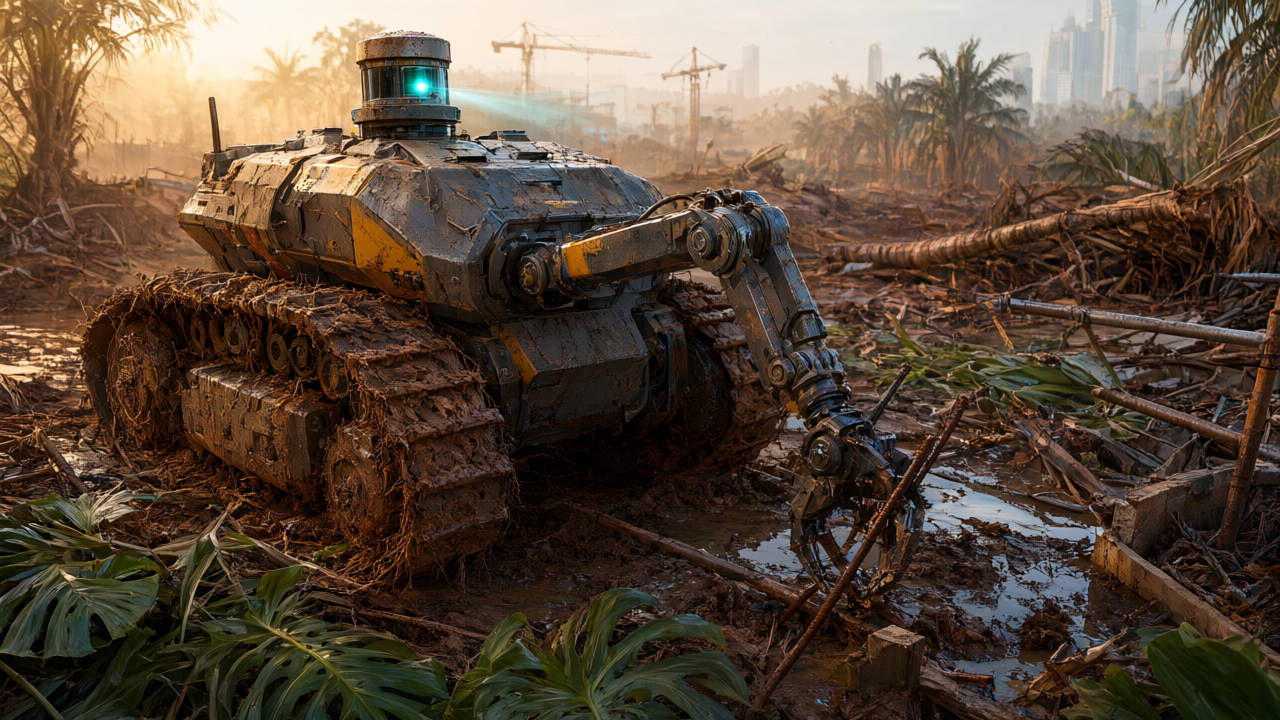
The Robot Report has announced that Raise Robotics will present at RoboBusiness on the challenge of scaling field robots — machines that work on real sites like construction yards, farms, and inspection routes rather than inside controlled factories. The company says attendees will learn two things: a decision rule for allocating scarce engineering capacity, and a vocabulary for two hidden failure modes. That framing matters because the robotics industry's bottleneck has quietly shifted. The question is no longer "can a robot do the task?" but "who keeps a fleet of them running, and how do you notice when they fail silently?" For Malaysian firms weighing automation against rising labour costs, this session previews the operating discipline that separates a working pilot from an expensive paperweight.
AI Summary
The Robot Report has announced that Raise Robotics will present at RoboBusiness on the challenge of scaling field robots — machines that work on real sites like construction yards, farms, and inspection routes rather than inside controlled factories. The company says attendees will learn two things: a decision rule for allocating scarce engineering capacity, and a vocabulary for two hidden failure modes. That framing matters because the robotics industry's bottleneck has quietly shifted. The question is no longer "can a robot do the task?" but "who keeps a fleet of them running, and how do you notice when they fail silently?" For Malaysian firms weighing automation against rising labour costs, this session previews the operating discipline that separates a working pilot from an expensive paperweight.
Key Takeaways
- Raise Robotics will present at RoboBusiness on scaling field robots, promising a decision rule for allocating engineering capacity and a vocabulary for two hidden failure modes, per The Robot Report.
- The framing confirms a shift in the industry's centre of gravity: deployment operations, not hardware capability, is now the constraint on growth.
- "Hidden failure modes" — failures that don't trip an alarm — are the most expensive kind, because they surface as poor output quality on the customer's site, long after the demo.
- Malaysian sectors with heavy labour exposure (construction, plantations, warehousing) are exactly where this scaling problem will bite first.
- Both themes — capacity allocation and failure-mode detection — are tasks that AI agents can largely automate, turning a management philosophy into daily software.
What Happened
The Robot Report published an announcement that Raise Robotics will discuss scaling field robots at RoboBusiness, an industry event covering commercial robotics. The announcement is short but pointed. The company said attendees will leave with two concrete artefacts: a decision rule for allocating engineering capacity, and a vocabulary for two hidden failure modes in field robotics operations.
Those two promises are worth unpacking because they name the problems that robotics vendors rarely put in their sales decks. "Field robots" are machines that operate in unstructured, changing environments — outdoor sites, live facilities, routes that differ day to day — as opposed to fixed automation bolted inside a factory cell. "Scaling" refers to the jump from a handful of pilot units to a commercial fleet across many sites.
A note on sourcing, because paying readers deserve precision: this is a preview announcement, not a report of the talk itself. The specific decision rule and the two named failure modes will be revealed at the session. Everything in the analysis below builds on those two confirmed themes; where we extend beyond the source, we label it as our interpretation.
Why It Matters
Robotics has a pilot-to-fleet problem, and it looks a lot like the one software went through twenty years ago. A demo works because engineers hover over it. A fleet works only if someone decides, deliberately, where each engineering hour goes — new features, new site deployments, or keeping existing units healthy. Without a decision rule, engineers default to whatever shouted loudest that week, and the fleet quietly degrades. The fact that Raise Robotics is packaging an allocation rule as a headline takeaway tells you this trade-off is now the commercial bottleneck, not motor torque or sensor specs.
The second promise is arguably the sharper one. A hidden failure mode is a failure that doesn't crash the robot. Think of a drilling robot whose positioning drifts two millimetres a month, or a delivery robot that completes its route but takes 20% longer each quarter. Nothing alarms. Output still appears. The defect shows up in the customer's quality report or cost line months later, when the root cause is expensive to trace. The software world solved this class of problem by naming it — error budgets, regressions, silent data corruption — because you cannot manage what you cannot name. A shared vocabulary for failure modes is how an industry moves from heroic firefighting to disciplined operations.
The signal for buyers: the competitive edge in robotics is migrating from the machine to the operating system around the machine. Vendors who can articulate their failure-mode taxonomy and engineering capacity model are, in effect, showing you their post-sale reliability. Vendors who can't are showing you something too.
What This Means for Malaysia
Malaysia's automation story so far has been concentrated indoors — the E&E corridors of Penang, the assembly lines of the Klang Valley, powered by Industry4WRD incentives and smart-automation grants. Field robotics pushes automation into the open air, and Malaysia has three sectors where that push meets a genuine pain point: construction, which remains dependent on large foreign labour pools; plantations, where harvesting labour shortages are chronic; and warehousing yards, straining under e-commerce growth. When a vendor pitches robots into these sectors, the pilot will look impressive. The scaling conversation — engineering support, failure-mode monitoring, spare-parts logistics into Malaysia — is where Malaysian buyers must probe harder than they currently do.
The talent angle is the quiet constraint. Malaysian firms typically buy robots but rarely budget the engineering muscle to keep them running, assuming the vendor handles it. At three units, that assumption holds. At thirty units across multiple sites, someone internal needs to own robot performance data, triage faults, and negotiate with the vendor's support queue. Local mechatronics and AI engineering graduates can fill this role, but firms must create it deliberately — "robot fleet operations" is not yet a standard job title in Malaysian org charts. Government-side, this is squarely aligned with MyDIGITAL and MDEC's automation agenda; the practical gap to close is operational know-how transfer, not grant money.
How Your Business Can Use This
Treat this announcement as a checklist for your next automation negotiation. Before signing any field robotics deal, ask the vendor two questions drawn directly from the session's themes. First: at fleet scale, how many engineering hours per robot per month does your operating model assume, and how is that capacity split between new deployments and keeping live units healthy? A vendor with a real answer has scaled before. Second: give me your named list of failure modes and the signal that detects each one. A vendor who can only name the failures that trigger alarms is telling you the hidden ones will be discovered on your site, at your cost.
For piloting, change what you measure. Most Malaysian pilot reports track uptime and cycle time. Add two lines: engineering
Sources & References
AIBlog summarises and analyses published information. We do not reproduce full source text. Analysis is editorial and not financial or legal advice.