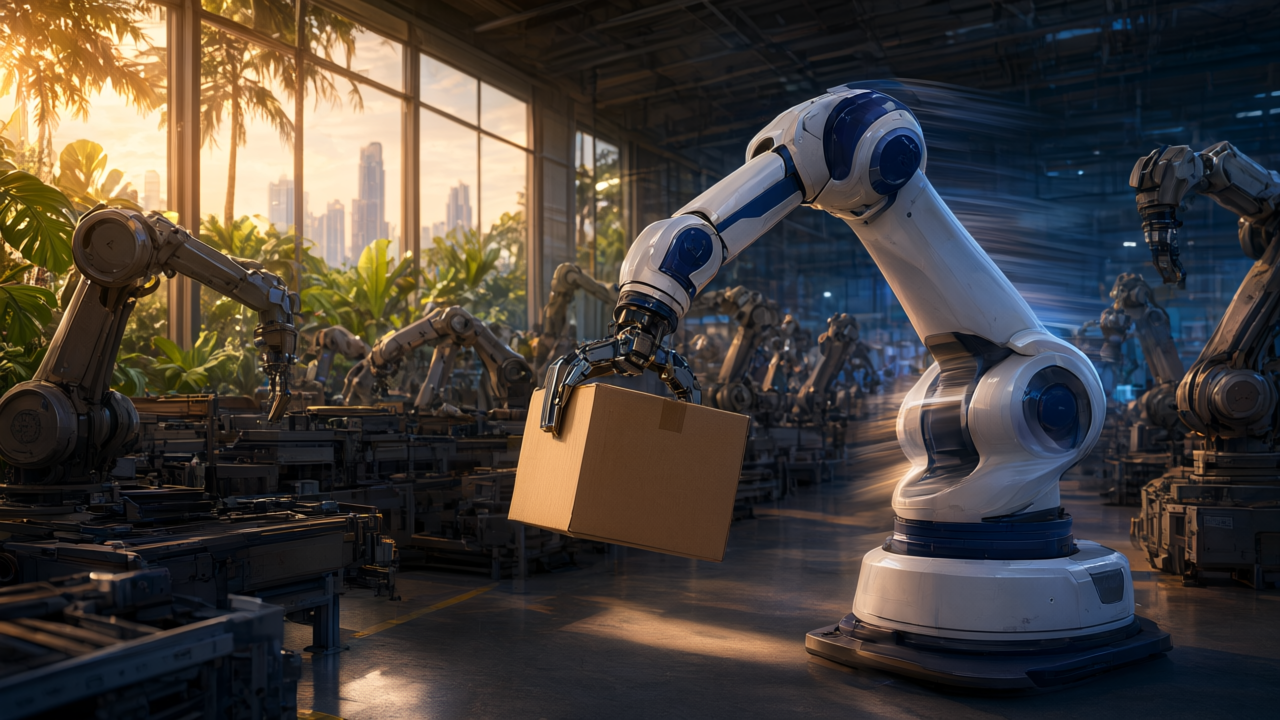
Physical AI Moves From Demo to Factory Floor: What NexCOBOT's Outlook Means for Malaysia
A safety-controller specialist says Big Tech is accelerating physical AI — a signal Malaysian manufacturers should read as a cost curve about to bend in their favour.
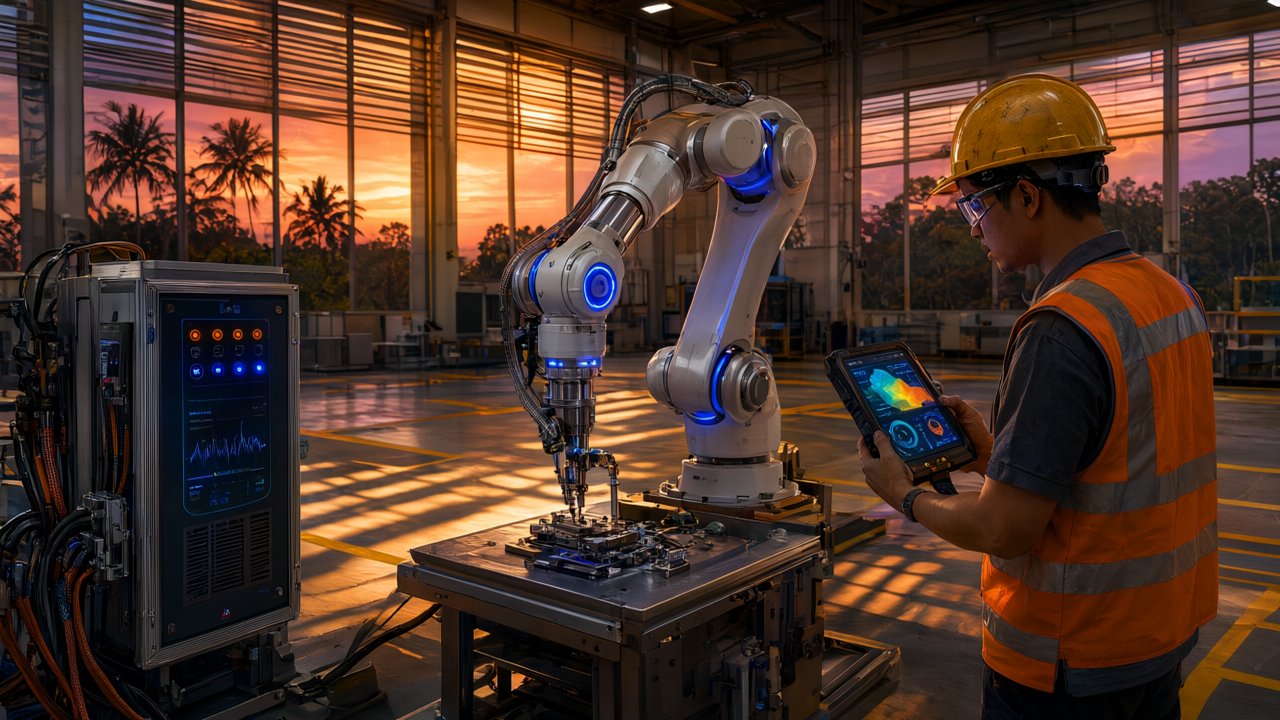
NexCOBOT, a supplier of functional safety and motion controllers — the certified components that make industrial machines move precisely and shut down safely — has shared its assessment of the physical AI market with The Robot Report, covering both the hurdles slowing adoption and the forces accelerating it. Its central point: physical AI, meaning AI built into machines that sense and act in the real world, benefits heavily from Big Tech's investments in AI models, chips and infrastructure, which lets hardware specialists build smarter machines faster. In our analysis, this matters for Malaysia because our manufacturing base in Penang, Kulim and the Klang Valley sits on both sides of this trend — as builders of components and as buyers of automation. The practical conclusion for Malaysian businesses: robotics capability is getting cheaper and easier to deploy, and a contained pilot this quarter beats a strategy deck next year.
AI Summary
NexCOBOT, a supplier of functional safety and motion controllers — the certified components that make industrial machines move precisely and shut down safely — has shared its assessment of the physical AI market with The Robot Report, covering both the hurdles slowing adoption and the forces accelerating it. Its central point: physical AI, meaning AI built into machines that sense and act in the real world, benefits heavily from Big Tech's investments in AI models, chips and infrastructure, which lets hardware specialists build smarter machines faster. In our analysis, this matters for Malaysia because our manufacturing base in Penang, Kulim and the Klang Valley sits on both sides of this trend — as builders of components and as buyers of automation. The practical conclusion for Malaysian businesses: robotics capability is getting cheaper and easier to deploy, and a contained pilot this quarter beats a strategy deck next year.
Key Takeaways
- Physical AI is AI with a body — embedded in robots, machine tools and guided vehicles — and it is a different market from chatbots and generative software, with safety certification as the gate to deployment.
- NexCOBOT's position in functional safety and motion controllers gives it a credible window into real deployment, not demo hype; when the safety-component layer reports acceleration, machines are actually shipping.
- The Big Tech effect means smaller hardware firms no longer need to build frontier AI themselves — they ride on shared models and compute, which pushes costs down the stack.
- For Malaysia, the impact lands twice: local E&E suppliers in Penang and Kulim can sell into a growing smart-machine supply chain, while manufacturers and logistics operators become adopters.
- The right move now is a single contained pilot cell with clear KPIs, not a factory-wide rollout — integration skill, not hardware price, is the usual bottleneck.
What Happened
NexCOBOT, a company that provides functional safety and motion controllers, gave its view on the physical AI market in a discussion published by The Robot Report, a US robotics trade publication. The discussion covered two threads: the hurdles holding the market back, and the factors accelerating it forward, including where the company expects growth.
The factual core of NexCOBOT's position, as reported, is that physical AI benefits from "Big Tech" — the large technology firms whose spending on AI models, chips and supporting infrastructure is doing work that individual robotics companies could not afford to do alone. The company also indicated where it sees the market growing, framed around the components it builds.
Some context for readers new to this space. A motion controller is the component that governs how a machine's motors move — how fast, how far, with how much force. Functional safety is the engineering discipline that ensures a machine fails into a safe state: if a sensor dies or software misbehaves, the arm stops rather than swings. These are the unglamorous parts of robotics, and they are the parts regulators and insurers actually check. When a company in this layer speaks about market acceleration, it is describing what machine builders are ordering, which is a closer signal to real deployment than most AI announcements.
The published discussion is an industry outlook rather than a product launch, so treat it as a supplier's read of demand — useful, but with an obvious commercial interest in an optimistic growth story.
Why It Matters
The significance sits in who said it. Software AI announcements are cheap; certified hardware that ships is not. NexCOBOT sells into the layer of robotics where machines must pass safety scrutiny before a factory will install them and a worker will stand next to them. That layer is historically the slowest part of automation — certification cycles are long, engineering is conservative, and failures are physical. If that layer is now reporting acceleration, the change is real in a way that demo videos are not.
The Big Tech point deserves unpacking, and the rest of this section is our analysis
Sources & References
AIBlog summarises and analyses published information. We do not reproduce full source text. Analysis is editorial and not financial or legal advice.