Meet Microduck — and the Free Robotics Intelligence Hiding in Video Friday
IEEE Spectrum's weekly robot video digest and its 2026 event calendar tell you where automation is heading before it reaches a Malaysian factory floor.
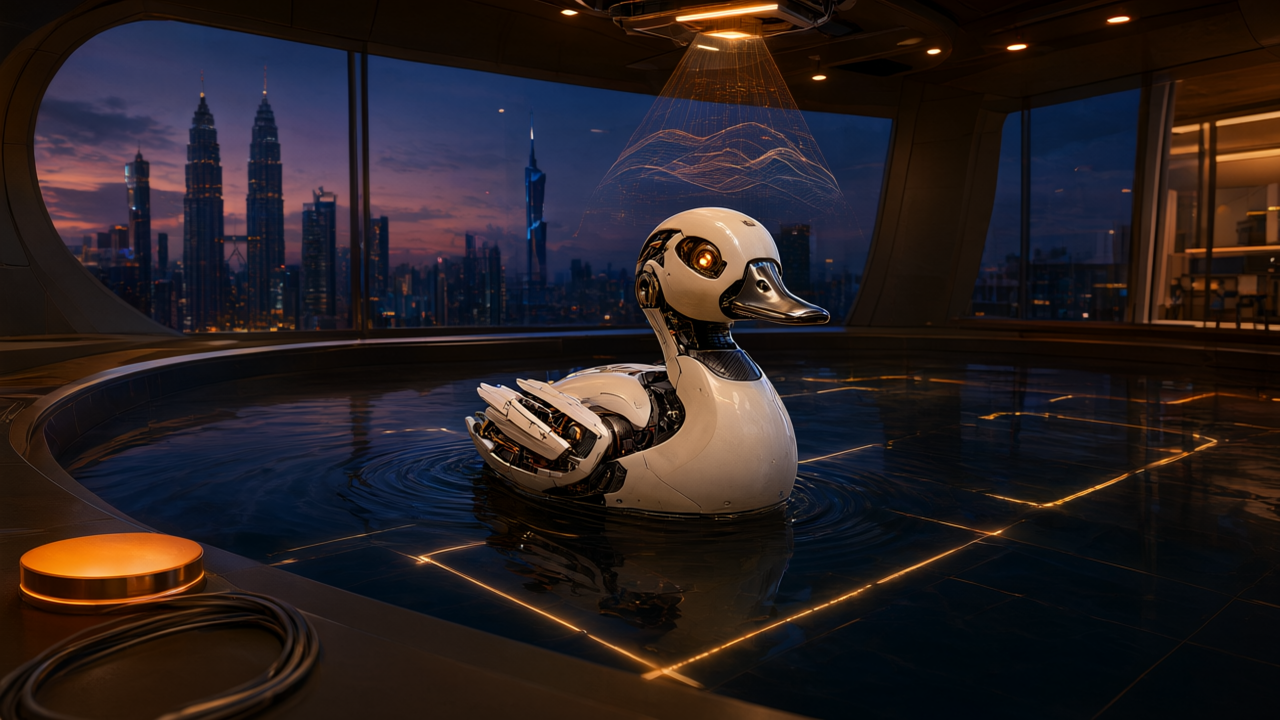
Microduck is the robot introduced in the latest edition of Video Friday, the weekly robotics video digest published by IEEE Spectrum's robotics desk. The same post carries a calendar of the field's major 2026 gatherings: the Humanoids Summit in Seoul (22–23 September), IROS 2026 in Pittsburgh (27 September–1 October), and CoRL 2026 in Austin (9–12 November). For a Malaysian business reader, the real value is not one robot clip. It is the channel and the calendar, which together work as an early-warning system for what commercial automation will look like two to three years from now. This article breaks down what the post contains, why curated research feeds matter, and how a Malaysian SME can put them to work this quarter at zero cost.
AI Summary
Microduck is the robot introduced in the latest edition of Video Friday, the weekly robotics video digest published by IEEE Spectrum's robotics desk. The same post carries a calendar of the field's major 2026 gatherings: the Humanoids Summit in Seoul (22–23 September), IROS 2026 in Pittsburgh (27 September–1 October), and CoRL 2026 in Austin (9–12 November). For a Malaysian business reader, the real value is not one robot clip. It is the channel and the calendar, which together work as an early-warning system for what commercial automation will look like two to three years from now. This article breaks down what the post contains, why curated research feeds matter, and how a Malaysian SME can put them to work this quarter at zero cost.
Key Takeaways
- Video Friday is a free weekly curation by IEEE Spectrum's robotics editors — effectively a pre-filtered research feed that most Malaysian manufacturers never bother to read.
- Microduck headlines the latest digest; even the name points to the small, low-cost end of robotics, which is the segment most realistic for SME budgets (this is an inference from the name, not a spec sheet — the post is video-led).
- The 2026 calendar names three anchor events: Humanoids Summit Seoul, IROS 2026 Pittsburgh, and CoRL 2026 Austin. What gets presented there tends to become vendor product roadmaps within a few years.
- A dedicated humanoids summit sitting in Seoul signals where Asia-Pacific robotics attention and capital are concentrating — relevant to Malaysia's position in the region's electronics supply chain.
- CoRL's prominence on the calendar matters most for the AI-minded reader: it is the conference where machine learning meets robot control, the technical base for agentic AI doing physical work.
What Happened
IEEE Spectrum's robotics team published its regular Video Friday column, a weekly roundup it describes as "your weekly selection of awesome robotics videos." The headline entry introduces a robot called Microduck, presented in video form. The post does not read like a product launch — Video Friday entries are typically lab demos and research snippets, and the format invites readers to watch the clip rather than parse a spec table. Details about Microduck's size, creator, and capabilities live in the video itself.
Alongside the videos, the post maintains a running calendar of upcoming robotics events, and the 2026 line-up is now firm: the Humanoids Summit in Seoul on 22–23 September 2026, IROS 2026 — one of the largest robotics research conferences in the world — in Pittsburgh from 27 September to 1 October 2026, and CoRL 2026, the major conference on robot learning, in Austin from 9–12 November 2026. The column also openly solicits event submissions from the community, which tells you something about its role: it functions as a shared notice board for the global robotics research scene.
So the news itself is modest. A new small robot got a video feature, and three conference dates were confirmed. The significance sits in the pattern, not the single post.
Why It Matters
Think about how industrial buying actually works. By the time a robot appears in a Malaysian vendor's brochure or an automation integrator's proposal, the underlying research is usually three to five years old. The companies that got better prices and earlier capability did not see the product first — they saw the research first. Channels like Video Friday compress that lead time for you. IEEE Spectrum's robotics editors watch an enormous volume of lab footage every week and publish a shortlist. That is an editorial filter you would otherwise pay a consultant to replicate.
The conference calendar is the second signal. Research conferences are leading indicators. Work presented at IROS and CoRL in 2026 becomes startup pitch decks in 2027, pilot deployments in 2028, and mainstream vendor offerings soon after. The topics on the 2026 calendar tell you where that pipeline is flowing: humanoids, via the Seoul summit, and learning-based robotics, via CoRL. Learning-based robotics is the shift from robots programmed line-by-line to robots trained on data — closer to how you would teach a new worker than how you would configure a machine.
The choice of Seoul for a dedicated humanoids summit is also worth a moment. Asia-Pacific is not just manufacturing robots; it is hosting the conversations that define them. For anyone in this region's electronics and industrial supply chain, that shifts these events from "nice to know" to "geographically within reach" — a realistic trip, a realistic paper submission, a realistic recruitment ground.
What This Means for Malaysia
Malaysia sits upstream of the robotics boom whether or not local firms buy robots. The country's electrical and electronics sector, concentrated around Penang, produces exactly the components — sensors, power electronics, control modules, semiconductors — that go into machines like the ones featured in these videos. Rising global robotics activity is, structurally, rising demand for Malaysian manufacturing output. That is a supply-chain position worth
Sources & References
AIBlog summarises and analyses published information. We do not reproduce full source text. Analysis is editorial and not financial or legal advice.