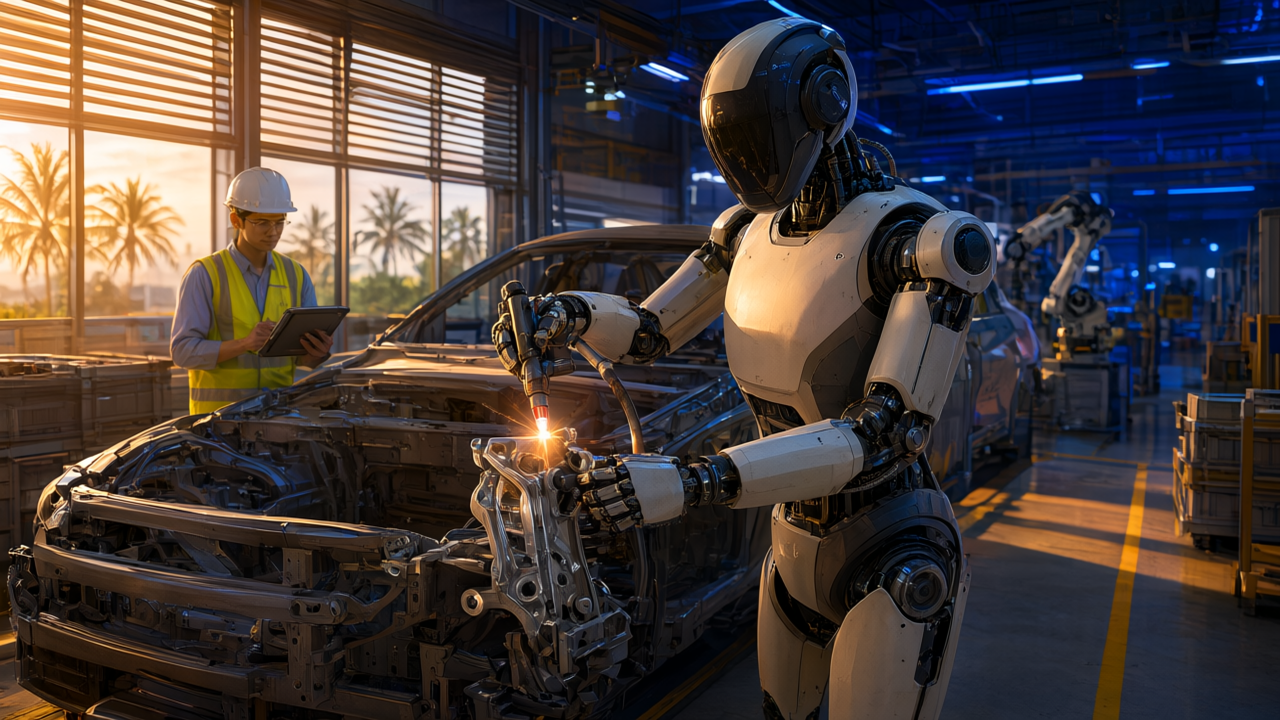
Japan Pioneered Humanoid Robots—Can It Now Catch China?

Japan, a pioneer in humanoid robotics, is now at a crossroads as it faces competition from China's rapidly advancing robotics sector. The recent Humanoids Summit in Tokyo highlighted the potential for deeper human-robot relationships, indicating a future where the lines between humans and robots may blur.
TITLE: Japan's Humanoid Robots: Can They Compete with China's Robotics Dominance?
SUBTITLE: Japan's legacy in humanoid robotics faces new challenges from China’s rapid advancements.
AI Summary
Japan, a pioneer in humanoid robotics, is now at a crossroads as it faces competition from China's rapidly advancing robotics sector. The recent Humanoids Summit in Tokyo highlighted the potential for deeper human-robot relationships, indicating a future where the lines between humans and robots may blur.
Key Takeaways
- Japan has a long history of innovation in humanoid robotics, exemplified by the Geminoid HI-6.
- The emergence of China as a leader in robotics poses a significant challenge to Japan's traditional dominance.
- The future of human-robot interaction could redefine industries, impacting sectors such as automation and smart city development.
What Happened
At the recent Humanoids Summit in Tokyo, experts discussed the future of humanoid robots, emphasizing the potential for deeper integration into human life. The event featured the Geminoid HI-6, a sophisticated android that exemplifies Japan's pioneering work in this field. However, the conversation also turned to the competitive landscape, particularly the rise of China in robotics and automation.
Why It Matters
The advancements in robotics and automation are crucial for various sectors, including manufacturing, healthcare, and service industries. As countries like China invest heavily in robotics, it raises questions about Japan's ability to maintain its leadership in this space. For Malaysia, this competition could influence local industries and the adoption of robotics technologies.
Malaysia Impact
For Malaysia, understanding the dynamics of Japan and China's robotics competition is vital. As the nation aims to enhance its own automation capabilities and smart city initiatives, learning from Japan's experience while also keeping an eye on China's aggressive strategies could inform local policies and investment decisions.
Business Impact
Businesses in Malaysia, particularly SMEs and enterprises, can benefit from the advancements in humanoid robotics. As these technologies evolve, they can enhance productivity and efficiency in various sectors. Companies that adopt these innovations early could gain a competitive edge in the market.
Agentic AI Angle
The discussions at the summit hint at a future where Agentic AI—AI systems that can act independently—becomes more prevalent. This could lead to significant changes in how businesses operate, with robots taking on more complex tasks and responsibilities.
Risks / Limitations
Despite the potential benefits, there are risks associated with the increased reliance on humanoid robots and AI. Issues such as job displacement, ethical concerns, and the need for robust AI governance must be addressed to ensure a balanced approach to automation.
What this means in simple terms
Japan's historical expertise in humanoid robots is now challenged by China's rapid advancements. For Malaysia, this means an opportunity to learn and adapt, leveraging robotics to improve business operations while also considering the ethical implications of such technologies.
Final Summary
Japan's legacy in humanoid robotics is at a pivotal moment as it faces competition from China. For Malaysia, this landscape presents both challenges and opportunities in the adoption of robotics and AI technologies. By observing these developments, Malaysian businesses and policymakers can better navigate the future of automation.
FAQ
What is the significance of humanoid robots in business?
Humanoid robots can enhance productivity and efficiency in various sectors, offering innovative solutions for tasks that require human-like interaction.
How can Malaysia benefit from Japan's experience in robotics?
By studying Japan's advancements and challenges in robotics, Malaysia can better inform its own policies and investments in automation, ultimately improving its competitive position in the global market.
Sources / References
Sources & References
AIBlog summarises and analyses published information. We do not reproduce full source text. Analysis is editorial and not financial or legal advice.