Fertilizer Prices Track Fossil Fuels — and Farms Pay the Bill
MIT Technology Review's report on agriculture's fossil fuel dependence signals a cost squeeze that reaches Malaysian plantations and padi fields.
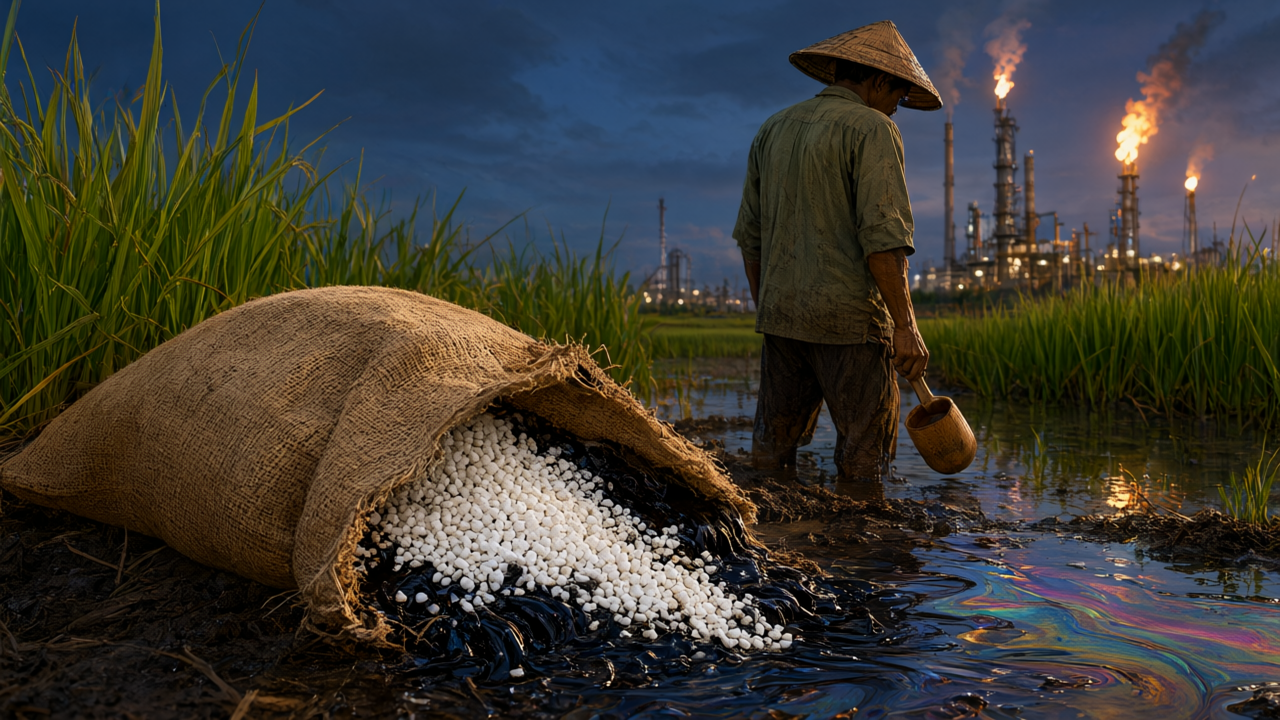
A 3 September 2026 MIT Technology Review report examines how agriculture's dependence on fossil fuels has become a direct cost problem: the conflict in Iran has pushed up oil and gas prices, and fertilizer prices are climbing in response, hitting farmers hardest. Because most synthetic fertilizer is manufactured using natural gas, every energy shock lands on farms as an input-cost shock, and eventually on food prices. For Malaysia — a major fertilizer consumer through palm oil estates and padi smallholders — this is a margin and food-security issue, not an abstract geopolitical story. The practical response available this quarter is demand-side: using AI-driven precision agriculture and agentic automation to cut fertilizer waste per hectare without cutting yield.
AI Summary
A 3 September 2026 MIT Technology Review report examines how agriculture's dependence on fossil fuels has become a direct cost problem: the conflict in Iran has pushed up oil and gas prices, and fertilizer prices are climbing in response, hitting farmers hardest. Because most synthetic fertilizer is manufactured using natural gas, every energy shock lands on farms as an input-cost shock, and eventually on food prices. For Malaysia — a major fertilizer consumer through palm oil estates and padi smallholders — this is a margin and food-security issue, not an abstract geopolitical story. The practical response available this quarter is demand-side: using AI-driven precision agriculture and agentic automation to cut fertilizer waste per hectare without cutting yield.
Key Takeaways
- The Iran conflict's energy price ripple has reached farms: alongside petrol pumps and airfares, fertilizer prices are rising, and farmers "are especially aware" of the spread, per MIT Technology Review.
- Fertilizer is effectively fossil fuel in solid form — most synthetic nitrogen fertilizer is manufactured from natural gas — so agriculture inherits energy market volatility with a lag.
- Malaysian palm oil estates, where fertilizer is one of the largest operating costs, feel this directly in cost of production; padi smallholders feel it through subsidy pressure and input affordability.
- Producing our own natural gas does not shield Malaysian buyers — fertilizer trades at global prices tied to global energy markets.
- AI is the fastest lever available now: variable-rate application, satellite and drone monitoring, and agentic procurement workflows can cut fertilizer spend this season, without waiting for new fertilizer production technology.
What Happened
MIT Technology Review published
Sources & References
AIBlog summarises and analyses published information. We do not reproduce full source text. Analysis is editorial and not financial or legal advice.