Google's AMIE AI Proves It Can Handle Video Medical Consultations
A simulated study shows AI moving from text-based chatbots to real-time video diagnostics, signaling major shifts for healthcare and telemedicine.
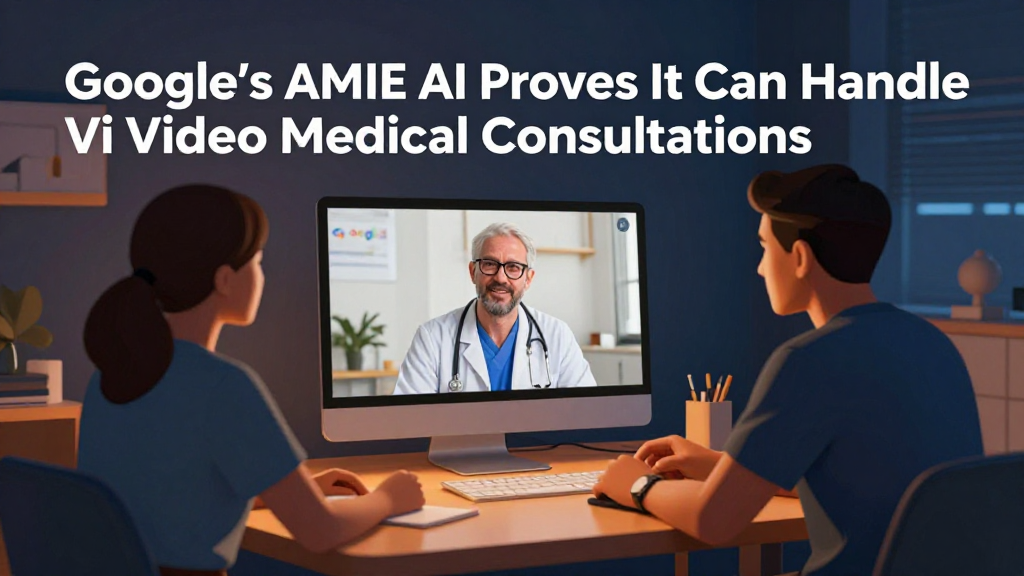
Google has announced that AMIE, its research medical AI system, successfully demonstrated real-time clinical video consultation capabilities in a first-of-its-kind simulated study. This moves AI beyond text-based medical chats into multimodal interactions where the system must process visual cues, spoken audio, and medical reasoning simultaneously. For Malaysian businesses, particularly those in healthtech, insurance, and corporate benefits, this signals a near future where initial patient triage and specialist screenings can be heavily automated. It also raises immediate questions about data privacy under the PDPA and compliance with Ministry of Health telemedicine guidelines.
AI Summary
Google has announced that AMIE, its research medical AI system, successfully demonstrated real-time clinical video consultation capabilities in a first-of-its-kind simulated study. This moves AI beyond text-based medical chats into multimodal interactions where the system must process visual cues, spoken audio, and medical reasoning simultaneously. For Malaysian businesses, particularly those in healthtech, insurance, and corporate benefits, this signals a near future where initial patient triage and specialist screenings can be heavily automated. It also raises immediate questions about data privacy under the PDPA and compliance with Ministry of Health telemedicine guidelines.
Key Takeaways
- Google's AMIE demonstrated the ability to conduct real-time, multimodal video consultations, requiring the AI to process visual patient data and conversational cues simultaneously.
- The study was conducted in simulated settings, meaning the AI is not yet ready for live clinical deployment but proves the technical viability of automated video diagnostics.
- This development shifts medical AI from simple text-based symptom checkers to agentic systems capable of reasoning through a diagnostic conversation.
- Malaysian healthtech companies and insurers must begin planning for multimodal AI integration, as text-only telemedicine will soon fall behind.
- Regulatory frameworks, particularly Malaysia's Medical Act and PDPA, will face pressure to establish clear guidelines for AI-assisted video triage.
What Happened
Google recently detailed the capabilities of AMIE, a research-grade medical AI system, highlighting its ability to conduct real-time clinical video consultations. According to the announcement, this marks the first time a system has been tested in a simulated environment to handle the complex dynamics of a face-to-face video medical encounter. In a standard telemedicine setup today, a human doctor looks at a patient through a screen, asks questions, observes physical symptoms like a rash or breathing rate, and formulates a diagnosis.
AMIE is designed to replicate this interaction. The AI system processes the video feed and audio in real time. It must understand the patient's spoken complaints, ask relevant follow-up questions, and analyze visual cues from the camera. This is a technical leap. Previous medical AI models primarily focused on text-based interactions. They relied on patients typing their symptoms into a chat window.
A video consultation requires the AI to be multimodal. It must process audio, text, and vision simultaneously, while maintaining the conversational flow necessary for a clinical interview. The study placed AMIE in simulated clinical scenarios to test how well it could manage these inputs and deliver accurate medical reasoning.
Why It Matters
The transition from text-based medical chatbots to real-time video consultations is a major inflection point for the healthcare industry. Text-based symptom checkers are limited. They cannot see if a patient is pale, sweating, or experiencing motor function issues. By moving to video, AI systems like AMIE can gather a much richer set of data. The system can analyze physical presentations alongside patient history, closely mirroring the diagnostic process of a human primary care physician.
This development matters because it attacks one of the most expensive and time-consuming bottlenecks in global
Sources & References
AIBlog summarises and analyses published information. We do not reproduce full source text. Analysis is editorial and not financial or legal advice.