Edge AI Shift: Why FCC Robot Restrictions Matter for Malaysian Factories
New US limits on robotics equipment are pushing AI from distant data centres onto the robots themselves — and Malaysian buyers, builders, and chip suppliers all sit in the blast radius.

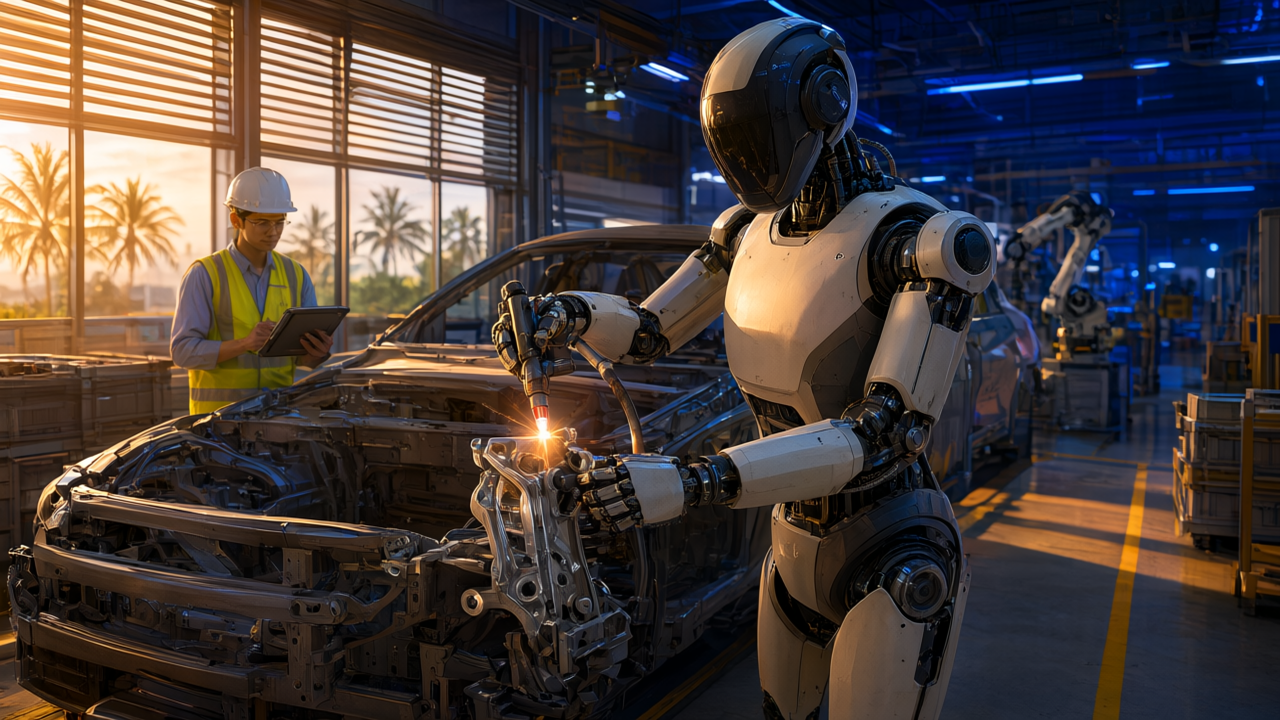
The Robot Report reports that restrictions from the US Federal Communications Commission (FCC) on robotics equipment could accelerate a move toward "local AI" — running AI workloads directly on robots instead of in the cloud. Companies deploying physical AI now face three hard decisions: which workloads belong on the robot, which stay in the cloud, and whether their technology stack can meet rising expectations for security, safety, and supply-chain transparency. For Malaysia, this touches factory automation purchases, PDPA data-handling obligations, and demand for the edge AI silicon that Penang and Kulim help produce. The practical takeaway: where your robot's AI runs is now a procurement and compliance question, not just an engineering one.
AI Summary
The Robot Report reports that restrictions from the US Federal Communications Commission (FCC) on robotics equipment could accelerate a move toward "local AI" — running AI workloads directly on robots instead of in the cloud. Companies deploying physical AI now face three hard decisions: which workloads belong on the robot, which stay in the cloud, and whether their technology stack can meet rising expectations for security, safety, and supply-chain transparency. For Malaysia, this touches factory automation purchases, PDPA data-handling obligations, and demand for the edge AI silicon that Penang and Kulim help produce. The practical takeaway: where your robot's AI runs is now a procurement and compliance question, not just an engineering one.
Key Takeaways
- FCC restrictions raise the bar on supply-chain transparency, so robot buyers must now be able to answer where the chips, radios, and software in their machines actually come from.
- The architectural response is edge AI — inference on the robot itself — because local compute cuts network dependency, latency, and the amount of operational data leaving your premises.
- Cloud AI does not disappear; the realistic end state is hybrid: safety-critical and real-time work on-device, fleet learning and retraining in the cloud.
- Malaysian E&E exporters using robots in US-linked supply chains should expect component-level compliance questions from customers, not just performance questions.
- Penang and Kulim's semiconductor corridor sits upstream of this trend: more AI on robots means more inference silicon per machine, which is demand Malaysia helps supply.
What Happened
The Robot Report, a robotics industry publication, reported that restrictions imposed by the FCC — the US regulator that authorises communications and connected equipment — could accelerate a shift toward local AI in robotics. In plain terms: when a regulator starts restricting what connected equipment can be sold or authorised over trust and supply-chain concerns, vendors and buyers respond by rethinking the technology stack underneath their machines.
The report frames the immediate consequence clearly. Companies deploying physical AI — robots that perceive, decide, and act using AI — now need to make three decisions. First, which AI workloads belong on the robot itself. Second, which workloads can remain in the cloud. Third, whether the underlying technology stack can meet rising expectations for security, safety, and supply-chain transparency. That third point is the quiet one, and arguably the biggest: "transparency" means being able to show, component by component, what is inside your machine and who made it.
One honest note on sourcing: the published summary is brief and does not enumerate specific FCC rule numbers, affected vendors, or timelines. This article sticks to what the source states and builds the strategic analysis outward from it — and where I am inferring rather than reporting, I say so.
Why It Matters
Regulatory pressure changes hardware design. That is the core mechanism here, and it is worth spelling out. When equipment restrictions are driven by distrust of certain suppliers or supply chains, the commercial fix is not a software patch — it is redesigning the machine so that less of it depends on contested components and contested network paths. Moving AI compute onto the robot itself shrinks the dependency surface. The robot still works, the data stays local, and fewer foreign links sit in the chain of trust.
There are also plain engineering reasons the pendulum swings toward on-device AI. Latency: a robot arm deciding whether to stop cannot wait for a round trip to a data centre in another country. Reliability: a factory robot that keeps working when the plant Wi-Fi drops is worth more than one that freezes. Data control: if the video and sensor data never leaves the machine, there is simply less of it to secure, transfer, or explain to a regulator. The closest parallel from recent history is the earlier US pushback
Sources & References
AIBlog summarises and analyses published information. We do not reproduce full source text. Analysis is editorial and not financial or legal advice.