Do We Need Superhuman Humanoid Robots? A Question Malaysian Industry Should Answer
IEEE Spectrum's latest robotics round-up puts Unitree's "superhuman" demos front and centre — the real decision for Malaysian businesses is capability, not body shape.
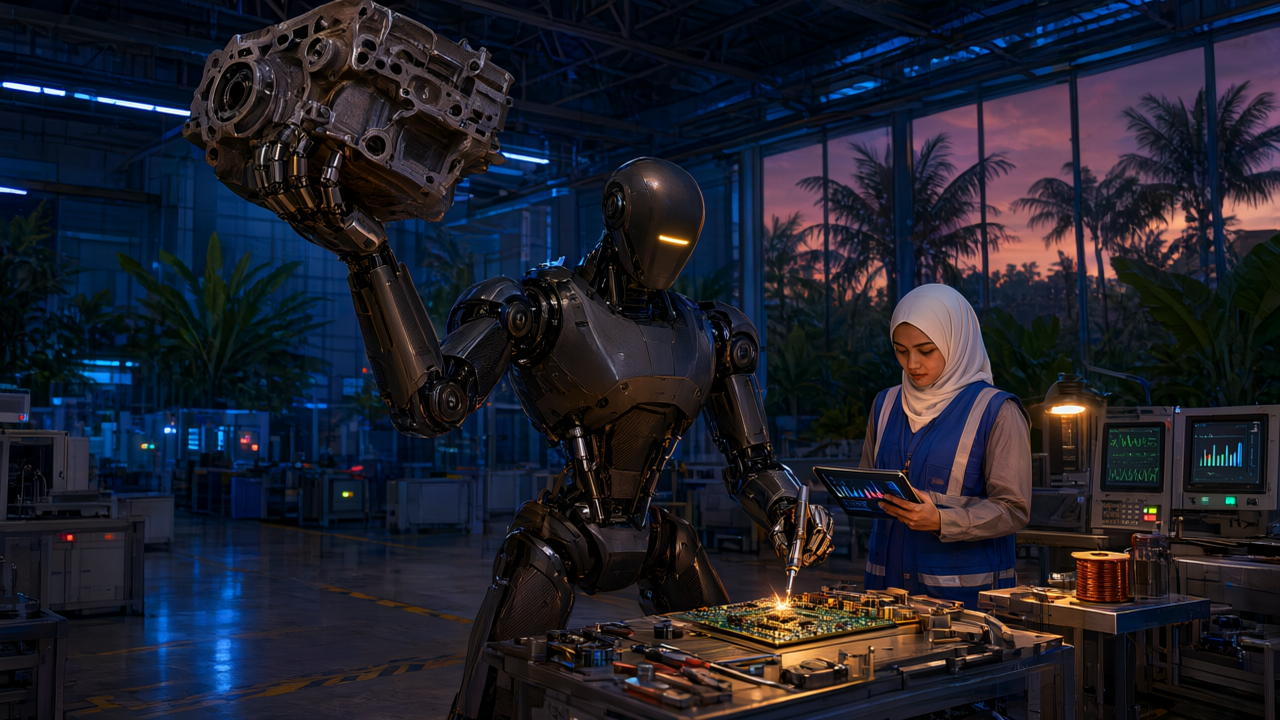
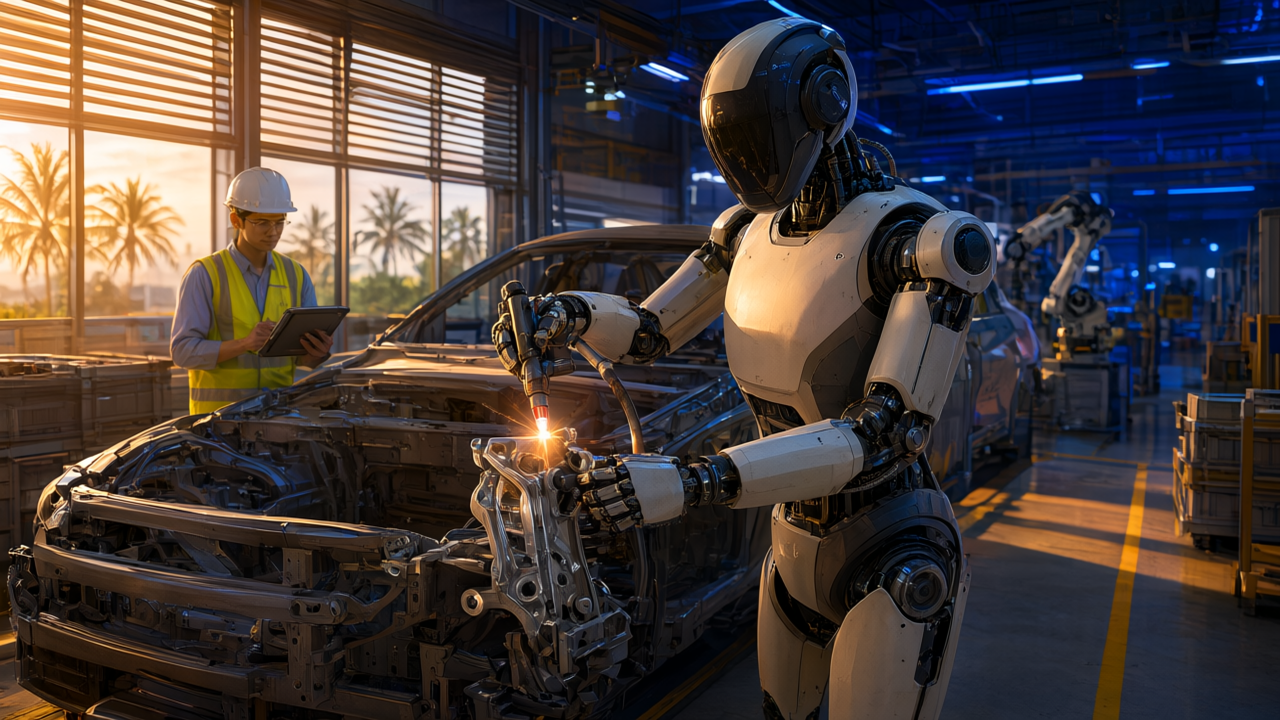
IEEE Spectrum's weekly Video Friday column has published its latest robotics video round-up, headlined with the question "Do We Need Superhuman Humanoid Robots?" and pointing, via the post's link, to demonstrations from robotics firm Unitree. The column also carries the 2026 robotics event calendar: Humanoids Summit Seoul (22–23 September), IROS 2026 in Pittsburgh (27 September–1 October), and CoRL 2026 in Austin (9–12 November). For Malaysian decision-makers, the honest answer to the headline is: mostly not yet. Task-specific automation still wins on cost, reliability, and payback time. But humanoids paired with agentic AI — software that plans and executes multi-step work on its own — will eventually matter in facilities built around human bodies. The practical move this quarter is workflow auditing and data preparation, not robot purchases.
AI Summary
IEEE Spectrum's weekly Video Friday column has published its latest robotics video round-up, headlined with the question "Do We Need Superhuman Humanoid Robots?" and pointing, via the post's link, to demonstrations from robotics firm Unitree. The column also carries the 2026 robotics event calendar: Humanoids Summit Seoul (22–23 September), IROS 2026 in Pittsburgh (27 September–1 October), and CoRL 2026 in Austin (9–12 November). For Malaysian decision-makers, the honest answer to the headline is: mostly not yet. Task-specific automation still wins on cost, reliability, and payback time. But humanoids paired with agentic AI — software that plans and executes multi-step work on its own — will eventually matter in facilities built around human bodies. The practical move this quarter is workflow auditing and data preparation, not robot purchases.
Key Takeaways
- IEEE Spectrum's headline question is a purchasing-discipline test in disguise: define the task first, then choose the machine's shape. Buying a humanoid because the video impressed you inverts that logic.
- The Unitree reference signals where demonstration attention sits, but demos are not deployments. Treat "superhuman" claims as unverified marketing until a machine proves itself in your own facility, on your own tasks.
- The 2026 calendar is the quieter signal: humanoid research now has a dedicated summit (Seoul), alongside the two major research conferences, IROS and CoRL. Talent and capital are consolidating around this category.
- For most Malaysian SMEs — Penang electronics, Klang Valley logistics, glove and food plants — robotic arms, autonomous mobile robots, and machine vision deliver measurable returns today. Humanoids earn their keep mainly where stairs, doorways, and human-sized tools dominate.
- Agentic AI is the missing half of the humanoid story. A humanoid without a planning brain is a remote-controlled prop; the software, not the metal, decides whether any robot becomes a worker.
What Happened
IEEE Spectrum, the consumer-facing publication of the engineering body IEEE, runs a long-standing weekly feature called Video Friday. Each week its robotics editors collect notable robotics videos from labs and companies around the world and publish them together, alongside a running calendar of upcoming robotics events. It has become a routine checkpoint for anyone tracking how robots actually move, grasp, balance, and fail — unpolished footage that press releases rarely show.
The latest edition poses a pointed question in its headline: "Do We Need Superhuman Humanoid Robots?" The post's link points to Unitree as the subject of the superhuman framing. Beyond the videos, the column lists three events on its forward calendar: Humanoids Summit Seoul on 22–23 September 2026, IROS 2026 — one of the largest intelligent robotics research conferences — in Pittsburgh from 27 September to 1 October 2026, and CoRL 2026, the major conference on robot learning, in Austin from 9–12 November 2026.
That is the factual record. The question in the headline, though, deserves a serious answer, because it is the same question every manufacturer, warehouse operator, and plant manager in Malaysia will eventually put to a vendor. The rest of this article is our analysis of that question, clearly separated from the source material.
Why It Matters
Strip away the spectacle and the headline asks an economic question: should you buy a general-purpose machine that does many things adequately, or specialised machines that each do one thing exceptionally well? The history of industrial automation answers this consistently. Robotic arms took over welding and painting because those tasks are repetitive, measurable, and dangerous. They succeeded by being narrow. A machine that does one weld perfectly for eight years beats a machine that does many tasks adequately — in total cost, in uptime, in spare parts, in operator training.
So why does "superhuman" matter as a framing? Because it changes the comparison. A humanoid that is merely human-level competes with Malaysian wage rates, and in most categories it loses badly on cost. A humanoid that exceeds human capability — in strength, endurance, precision, or hours of operation — competes with a different baseline. That is the bet embedded in the videos IEEE Spectrum collects: push performance past the human threshold, and the economics flip. Our assessment is that this bet remains unproven for the vast majority of commercial tasks, and the demo-to-deployment gap in robotics is wide and well documented across the industry's history — impressive lab videos have preceded commercially viable products by a decade or more, repeatedly.
The event calendar tells a second story. When a research category earns its own summit, it means universities, startups, and investors are organising around it. Seoul's Humanoids Summit, sitting two months before the two big autumn research conferences, suggests the humanoid field expects sustained momentum through 2026. For planners, that is a timing signal: the technology worth watching closely now is likely to be commercially packaged within a three-to-five-year window, not next quarter.
What This Means for Malaysia
Malaysia's industrial base is heavily concentrated in exactly the sectors where automation economics are decided by task repetition and labour cost: electronics assembly in Penang and Kulim, rubber glove manufacturing, semiconductor back-end operations, and the logistics corridor around Port Klang and the Klang Valley. These facilities already run on conventional automation — SCARA and six-axis arms, conveyor systems, machine vision for inspection. For them, the humanoid question is not abstract. It is a capital allocation question.
Our read for Malaysian firms: the near-term opportunity is not humanoid bodies but agentic brains layered onto existing automation. National initiatives under MyDIGITAL and MDEC have pushed digital adoption across SMEs, and the next phase of that push — AI automation in Malaysian manufacturing — will reward companies whose production data is clean, instrumented, and accessible. A factory that cannot answer "what did line three produce per hour last Tuesday, and why did it stop four times" cannot automate decisions, regardless of what robots it owns. That data foundation is the Malaysian SME's homework.
There is also a talent and positioning angle. The 2026 events sit in Seoul, Pittsburgh, and Austin — none in Southeast Asia. Malaysian engineers, university robotics groups, and government-linked talent programmes should be watching these events' published research the way investors watch earnings season. If humanoid and robot-learning capability matures into a commercial market, ASEAN manufacturing hubs will be the natural early adopters, because our factories are the target environment. Malaysian companies that build the integration and maintenance skills early — the people who can commission, babysit, and repair these systems — will hold a regional advantage that is hard to copy quickly.
How Your Business Can Use This
Start with
Sources & References
AIBlog summarises and analyses published information. We do not reproduce full source text. Analysis is editorial and not financial or legal advice.