DAF Trucks integrates Einride Driver to scale autonomous electric freight
The logistics industry takes a concrete step forward as autonomous software merges with commercial electric vehicle manufacturing.
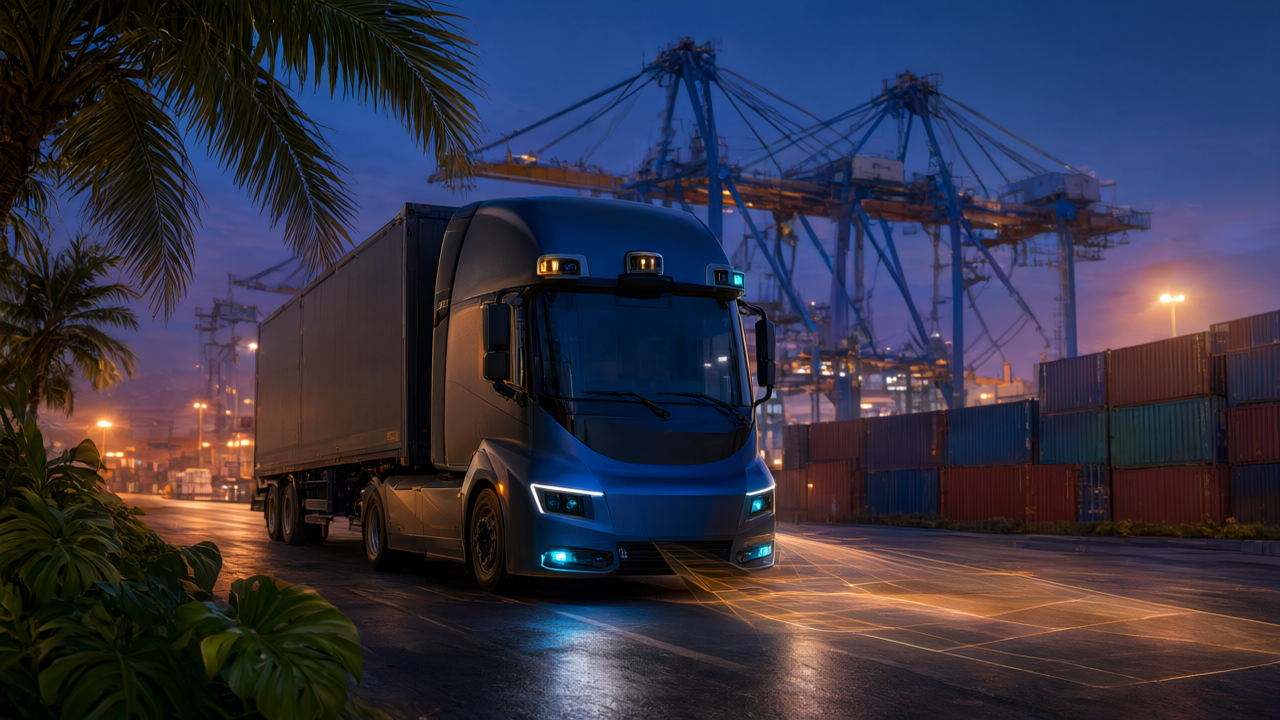
Einride, a Swedish freight technology company, is integrating its autonomous driving software, known as Einride Driver, into trucks built by DAF Trucks, a subsidiary of the global commercial vehicle manufacturer PACCAR. This partnership, supported by research from the Dutch organization TNO, aims to scale up the deployment of safe, self-driving electric freight. For Malaysian businesses, this signals a shift in global logistics from experimental autonomous testing to commercial integration. Supply chain operators, hauliers, and manufacturing dependents should prepare for a future where long-haul transport is managed by autonomous electric fleets.
AI Summary
Einride, a Swedish freight technology company, is integrating its autonomous driving software, known as Einride Driver, into trucks built by DAF Trucks, a subsidiary of the global commercial vehicle manufacturer PACCAR. This partnership, supported by research from the Dutch organization TNO, aims to scale up the deployment of safe, self-driving electric freight. For Malaysian businesses, this signals a shift in global logistics from experimental autonomous testing to commercial integration. Supply chain operators, hauliers, and manufacturing dependents should prepare for a future where long-haul transport is managed by autonomous electric fleets.
Key Takeaways
- Einride is moving away from building its own proprietary trucks from scratch, instead integrating its autonomous software into established hardware manufactured by DAF Trucks.
- The collaboration involves TNO, a recognized Dutch research organization, focusing heavily on validating the safety and reliability of autonomous trucking systems.
- The freight being targeted is specifically electric, combining zero-emission vehicle technology with autonomous software to solve both labor shortages and sustainability targets.
- This validates the "autonomous stack" business model, where tech companies provide the software and operational systems, while traditional truck makers provide the physical chassis.
- Malaysian logistics planners and supply chain managers need to start assessing infrastructure readiness, as autonomous electric transport will soon be a standard procurement option for global shipping.
What Happened
Einride has announced a partnership with DAF Trucks to integrate the Einride Driver autonomous software system into DAF’s commercial truck lineup. DAF Trucks operates under PACCAR, a major global designer and manufacturer of commercial vehicles. This integration pairs a leading European truck manufacturer with Einride's purpose-built autonomous technology.
Alongside the hardware and software integration, the initiative includes research from TNO, an independent Dutch research organization. TNO's involvement focuses on the operational and safety research required to put autonomous trucks on public roads at scale. This three-way collaboration between a tech provider, a truck manufacturer, and a research institute represents a structured path toward commercializing autonomous freight.
The core technology is Einride Driver. This is an autonomous driving system designed specifically for heavy-duty freight transport. Instead of retrofitting sensors onto older diesel trucks, the partnership focuses on electric trucks built by DAF. This creates a dual benefit: the trucks produce zero local emissions, and the autonomous software addresses the persistent shortage of qualified truck drivers. The joint effort is working toward making this a safe, scalable reality on public roads.
Why It Matters
For years, autonomous trucking has been stuck in the prototype and testing phases. Startups built strange-looking, cab-less demonstration vehicles to prove their technology worked in controlled environments. The partnership between Einride and DAF Trucks signals a shift toward commercial reality.
By integrating with DAF, Einride is adopting a scalable business model. Building trucks requires massive capital, extensive supply chains, and decades of manufacturing expertise. Software companies cannot easily replicate this. By focusing purely on the autonomous software—the "brain" of the vehicle—and integrating it into proven DAF hardware, Einride can scale its technology much faster. This mirrors how personal computer manufacturers build the hardware while software companies provide the operating system.
The inclusion of TNO highlights that safety remains the primary barrier to widespread adoption. Autonomous vehicles must interact with unpredictable human drivers, severe weather, and complex road networks. TNO’s research aims to bridge the gap between closed-course testing and unmonitored operation on busy public highways. When a major manufacturer like DAF commits to this integration, it tells the market that the underlying technology is maturing past the experimental phase.
What This Means for Malaysia
Malaysia relies heavily on road freight. The North-South Expressway is the primary artery for domestic trade, connecting the Port Klang terminals to the manufacturing hubs in Penang and the Johor economic corridors. Congestion, driver fatigue, and the high cost of diesel are constant pain points for Malaysian hauliers.
While this specific partnership involves European entities, the technology will eventually reach ASEAN. PACCAR, DAF’s parent company, has a massive global footprint. As autonomous electric trucks prove viable in Europe and North America, manufacturers will look to expand into markets with dense logistics needs, including Malaysia. Local logistics players, such as those operating out of Port Klang or the Kuala Lumpur International Airport (KLIA) aerocity, will soon have the option to purchase or lease these autonomous electric trucks.
For Malaysia, this aligns directly with national goals outlined in the MyDIGITAL blueprint and the National Energy Transition Roadmap (NETR). The NETR pushes for heavy vehicle electrification to reduce carbon emissions. Introducing autonomous driving software complements this by optimizing routes and reducing fuel waste. However, it also forces Malaysian policymakers to address regulatory gaps. The Road Transport Department (JPJ) will need to establish clear guidelines for testing and operating autonomous commercial vehicles on Malaysian roads.
Furthermore, Malaysia's semiconductor industry—particularly the packaging and testing facilities in Penang—relies on just-in-time delivery. Autonomous electric trucks can operate 24 hours a day without driver fatigue. They can move components between factories and ports during off-peak night hours, drastically reducing daytime highway congestion and speeding up supply chains for local manufacturers.
How Your Business Can Use This
Malaysian supply chain operators should treat this news as an early warning to digitize their logistics infrastructure. You cannot run an autonomous electric truck fleet if your warehouse loading bks still rely on manual paperwork and diesel-dependent processes.
Start by auditing your operational data. Autonomous trucks rely on data, and they integrate best with digital supply chains. If your current transport management system (TMS) is outdated, prioritize upgrading to a cloud-based system. Ensure your loading docks, delivery schedules, and routing are digitized. When autonomous vehicles become available in Malaysia, the first companies to benefit will be those that can plug these AI-driven trucks directly into their digital workflows.
Haulage company owners and fleet managers should begin tracking the total cost of ownership (TCO) of heavy vehicles. Calculate how much of your operating cost goes into driver salaries, accommodation for long-haul trips, diesel fuel, and accidents caused by human error. Once autonomous electric models enter the local market, comparing your current TCO against the cost of leasing autonomous capacity will help you build the financial case for adoption.
The Agentic AI Angle
Einride Driver is not simply a collision-avoidance system or smart cruise control. It is an embodied AI agent. The software takes in massive amounts of sensor data from the truck's cameras, LiDAR, and radar, understands its environment, and makes independent driving decisions in real-time.
From an agentic perspective, a self-driving truck acts as a physical agent executing a logistical workflow. A human dispatcher sets the goal: "Pick up a container at Westports and deliver it to a factory in Shah Alam by 8:00 AM." The autonomous truck formulates the execution plan. It calculates the most efficient route, adjusts its speed to account for live traffic data, navigates the port entrance, and monitors its own battery levels, deciding when and where to stop for charging.
Because it is an agent, the truck can also communicate with other systems. In a fully autonomous port, the truck could wirelessly transmit its arrival time to the port authority's AI. The port's system would then have a crane agent ready to unload the container the moment the truck arrives. This machine-to-machine coordination removes human bottlenecks from the physical supply chain.
Risks and Limitations
Integrating autonomous electric trucks into complex, unpredictable environments carries significant risk. Highway driving requires the AI to handle edge cases—motorcyclists weaving through traffic, sudden heavy rainstorms that obscure camera vision, and poorly marked roadworks. European road conditions differ vastly from those in Malaysia, meaning the AI will require extensive local retraining and mapping before it can safely operate on local routes.
Infrastructure remains a major bottleneck. Autonomous electric trucks require high-capacity charging stations positioned strategically along transport routes. Malaysia's current commercial vehicle charging infrastructure is insufficient for heavy, long-haul freight. Furthermore, if a software glitch or sensor failure occurs hundreds of kilometers from headquarters, logistics companies need specialized rapid-response teams to recover the vehicle.
The Bottom Line
The integration of Einride Driver into DAF Trucks proves that autonomous freight is moving from a novelty into the commercial manufacturing phase. By combining proven truck hardware with advanced agentic AI software, the industry is solving the dual problems of driver shortages and emissions.
For Malaysian business leaders, the action item this quarter is to assess digital readiness. Hauliers, port operators, and manufacturing supply chain managers must digitize their transport management systems now. The autonomous truck wave is approaching. The companies that succeed will be those that have the digital infrastructure ready to plug these physical AI agents into their operations.
FAQ
What is Einride Driver? Einride Driver is an autonomous software system designed to operate heavy-duty commercial trucks without human intervention, using sensors and AI to navigate roads safely.
When will autonomous electric trucks arrive in Malaysia? There is no official timeline for commercial deployment in Malaysia yet, as local regulations, infrastructure, and JPJ safety guidelines still need to be established. However, global commercialization is expected to accelerate over the next five years.
Will autonomous trucks eliminate haulage jobs in Malaysia? Long-haul driving roles will eventually decrease. However, the transition will create new jobs in fleet teleoperations, AI maintenance, charging infrastructure management, and local urban delivery.
Sources / References
- The Robot Report: Provided the core facts regarding the partnership between Einride, DAF Trucks (PACCAR), and TNO, along with the goal of scaling autonomous electric freight safely.
Sources & References
AIBlog summarises and analyses published information. We do not reproduce full source text. Analysis is editorial and not financial or legal advice.