Chip Week: HBM Smuggling, Held Nvidia Chips, and What It Means for Malaysia
Enforcement is tightening, memory supply is shifting, and AI infrastructure deals are getting fragile — the semiconductor week explained for Malaysian decision-makers.
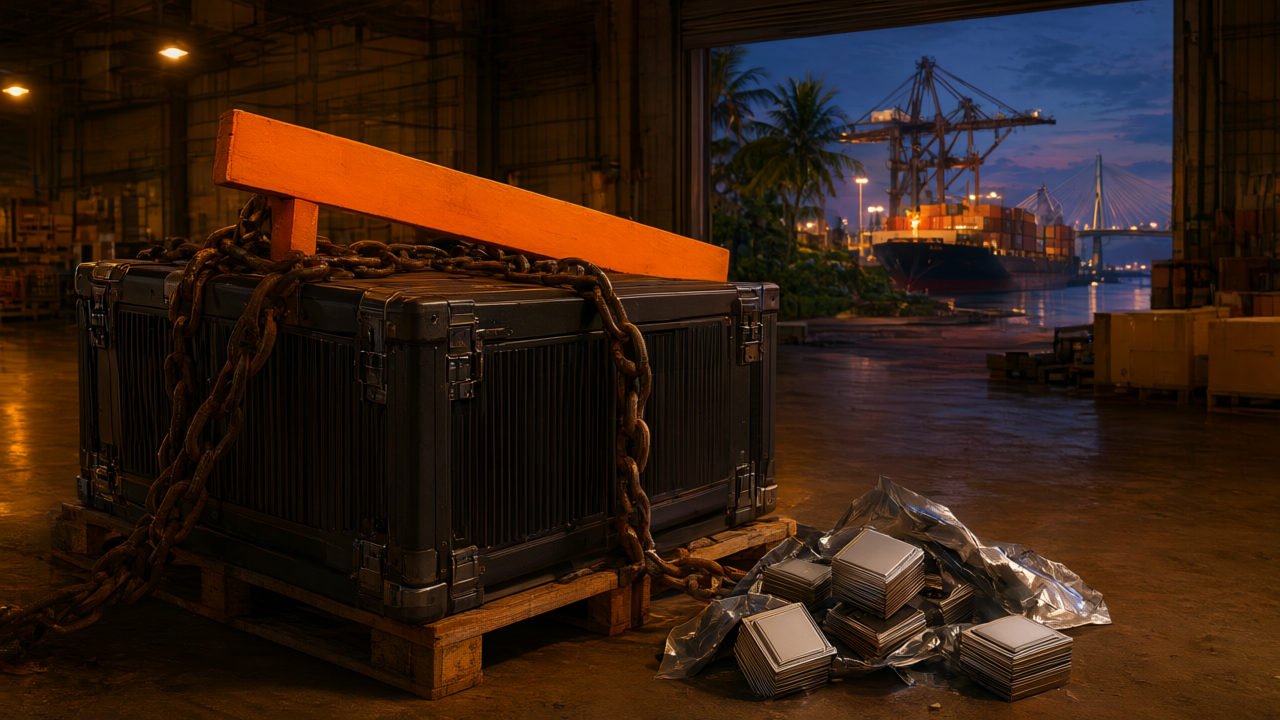
The past week in semiconductors was defined by friction rather than breakthroughs. Reports surfaced of HBM (high-bandwidth memory) smuggling routes into China, Nvidia H200 units were held up in Hong Kong, and Micron paused fab work in Taiwan — while Samsung expanded HBM base-die capacity and South Korea increased state spending on AI and chips. Two deals told opposite stories: Oracle's AI chip arrangement with Tencent collapsed, and Bosch kept building out its semiconductor business. For Malaysia, the week carries a double message: the global scramble for AI hardware keeps pulling investment toward this region, but the enforcement net around US export controls is tightening around the exact logistics corridors — packaging, testing, transshipment — where Malaysian companies earn their living.
AI Summary
The past week in semiconductors was defined by friction rather than breakthroughs. Reports surfaced of HBM (high-bandwidth memory) smuggling routes into China, Nvidia H200 units were held up in Hong Kong, and Micron paused fab work in Taiwan — while Samsung expanded HBM base-die capacity and South Korea increased state spending on AI and chips. Two deals told opposite stories: Oracle's AI chip arrangement with Tencent collapsed, and Bosch kept building out its semiconductor business. For Malaysia, the week carries a double message: the global scramble for AI hardware keeps pulling investment toward this region, but the enforcement net around US export controls is tightening around the exact logistics corridors — packaging, testing, transshipment — where Malaysian companies earn their living.
Key Takeaways
- Export controls have moved from policy documents to enforcement action: smuggling routes and held shipments show controls now bite at the freight-forwarding and customs level, not just at the licence application stage.
- Memory supply signals point in opposite directions — Micron pausing Taiwan fab work while Samsung expands HBM base-die capacity suggests supply is concentrating into fewer, bigger hands.
- The Oracle-Tencent deal collapse is a warning that large AI infrastructure deals can still die late in negotiation; AI capital spending is being re-priced in real time.
- South Korea's boosted AI and chip spending raises the subsidy bar that Malaysia's National Semiconductor Strategy has to compete against for the same pool of advanced packaging investment.
- Consolidation continues across the AI supply chain — Marvell-Lumentum under scrutiny, Bosch expanding, plus further acquisitions — which shifts bargaining power toward whoever owns manufacturing capacity.
What Happened
Semiconductor Engineering's weekly review captured a week where geopolitics and supply chains collided at several points. HBM — the stacked memory that sits beside processors in AI accelerators and determines how fast models actually run — is reportedly moving into China through smuggling routes. At the same time, Nvidia H200 GPUs were held in Hong Kong. The review lists both items together, and the pairing matters: one story is about chips getting in illegally, the other about chips being stopped in transit. Enforcement, in other words, is now happening at the logistics layer.
On the capacity side, Micron paused fab work in Taiwan, while Samsung expanded its HBM base-die capacity — the base die being the logic chip at the bottom of every HBM stack that ties the memory layers together. The reasons behind the Micron pause are not detailed in the reporting, but the pattern reads as capex discipline from one memory maker and aggressive expansion from another chasing the AI memory market. South Korea's government also increased state spending on AI and chips, adding public money to a market where Samsung is fighting SK Hynix and Micron for HBM relevance.
The deal news split two ways. Oracle and Tencent's AI chip arrangement collapsed, showing that even large cloud and infrastructure players cannot lock in AI hardware supply. Meanwhile Bosch continued building out its semiconductor business, and Marvell's deal with Lumentum — a maker of optical components used in data centre interconnects — drew regulatory scrutiny. The week also brought further acquisitions, market reports, and earnings across the industry, continuing a clear consolidation trend in AI-related hardware.
Why It Matters
The enforcement stories are the most consequential. For two years, US export controls on advanced AI chips and memory existed mostly on paper for many observers — licences, entity lists, restrictions. Smuggling routes and shipments held in Hong Kong change that picture. When controls get enforced at customs and freight level, every intermediate stop in the supply chain becomes a checkpoint. That raises compliance costs for everyone operating legally, and it creates a grey market with real pricing distortions for everyone else.
The memory items matter because HBM is the bottleneck of the AI hardware stack. GPUs get the headlines, but without HBM beside them, an accelerator cannot feed data to its compute fast enough to matter. Samsung expanding base-die capacity is a bet that HBM demand stays strong; Micron pausing fab work is a signal that at least one major player sees reason for caution on spending. If capacity gets built by fewer companies, buyers — cloud providers, server integrators, and eventually enterprises renting compute — face a more concentrated, less negotiable supply base.
The deal news matters because it tests the assumption behind the entire AI investment cycle: that demand for AI compute is so certain that infrastructure deals are safe bets. A collapsed Oracle-Tencent arrangement shows geopolitics and economics can still kill deals involving the biggest players. Add Korea's fresh government spending and the scrutiny of the Marvell-Lumentum consolidation, and the week describes an industry where the winners are states and companies with deep pockets, protected supply, and regulatory patience.
What This Means for Malaysia
Malaysia sits in the middle of this contest, and mostly by geography. Penang and Kulim host one of the world's densest clusters of back-end semiconductor work — packaging, assembly, and test. The companies named this week already have skin in this country: Micron runs assembly and
Sources & References
AIBlog summarises and analyses published information. We do not reproduce full source text. Analysis is editorial and not financial or legal advice.