Biotech Talent and Clean Steel: Two Signals Malaysian Firms Should Not Miss
MIT Technology Review's latest daily digest points at where deep tech money and talent are heading next — and both directions reach Malaysia.
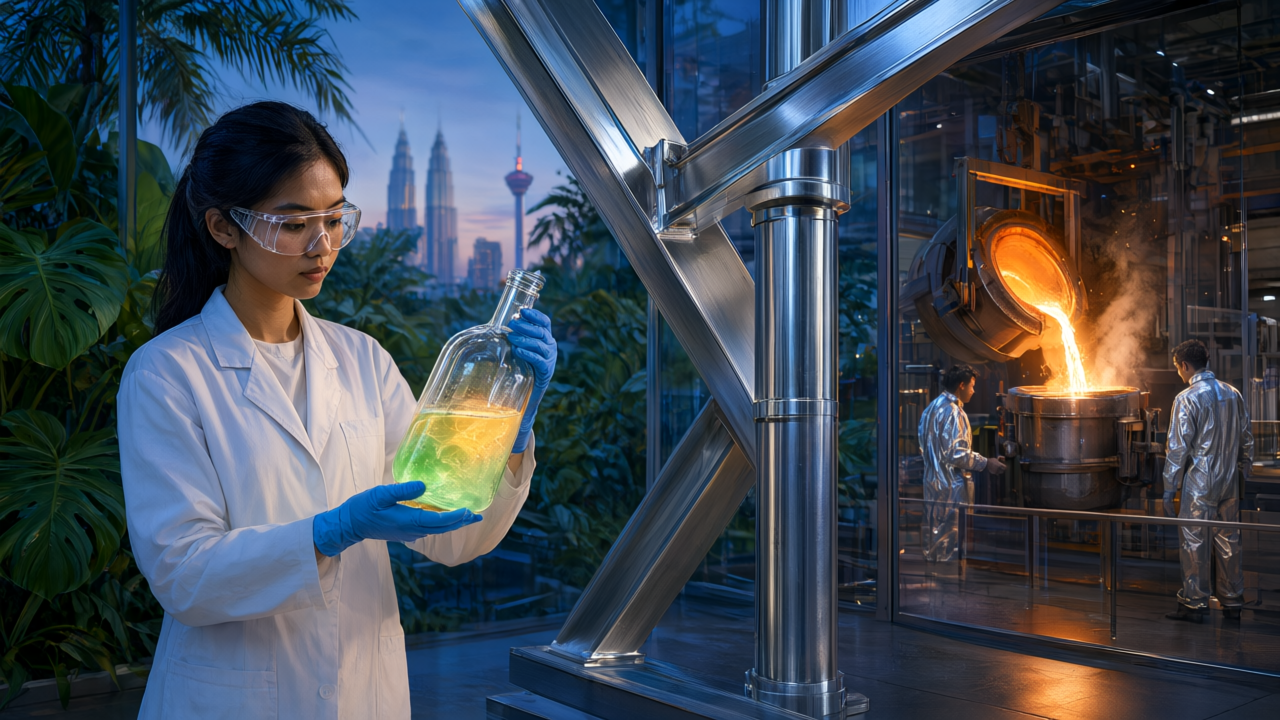
MIT Technology Review's weekday newsletter, The Download, published on 11 September 2026, spotlights two stories: its annual 35 Innovators Under 35 list, which this edition frames around young people shaping the future of biotech, and a feature on cheaper, cleaner steel. Neither story is about software, yet both are being driven by the same force behind most AI news today — computation applied to physical problems. For Malaysian businesses, the practical read is this: industrial decarbonisation is becoming an economics question rather than a CSR question, and biology is becoming an information industry. Both shifts reward companies that can pair AI automation with domain expertise, and both carry compliance and talent implications that land in Malaysia through carbon pricing, export rules, and the local biotech workforce.
AI Summary
MIT Technology Review's weekday newsletter, The Download, published on 11 September 2026, spotlights two stories: its annual 35 Innovators Under 35 list, which this edition frames around young people shaping the future of biotech, and a feature on cheaper, cleaner steel. Neither story is about software, yet both are being driven by the same force behind most AI news today — computation applied to physical problems. For Malaysian businesses, the practical read is this: industrial decarbonisation is becoming an economics question rather than a CSR question, and biology is becoming an information industry. Both shifts reward companies that can pair AI automation with domain expertise, and both carry compliance and talent implications that land in Malaysia through carbon pricing, export rules, and the local biotech workforce.
Key Takeaways
- MIT Technology Review's editorial curation is itself a signal: when the world's most-cited deep tech publication pairs biotech talent with clean steel, it is telling you where the next decade of industrial value is expected to concentrate.
- Biotech has effectively become a computational discipline — the young innovators being celebrated are working at the intersection of biology and computing, which is exactly where Malaysian BioNexus-status companies and research universities need to position their hiring.
- "Cheaper" matters as much as "cleaner" in the steel story — green steel only displaces coal-fired production when the economics cross over, and cost crossover is what changes procurement decisions in construction and manufacturing.
- Malaysian steel and steel-using exporters face converging carbon pressure: the EU's Carbon Border Adjustment Mechanism (CBAM) moving into its definitive phase and Malaysia's own carbon pricing plans for the iron and steel sector mean carbon accounting stops being optional.
- Agentic AI — autonomous systems that plan and execute multi-step work — is the cheapest bridge between these global trends and a Malaysian SME's daily operations, especially for carbon reporting and R&D support.
What Happened
On 11 September 2026, MIT Technology Review published its daily newsletter, The Download, covering two feature stories. The first is the publication's annual 35 Innovators Under 35 list, presented under the theme of the under-35s shaping the future of biotech. The list, which MIT Technology Review compiles every year, recognises young researchers and founders whose work is expected to influence the direction of technology over the coming decades.
The second story in the newsletter addresses cheaper, cleaner steel — the effort to produce one of the world's most fundamental industrial materials at lower cost and lower carbon emissions than conventional coal-dependent methods allow. Steel is responsible for a large share of global industrial emissions, which is why it appears regularly in climate and technology coverage as a hard-to-abate sector.
That is the factual core of the source material: a curated newsletter pointing reader attention at young biotech talent and low-carbon steelmaking. The rest of this article is analysis — what these two editorial choices mean, and how they connect to Malaysia. Treat it accordingly.
Why It Matters
Start with the curation itself. MIT Technology Review does not choose its lead stories at random. When its editors put biotech's next generation and clean steel side by side, they are mapping two bets: that biology will be engineered the way we engineer software, and that heavy industry will be rebuilt around low-carbon processes. These are the two arenas where AI is moving from chatbots and marketing copy into atoms — drugs, proteins, molten metal. That transition from bits to atoms is arguably the most important trend in AI right now, because it changes capital expenditure, supply chains, and jobs rather than just productivity software.
Second, the pairing highlights that talent and technology now move together. A list of under-35 innovators is a talent-market signal. If the celebrated young minds are concentrated in biotech, that is where ambitious graduates, venture funding, and corporate research budgets will follow over the next five to ten years. For any country or company planning a workforce strategy, ignoring where the under-35 cohort is working is like ignoring where the water is flowing in a river system.
Third, the economics framing of the steel story deserves attention. "Cleaner" steel has existed as a concept for years; the constraint has always been cost. The newsletter's framing around "cheaper" suggests the conversation has shifted from whether green steel is possible to whether it is competitive. That is a different conversation entirely. When a low-carbon option becomes cost-competitive, adoption stops depending on regulation or corporate virtue and starts depending on procurement officers doing their jobs. Malaysian businesses that buy steel — construction firms, fabrication workshops, automotive parts makers — should understand that this shift, once it fully arrives, will show up in their supplier quotes before it shows up in any policy document.
What This Means for Malaysia
The steel angle has direct regulatory weight here. The EU's Carbon Border Adjustment Mechanism has been phasing in and shifts to its definitive regime in 2026, with steel among the covered goods, meaning Malaysian exporters of steel-containing products to Europe will need credible emissions data embedded in their supply chains. Domestically, Malaysia has signalled carbon pricing for the iron and steel sector, aligned with Budget 2026 announcements. Put plainly: Malaysian steel mills, fabricators, and exporters now face carbon accounting demands from both directions — foreign buyers and local policy. A story about cheaper clean steel is not distant international news; it is a preview of the procurement and compliance environment your company will operate in.
The biotech angle connects to Malaysia's existing national bets. The country has spent two decades building a bioeconomy — Bioeconomy Corporation, BioNexus company status, biotechnology research at local universities, and a medical device and physics manufacturing base in Penang and the Klang Valley. The global shift of biotech toward computational and AI-driven methods changes what "biotech talent" means: the valuable hire is increasingly someone who can code as well as they can culture cells. This is both a threat and an opening. The threat is brain drain — young Malaysians with exactly this hybrid profile are on every country's recruitment list, as the under-35 framing of the MIT Technology Review feature underscores. The opening is that Malaysia's cost base and English-language technical education make it a plausible location for AI-in-biology work, from clinical data analysis to biomanufacturing process optimisation.
There is also a manufacturing-corridor story. Penang's electronics and semiconductor cluster, plus the broader northern and central manufacturing belts, gives Malaysia companies that already understand process control and automation. The skills that run a cleanroom are adjacent to the skills that run AI-driven materials and bioprocess experiments. Retraining pipelines here are cheaper than building new industries from scratch.
How Your Business Can Use This
If you are a manufacturer or exporter, start with carbon visibility this quarter. Map which of your products contain steel or other CBAM-covered materials, identify which customers are in regulated markets, and get a baseline measurement of your supply chain emissions. You cannot negotiate or improve what you have not measured. Engage your steel suppliers on the emissions intensity of what they sell you — the ones who can answer credibly today will be the ones still supplying European customers in three years.
If you operate in life sciences, health, or agritech, audit your team's computational capability. A practical step: pick one workflow — literature review for R&D, clinical trial document drafting, quality-control data analysis — and run a pilot with AI assistance for eight weeks, measuring hours saved and error rates. Malaysian companies with BioNexus status should also watch global innovator lists like the 35 Under 35 as a scouting tool: the research directions named there indicate where partnership, licensing, and hiring opportunities will emerge.
If you are a services firm — consulting, logistics, accounting — recognise that carbon reporting and biotech compliance are about to become billable services. Firms that build CBAM-ready data practices now will win the client work when enforcement tightens.
The Ag
Sources & References
AIBlog summarises and analyses published information. We do not reproduce full source text. Analysis is editorial and not financial or legal advice.