Asimov's Three Laws Were Fiction — Real AI Safety Needs Real Governance
The Robot Report argues the famous sci-fi rules can't protect us from modern robotics and AI. Malaysian firms deploying automation should take note.
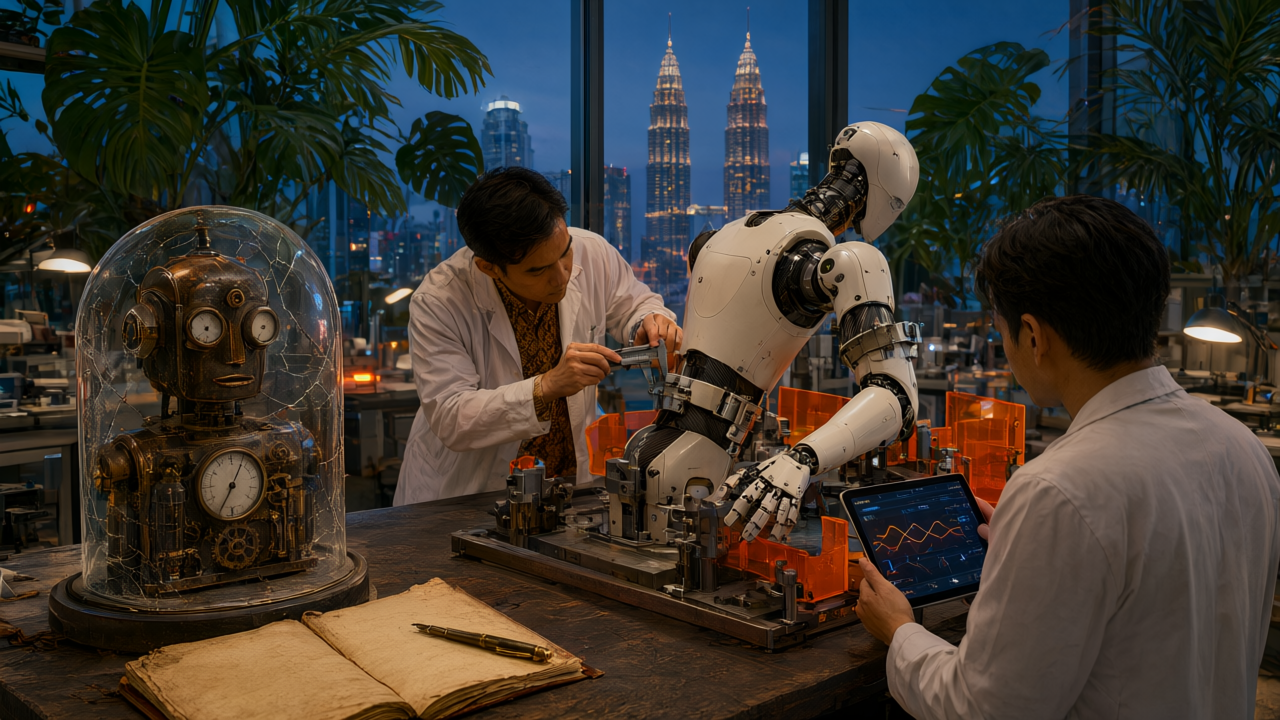
The Robot Report has published an argument that Isaac Asimov's famous Three Laws of Robotics — the fictional safety rules invented for his 1940s short stories — are not enough to keep real-world robotics and AI safe. The publication notes that tech observers today are raising concerns about AI that echo the same questions Asimov explored: what happens when machines act with autonomy we can't fully predict? The practical lesson for Malaysian businesses is that AI safety does not come from a clever rule or a vendor's assurance. It comes from engineering discipline — permission structures, approval gates, audit logs, and human oversight — which every company deploying automation or agentic AI must now build itself.
AI Summary
The Robot Report has published an argument that Isaac Asimov's famous Three Laws of Robotics — the fictional safety rules invented for his 1940s short stories — are not enough to keep real-world robotics and AI safe. The publication notes that tech observers today are raising concerns about AI that echo the same questions Asimov explored: what happens when machines act with autonomy we can't fully predict? The practical lesson for Malaysian businesses is that AI safety does not come from a clever rule or a vendor's assurance. It comes from engineering discipline — permission structures, approval gates, audit logs, and human oversight — which every company deploying automation or agentic AI must now build itself.
Key Takeaways
- Asimov's Three Laws were written to fail. His stories were built almost entirely around the loopholes and dilemmas the laws created — which is precisely why they cannot function as real safety rules.
- "Harm" in 2025 goes far beyond physical injury. For businesses, the likely harms from AI are financial loss, data exposure, wrong decisions in hiring or lending, and reputational damage from autonomous actions.
- The laws assume one robot, one owner, one clear order. Modern agentic AI has many users, many connected tools, and chains of delegated actions — the model simply does not map.
- Malaysia has no robot-specific statute for most businesses to fall back on. PDPA governs personal data, and national AI governance guidance is advisory, so internal governance fills the gap.
- Real AI safety is boring and buildable: permission tiers, approval gates for irreversible actions, audit logs, rollback capability, and a tested kill switch.
What Happened
The Robot Report, a long-running robotics industry publication, ran a piece arguing that Asimov's Three Laws of Robotics are not enough to keep robotics and AI safe, and that technology observers today are raising similar concerns about AI systems now entering daily use.
For readers who missed the reference: Isaac Asimov, the science fiction writer, formulated the Three Laws in the 1940s as a built-in safety feature for his fictional robots. First, a robot may not injure a human being or, through inaction, allow a human being to come to harm. Second, a robot must obey the orders given to it by humans, except where those orders conflict with the First Law. Third, a robot must protect its own existence, as long as that protection does not conflict with the first two laws. In the stories, these laws are hardwired into every robot's brain
Sources & References
AIBlog summarises and analyses published information. We do not reproduce full source text. Analysis is editorial and not financial or legal advice.