U.S. Navy's Choice of Blue Water Autonomy Signals Shift in Maritime Robotics
Months-long uncrewed ocean surveys will change how navies, energy companies, and logistics firms map the sea.
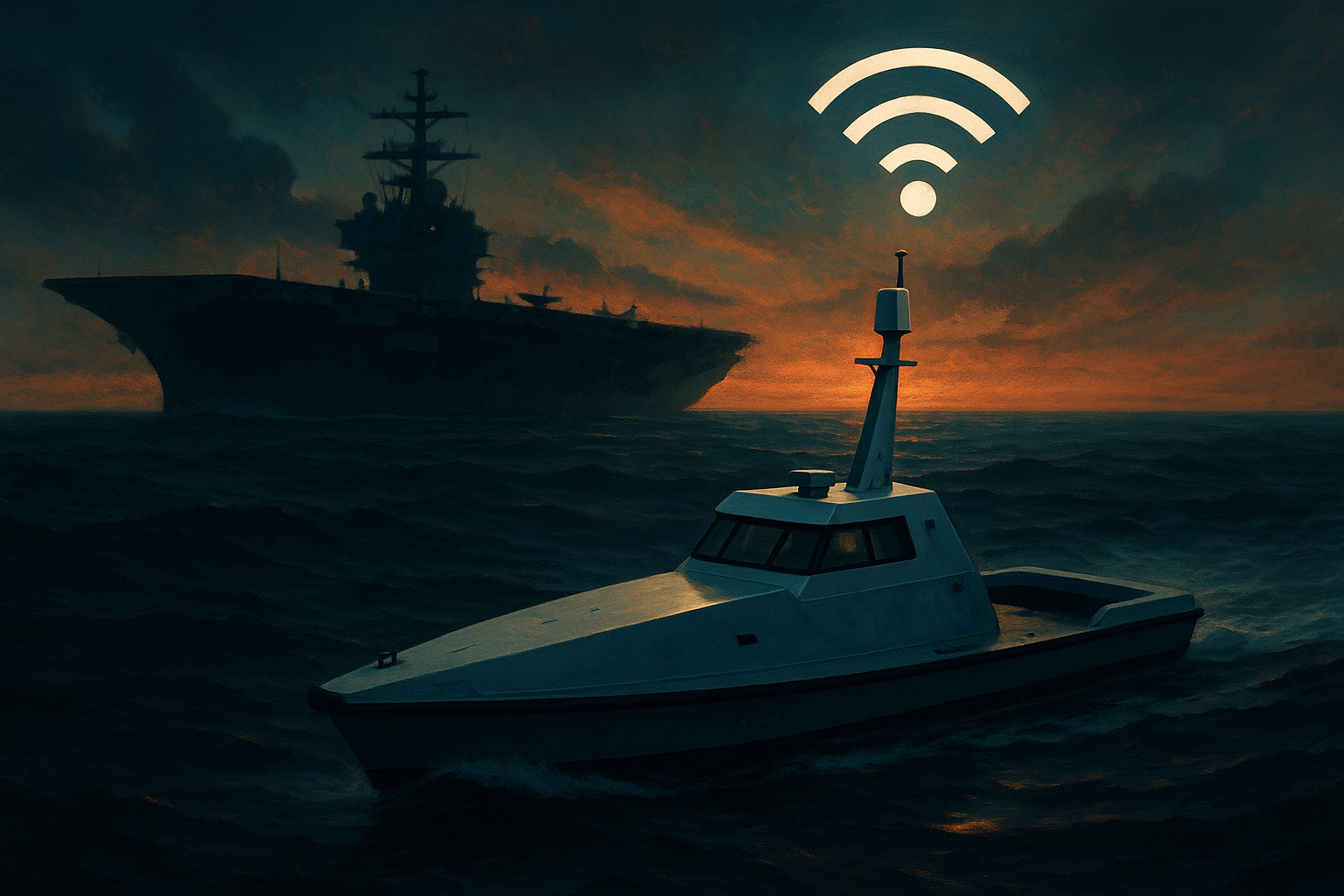
The U.S. Navy has selected Blue Water Autonomy to deploy unmanned vessels for deep ocean surveys. These ships are designed to operate autonomously on the open ocean for months at a time without human crews. This move signals a shift from remotely monitored drones to fully independent, agent-driven marine robotics. For Malaysian businesses, this technology heralds a new era of cheaper, persistent offshore data collection for industries ranging from oil and gas to maritime logistics and border protection.
AI Summary
The U.S. Navy has selected Blue Water Autonomy to deploy unmanned vessels for deep ocean surveys. These ships are designed to operate autonomously on the open ocean for months at a time without human crews. This move signals a shift from remotely monitored drones to fully independent, agent-driven marine robotics. For Malaysian businesses, this technology heralds a new era of cheaper, persistent offshore data collection for industries ranging from oil and gas to maritime logistics and border protection.
Key Takeaways
- The U.S. Navy is actively moving toward fully uncrewed surface vessels for long-duration maritime missions.
- Blue Water Autonomy’s ships can navigate the open ocean independently for months, eliminating the need for onboard human crews.
- Deep ocean surveys—essential for mapping the seafloor and laying submarine cables—will become significantly cheaper and safer to conduct.
- Malaysia’s heavy reliance on maritime trade and offshore resources makes this specific robotic technology highly relevant to local enterprises.
- The transition from remotely operated vehicles to true autonomous agents represents the next major evolution in marine engineering and AI governance.
What Happened
The United States Navy has officially chosen Blue Water Autonomy to provide autonomous vessels for conducting deep ocean surveys. According to recent reports, this contract marks a significant step in how modern navies approach oceanographic data collection. Blue Water Autonomy builds unmanned ships specifically designed to operate on the open ocean for months at a time.
Deep ocean surveys are highly complex operations. They involve mapping the ocean floor, measuring water salinity and temperature, and identifying potential underwater hazards. Historically, militaries and research institutions have relied on large, heavily crewed ships to perform these tasks. Maintaining a human crew on a vessel for months requires massive amounts of food, fuel, and rest facilities. It also exposes human personnel to the physical dangers of severe ocean storms and equipment failures.
By contracting Blue Water Autonomy, the Navy is replacing the traditional crewed survey ship with an unmanned alternative. The vessel will be tasked with navigating harsh oceanic conditions, collecting high volumes of sonar and environmental data, and returning to port—all without a single sailor on board. The technology relies on advanced sensors and navigation software to avoid collisions and maintain course over thousands of nautical miles.
Why It Matters
This development matters because it proves that autonomous marine technology has matured past the experimental phase. A naval contract is one of the most demanding operational tests any technology can pass. The open ocean is an unpredictable, hostile environment. Wind, waves, saltwater corrosion, and unexpected obstacles like shipping containers or marine wildlife make autonomous navigation extremely difficult. If Blue Water Autonomy’s vessels can successfully execute months-long surveys for the U.S. Navy, the underlying technology is robust enough for commercial use.
The economic implications for the maritime sector are substantial. Manned survey vessels cost tens of thousands of dollars per day to operate, largely due to fuel and crew expenses. Unmanned vessels drastically reduce these overheads. Because they do not need to accommodate humans, these ships can be built smaller, carry more fuel or sensor payload, and stay at sea indefinitely.
This shifts the business model for ocean data. Instead of sending a ship out for a specific, time-limited mission, companies can deploy a fleet of autonomous vessels to continuously monitor specific stretches of ocean. The data gathered from these persistent surveys will accelerate the laying of submarine telecommunications cables, improve climate modelling, and help energy companies map new offshore oil and gas reserves or wind farm sites.
What This Means for Malaysia
Malaysia is fundamentally a maritime nation. The Strait of Malacca is one of the busiest and most economically vital shipping lanes in the world, handling a massive percentage of global trade. Further east, the South China Sea holds deep economic interest for Malaysia, particularly regarding offshore oil and gas extraction in Sabah and Sarawak. The deployment of autonomous vessels by advanced navies directly impacts how Malaysia must manage and secure its own waters.
For local industries, the commercialisation of this technology by companies like Blue Water Autonomy means cheaper access to critical maritime data. Petronas and its various subcontractors spend considerable capital surveying offshore blocks. Uncrewed surface vessels can map the seafloor, monitor the structural integrity of underwater pipelines, and assess anchorages at a fraction of the current cost. This allows energy companies to direct their capital toward actual extraction and production rather than basic operational logistics.
There is also a regulatory and security dimension. The Malaysian Maritime Enforcement Agency (MMEA) and the Royal Malaysian Navy must adapt to a reality where uncrewed drones—both surface and subsurface—operate freely in regional waters. As regional powers deploy these vessels for surveys and intelligence gathering, Malaysia will need updated policies under the national PDPA and maritime laws to govern how foreign autonomous ships collect data in the country's Exclusive Economic Zone. Developing local expertise in robotics Malaysia ecosystems will be critical to ensuring the country is not just a passive observer in this automated maritime future.
How Your Business Can Use This
While a Malaysian SME is unlikely to buy a military-grade autonomous vessel tomorrow, the underlying business model of "robotics-as-a-service" is becoming the industry standard. Businesses in logistics, offshore energy, and supply chain management should prepare to integrate autonomous maritime data into their operations over the next few years.
If you operate in the maritime sector, start by auditing your data supply chain. Identify areas where your business pays high premiums for human-driven inspections, underwater mapping, or environmental monitoring. Over the next twelve to eighteen months, begin requesting proposals from commercial uncrewed surface vessel (USV) providers. Many startups now offer survey services on
Sources & References
AIBlog summarises and analyses published information. We do not reproduce full source text. Analysis is editorial and not financial or legal advice.