Ultrasound Touch Sensors Could Give Robot Hands a Lasting Sense of Feel
UltraSense says ultrasound-based tactile sensing sidesteps the wear problem that has held back robotic touch — a signal worth reading for Malaysian manufacturers.
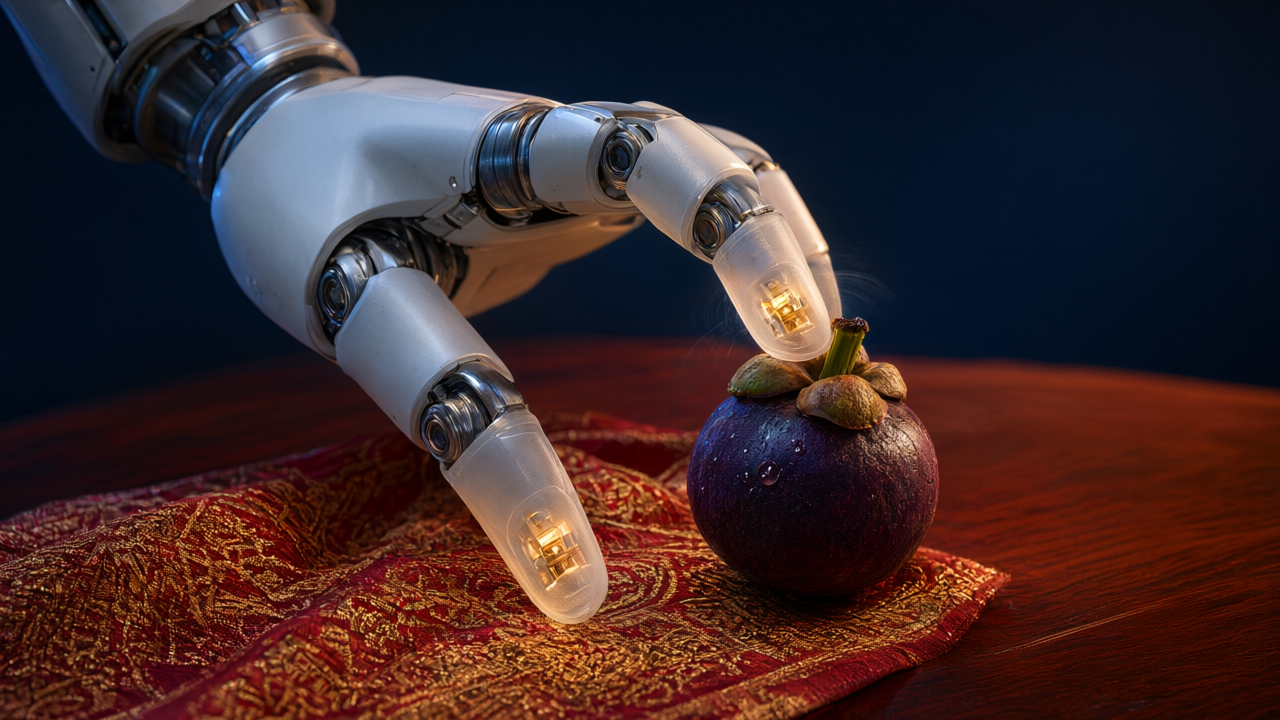
UltraSense, a sensor company, argues that ultrasound technology can give robotic hands a genuine sense of touch while avoiding the wear and tear that degrades conventional tactile sensors. The claim, reported by The Robot Report, targets one of the hardest problems in physical AI: robots can see, but they cannot feel. If durable tactile sensing works at industrial scale, it opens the door to robots that handle delicate, variable, and soft items — exactly the tasks that resist automation today. For Malaysian manufacturers in the Penang–Kulim electronics corridor and other labour-intensive sectors, this is not a product to buy this quarter. It is a development to track, and a reason to update how you evaluate automation vendors.
AI Summary
UltraSense, a sensor company, argues that ultrasound technology can give robotic hands a genuine sense of touch while avoiding the wear and tear that degrades conventional tactile sensors. The claim, reported by The Robot Report, targets one of the hardest problems in physical AI: robots can see, but they cannot feel. If durable tactile sensing works at industrial scale, it opens the door to robots that handle delicate, variable, and soft items — exactly the tasks that resist automation today. For Malaysian manufacturers in the Penang–Kulim electronics corridor and other labour-intensive sectors, this is not a product to buy this quarter. It is a development to track, and a reason to update how you evaluate automation vendors.
Key Takeaways
- The core claim is durability, not just sensitivity: ultrasound can provide tactile perception for robotic hands while avoiding the wear that plagues contact-based touch sensors, according to UltraSense.
- Touch is the missing sense in robotics. Most industrial robots rely on vision and pre-programmed positioning; they have no feedback on grip force, slippage, or texture.
- Durability is what makes tactile sensing scalable. A touch sensor that survives months of continuous contact changes the maintenance economics enough to move robots from pilot projects to fleet deployments.
- Malaysian industries with delicate-handling work — electronics assembly, medical devices, gloves, food processing — are the natural beneficiaries when this technology matures.
- This is a single-source vendor claim with no independent benchmarks, pricing, or availability details. Treat it as a directional signal, not a procurement decision.
What Happened
The Robot Report, a robotics industry publication, reported on UltraSense's argument that ultrasound sensing offers a scalable path to tactile intelligence for physical AI. The company's central claim: ultrasound can provide tactile perception for robotic hands while avoiding wear and tear.
The technology behind the claim works on a principle most people already know from medicine. A doctor's ultrasound machine sends high-frequency sound waves into the body and reads the echoes to build an image of what is inside. Applied to robotic touch, the same idea lets a sensor detect contact, pressure, and surface detail by reading how ultrasonic pulses bounce back when something touches the gripper.
Why does this avoid wear? Here is the engineering logic — and note this is my explanation of the approach, not a product specification from the source. Conventional tactile sensors typically depend on a soft, exposed surface that deforms when objects press against it. That soft surface is also the part that grinds down under thousands of contact cycles on a production line. Ultrasound, by contrast, can read through material. The sensing electronics can sit behind a harder, protective surface and still detect what is touching it. The part that takes the abuse is not the part doing the delicate sensing.
The phrase "physical AI" in the story matters too. It refers to artificial intelligence embodied in machines that act in the real world — robots that must perceive, decide, and physically manipulate their environment rather than just generate text or images. Touch is a core input for that kind of intelligence, and it is the input today's robots most obviously lack.
Why It Matters
Think about what a human hand does when you pick up an egg. Your eyes locate it, but your fingertips do the real work — sensing pressure, detecting the first hint
Sources & References
AIBlog summarises and analyses published information. We do not reproduce full source text. Analysis is editorial and not financial or legal advice.