Tacta Systems Targets High-Skill Manufacturing with Teachable TactaBot
A new three-part robotic hand system shifts how factories approach complex, dexterous assembly tasks.
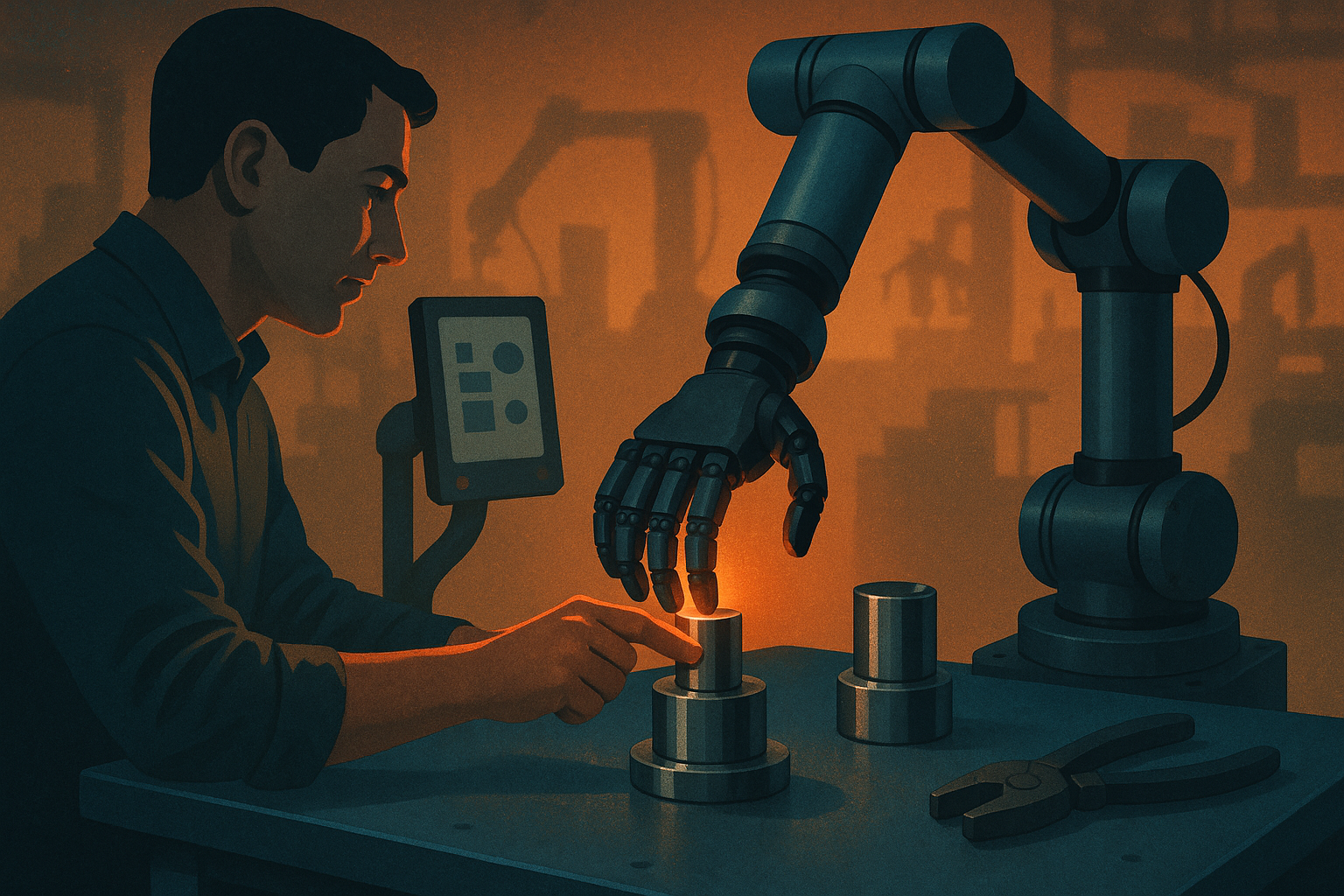
Tacta Systems has introduced TactaBot, a new robotic platform designed to perform high-skilled manufacturing work. The technology centers on a three-part system built around an advanced robotic hand capable of human-like dexterity. Instead of requiring complex code to program the robot, users physically teach the system new skills. For Malaysian businesses, this signals a shift in industrial automation from rigid, single-task machines to adaptable systems capable of handling delicate assembly. Operations leads in the Malaysian electronics and manufacturing sectors should monitor this technology as a practical way to automate tasks that currently rely heavily on human fine motor skills.
AI Summary
Tacta Systems has introduced TactaBot, a new robotic platform designed to perform high-skilled manufacturing work. The technology centers on a three-part system built around an advanced robotic hand capable of human-like dexterity. Instead of requiring complex code to program the robot, users physically teach the system new skills. For Malaysian businesses, this signals a shift in industrial automation from rigid, single-task machines to adaptable systems capable of handling delicate assembly. Operations leads in the Malaysian electronics and manufacturing sectors should monitor this technology as a practical way to automate tasks that currently rely heavily on human fine motor skills.
Key Takeaways
- Tacta Systems has launched TactaBot, a system specifically targeting high-skilled manufacturing roles that traditional automated arms struggle with.
- The technology relies on a three-part architecture built around a dexterous robotic hand.
- Users program the robot by teaching it new skills physically, rather than writing software code, lowering the technical barrier to deployment.
- Malaysian electronics, medical device, and precision manufacturing sectors stand to benefit greatly from adaptable assembly automation.
- This launch highlights a broader industry trend toward combining physical robotics with teachable, AI-driven control systems.
What Happened
Tacta Systems recently unveiled a new robotic platform called TactaBot, aiming squarely at high-skilled manufacturing environments. According to reports from The Robot Report, the company has developed a comprehensive three-part system to tackle tasks that require a high degree of physical precision. The core of this hardware is a robotic hand engineered
Sources & References
AIBlog summarises and analyses published information. We do not reproduce full source text. Analysis is editorial and not financial or legal advice.