STT GDC's US$1.37 Billion Green Loan Signals Johor's Arrival as Southeast Asia's AI Compute Hub
The 166MW Johor campus adds serious horsepower to Malaysia's data centre ambitions — and reshapes how local businesses should plan their AI infrastructure strategy.
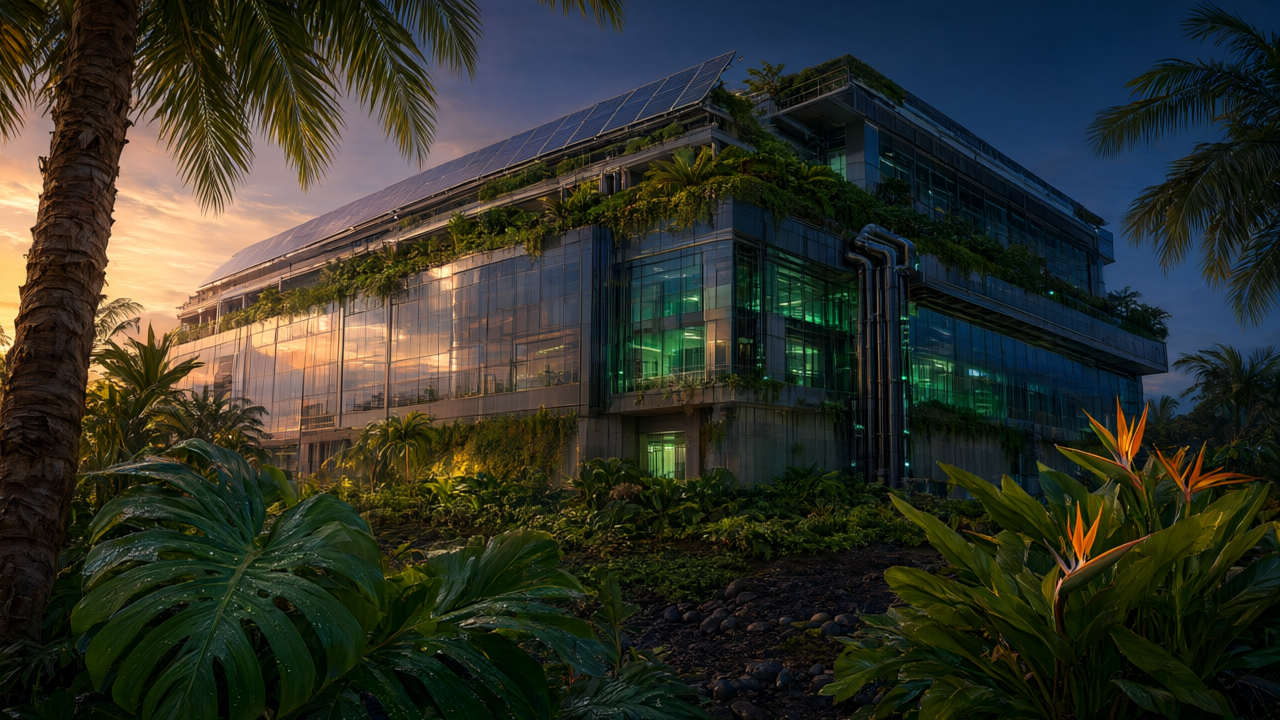
ST Telemedia Global Data Centres (STT GDC) has secured up to US$1.37 billion (RM5.6 billion) in green financing for Phase 1 of its STT Johor campus, a 166-megawatt facility that ranks among the largest data centre projects in Malaysia. The consortium-led financing ties the development to sustainability standards, meaning the campus must meet specific environmental criteria to draw on the funds. The investment reinforces Johor's growing position as a regional digital infrastructure hub and directly supports the Johor-Singapore Special Economic Zone (JS-SEZ). For Malaysian businesses, this means more local AI compute capacity is coming online — reducing latency, lowering costs, and enabling heavier AI workloads without routing data through Singapore or Hong Kong.
AI Summary
ST Telemedia Global Data Centres (STT GDC) has secured up to US$1.37 billion (RM5.6 billion) in green financing for Phase 1 of its STT Johor campus, a 166-megawatt facility that ranks among the largest data centre projects in Malaysia. The consortium-led financing ties the development to sustainability standards, meaning the campus must meet specific environmental criteria to draw on the funds. The investment reinforces Johor's growing position as a regional digital infrastructure hub and directly supports the Johor-Singapore Special Economic Zone (JS-SEZ). For Malaysian businesses, this means more local AI compute capacity is coming online — reducing latency, lowering costs, and enabling heavier AI workloads without routing data through Singapore or Hong Kong.
Key Takeaways
- 166MW is substantial capacity. For context, a single megawatt can power roughly 200 to 250 standard server racks. At 166MW, this campus can host thousands of racks serving cloud providers, AI training workloads, and enterprise customers across the region.
- Green financing means accountability. This is not a generic loan. The "green" label means the facility must meet environmental performance benchmarks — energy efficiency, renewable energy use, water stewardship — to access the full US$1.37 billion. That forces real sustainability practices, not just marketing claims.
- Johor is being positioned as the AI infrastructure backbone for the JS-SEZ. The Johor-Singapore Special Economic Zone depends on digital infrastructure to function. Data centres like this are the physical foundation.
- This is Phase 1 funding. The US$1.37 billion covers initial development. Full campus build-out could require significantly more capital, suggesting STT GDC sees long-term demand in Johor.
- Malaysia is absorbing data centre investment that Singapore turned away. Singapore's moratorium on new data centre construction (2019–2022) pushed providers north. Johor's land, power availability, and proximity to Singapore made it the natural beneficiary.
What Happened
STT GDC — described as one of the world's fastest-growing data centre providers — has locked in a green financing facility of up to US$1.37 billion (RM5.6 billion) to fund Phase 1 of its STT Johor campus. The financing was arranged through a consortium of lenders, though the specific banks involved were not detailed in the source material.
The campus will deliver 166 megawatts of IT capacity. To put that number in perspective: Malaysia's total data centre capacity was estimated at roughly 500MW in recent years, though it is growing fast. A single 166MW campus represents a meaningful chunk of national capacity concentrated in one location.
The financing structure matters as much as the amount. Green financing facilities require the borrower to meet specific environmental and sustainability criteria. These typically include energy efficiency metrics (like Power Usage Effectiveness, or PUE — a ratio measuring how much energy is used by the computing equipment versus cooling and overhead), renewable energy sourcing, water conservation, and green building certifications. If STT GDC fails to meet these benchmarks, the terms of the loan — or the ability to draw further tranches — could be affected.
The development is geographically significant. Johor has been accumulating data centre investment from multiple providers over the past several years, driven by its proximity to Singapore, available land, and access to power and submarine cable landing stations. STT GDC's campus adds to a cluster that already includes investments from other major operators, positioning Johor as a genuine regional hub rather than a single-project location.
The project is also explicitly linked to the JS-SEZ framework. The Johor-Singapore Special Economic Zone is a bilateral initiative designed to strengthen economic cooperation between the two countries, covering areas like digital connectivity, cross-border data flows, and shared infrastructure.
Why It Matters
This financing announcement tells us three things about where AI infrastructure is heading in Southeast Asia.
First, the money is real and the scale is large. US$1.37 billion for Phase 1 alone signals that STT GDC's lenders have done their demand homework. Data centre developers do not secure billion-dollar green loans on speculation. They secure them when they have anchor tenants — typically hyperscale cloud providers like AWS, Microsoft Azure, Google Cloud, or large enterprise customers — signalling committed demand for the capacity. The fact that lenders are willing to fund this at scale suggests the AI compute demand in the region is concrete, not speculative.
Second, the green financing structure reflects a genuine shift in how data centres are funded. Traditional data centre financing did not carry environmental conditions. Green financing does. This means the Johor campus will likely need to source renewable energy, achieve low PUE ratios, and potentially install technologies like liquid cooling to meet efficiency targets. For Malaysia, this pushes the national grid and energy markets toward more renewable energy procurement — because a 166MW facility running on coal-fired power would undermine the green loan's purpose.
Third, Johor's cluster effect is compounding. When multiple data centre operators build in the same region, several things happen: submarine cable operators route more capacity to nearby landing stations, power infrastructure gets upgraded, a skilled operations workforce develops locally, and the ecosystem becomes self-reinforcing. This is what happened in Northern Virginia (the world's largest data centre market) and is now happening in Johor.
The broader signal is that AI infrastructure investment is flowing into Malaysia at a pace that will reshape the country's digital economy over the next three to five years. Each new data centre campus adds compute capacity that Malaysian businesses can access locally — without the latency, cost, or data sovereignty concerns of routing through foreign facilities.
What This Means for Malaysia
For Malaysian enterprises and SMEs, more local data centre capacity translates directly into better, cheaper, and faster AI services. When your cloud provider or AI vendor hosts compute in Johor rather than Singapore or Hong Kong, your applications experience lower latency (the time it takes for data to travel between your office and the server), you potentially face lower data transfer costs, and you have an easier time complying with Malaysian data protection requirements under the PDPA.
The JS-SEZ connection is critical here. The special economic zone is designed to facilitate cross-border business between Johor and Singapore. A 166MW data centre campus in Johor gives companies operating across both sides of the Causeway a local infrastructure base for digital services, AI workloads, and cloud applications. A logistics company running AI-powered route optimisation between Johor Port and Tuas can process that data locally. A financial services firm with operations in both countries can host models closer to where transactions happen.
For Malaysia's broader AI ambitions under the MyDIGITAL framework and the National AI Roadmap, physical infrastructure like the STT Johor campus is foundational. You cannot build a domestic AI ecosystem — training models, running inference, hosting agentic AI systems — without local compute. Every 100MW of capacity that comes online in Malaysia reduces the country's dependence on foreign cloud regions for AI workloads.
There is also a talent dimension. Operating a 166MW campus requires data centre engineers, cooling specialists, electrical technicians, cybersecurity staff, and operations managers. This creates high-value technical jobs in Johor, contributing to the state's economic development and giving local universities and technical institutions a clear employer pipeline.
For the semiconductor sector — concentrated heavily in Penang and Kulim — there is an indirect but meaningful link. Data centres are massive consumers of chips: server processors, AI accelerators (GPUs and TPUs), networking silicon, and memory. Malaysia's position as both a semiconductor manufacturing hub and a growing data centre market creates a domestic supply chain feedback loop that few other ASEAN countries can match.
How Your Business Can Use This
If you are a Malaysian business leader, this development should prompt three concrete actions this quarter.
Audit where your data lives. Check your current cloud and SaaS contracts. Where is your data physically hosted? If your provider routes everything through Singapore, Hong Kong, or further afield, ask them about Malaysia region availability. As capacity in Johor comes online, more providers will offer local hosting options. This matters for latency, cost, and PDPA compliance.
Plan for heavier AI workloads. Local compute capacity at this scale means the cost barrier to running AI — whether that is training custom models, running large language model inference, or deploying AI agents — will drop over the next 18 to 36 months. If you have been holding off on AI adoption because cloud compute costs seemed prohibitive, revisit that assumption. Map out which business processes would benefit from AI, and estimate the compute requirements.
Evaluate your sustainability reporting. Green financing on data centres means your cloud and AI providers will increasingly be able to report lower carbon footprints for workloads hosted in these facilities. If your company has ESG reporting obligations — or if your customers are asking about your sustainability practices — choosing providers that host in green-certified data centres becomes a tangible claim you can make.
For SMEs specifically: you will not negotiate directly with STT GDC. But the cloud providers and AI platforms you use (AWS, Microsoft, Google, Alibaba Cloud, local providers like TM One or Maxim Integrated) will increasingly host services in facilities like this. Your job is to ask your vendors the right questions: Do you have Malaysia-region availability? What is your data localisation policy? What are your sustainability metrics for Malaysian hosting?
The Agentic AI Angle
Agentic AI — autonomous systems that plan, reason, and execute multi-step tasks without human supervision at each step — demands significant compute. An AI agent that monitors your supply chain, places reorders, negotiates with suppliers, and adjusts pricing in real time is not a chatbot. It is a system that runs continuously, processes large volumes of data, and calls multiple AI models in sequence.
This is where local data centre capacity becomes a practical enabler rather than an abstract concept. An agentic AI system managing inventory for a retail chain with 50 stores across Malaysia needs to process sales data, supplier availability, logistics schedules, and market signals — fast. If the compute is in Johor, the latency between data sources (point-of-sale systems, warehouse management, supplier APIs) and the AI inference layer is measured in milliseconds. If the compute is in Tokyo or Sydney, that latency stretches, costs rise, and real-time decision-making becomes harder.
A 166MW campus can host the GPU clusters needed for inference at scale. That means Malaysian companies could deploy agentic AI systems — for customer service automation, financial reconciliation, logistics optimisation, HR screening — on infrastructure that is geographically close, regulatorily aligned, and increasingly green-powered.
The practical scenario: A Malaysian logistics company deploys an AI agent that tracks shipments across Peninsular Malaysia, predicts delays based on traffic and weather data, automatically reroutes vehicles, and notifies customers. That agent needs continuous compute. Hosting it on local infrastructure — increasingly available as Johor scales up — makes the economics and the performance work.
Risks and Limitations
Several factors could temper expectations. First, 166MW of announced capacity does not mean 166MW of immediately available compute. Data centre builds happen in phases, and Phase 1 financing suggests the full capacity will come online over a period of years, not months. Businesses should not assume this capacity is available today.
Second, green financing is only as green as the enforcement. Malaysia's power grid still relies heavily on fossil fuels. If the campus cannot source sufficient renewable energy — and Malaysia's renewable procurement frameworks are still maturing — the "green" label may face scrutiny. Businesses should ask providers for actual carbon intensity data, not just certifications.
Third, demand could overshoot or undershoot. If regional AI adoption accelerates faster than expected, even 166MW may be insufficient. If adoption is slower than projected — or if geopolitical tensions reduce cross-border data flows — some capacity could sit underused. Data centre economics are sensitive to utilisation rates.
The Bottom Line
STT GDC's US$1.37 billion green financing for Johor is the latest confirmation that Malaysia — and Johor specifically — is becoming a serious AI infrastructure hub in Southeast Asia. The scale, the sustainability conditions, and the JS-SEZ alignment all point in the same direction: more local compute, coming online over the next two to three years, available to Malaysian businesses at improving price-performance ratios.
The action to take this quarter is simple. Talk to your cloud and AI vendors about Malaysia-region hosting. Ask where your data lives. And start mapping the AI workloads — especially agentic AI applications — that would become viable if compute was local, fast, and cheaper than it is today.
FAQ
Will this data centre lower my cloud computing costs as a Malaysian SME? Not immediately, but over the next 18 to 36 months, increased local capacity should put downward pressure on regional compute pricing and reduce data transfer costs for workloads hosted in Malaysia.
What is green financing and why does it matter for a data centre? Green financing is a loan that requires the borrower to meet environmental performance targets — like energy efficiency and renewable energy use. For a data centre, it means the facility must operate to specific sustainability standards, which affects the carbon footprint of services hosted there.
How does the JS-SEZ connect to this data centre investment? The Johor-Singapore Special Economic Zone relies on digital infrastructure to enable cross-border business. A major data centre in Johor provides the compute backbone for companies operating across both markets, supporting digital services, AI workloads, and data exchange between the two economies.
Sources / References
- Digital News Asia — "ST Telemedia Global Data Centres deepens Malaysia commitment with up to US$1.37 bil green financing for STT Johor campus." Primary source for all facts: financing amount, 166MW capacity, Phase 1 scope, consortium-led green financing structure, and JS-SEZ connection. (https://www.digitalnewsasia.com/business/st-telemedia-global-data-centres-deepens-malaysia-commitment-us137-bil-green-financing-stt)
Sources & References
AIBlog summarises and analyses published information. We do not reproduce full source text. Analysis is editorial and not financial or legal advice.