Robots That Learn by Watching Humans: Why It Matters for Malaysian Factories
OLogic CEO Ted Larson will present on egocentric robot learning at RoboBusiness — a sign that the costliest part of robot adoption, programming, is under attack.
OLogic, a robotics firm led by CEO Ted Larson, will present at the RoboBusiness conference on egocentric robot learning — the field of teaching robots new tasks by having them watch humans demonstrate those tasks from a first-person point of view. The talk will cover both the foundations of this approach and the technical challenges still blocking it. For Malaysian businesses, the significance is economic: programming and integration, not the robot hardware itself, are the main cost barrier to automation for SMEs. If robots can learn from video the way new employees learn by shadowing a senior worker, automation becomes accessible to smaller manufacturers. That future is not here yet, but firms can prepare for it this quarter at low cost.
AI Summary
OLogic, a robotics firm led by CEO Ted Larson, will present at the RoboBusiness conference on egocentric robot learning — the field of teaching robots new tasks by having them watch humans demonstrate those tasks from a first-person point of view. The talk will cover both the foundations of this approach and the technical challenges still blocking it. For Malaysian businesses, the significance is economic: programming and integration, not the robot hardware itself, are the main cost barrier to automation for SMEs. If robots can learn from video the way new employees learn by shadowing a senior worker, automation becomes accessible to smaller manufacturers. That future is not here yet, but firms can prepare for it this quarter at low cost.
Key Takeaways
- OLogic CEO Ted Larson will explain the foundations of egocentric robot learning — robots learning tasks from first-person human demonstration — and the technical challenges in building such systems, at the RoboBusiness event.
- The target of this research is the most expensive part of any robot project: the engineer weeks spent programming and integrating the machine.
- The hard problems are structural — human hands differ from robot grippers, learned skills break outside the setting they were taught in, and safety validation is harder when behaviour is learned rather than coded.
- Malaysian manufacturers can act now: audit repetitive, high-turnover tasks and start building a labelled video library of skilled workers performing them, with PDPA-compliant consent.
- The first companies to benefit will be those pairing demonstration data with agentic AI workflows that manage the learn-test-retrain loop automatically.
What Happened
The Robot Report has announced that Ted Larson, CEO of robotics firm OLogic, will speak at RoboBusiness, a conference where companies present commercial and applied robotics work. His subject: how robots can learn from human demonstrations, specifically through an approach called egocentric robot learning, together with the technical challenges involved in building these systems.
The announcement itself is brief. What is confirmed: the speaker, the venue, the topic, and the fact that the talk will cover both fundamentals and engineering obstacles. That framing tells you the field is still in the "explain the basics and the problems" stage of maturity, not the "here is a shipping product" stage — and that is useful information for anyone planning automation budgets.
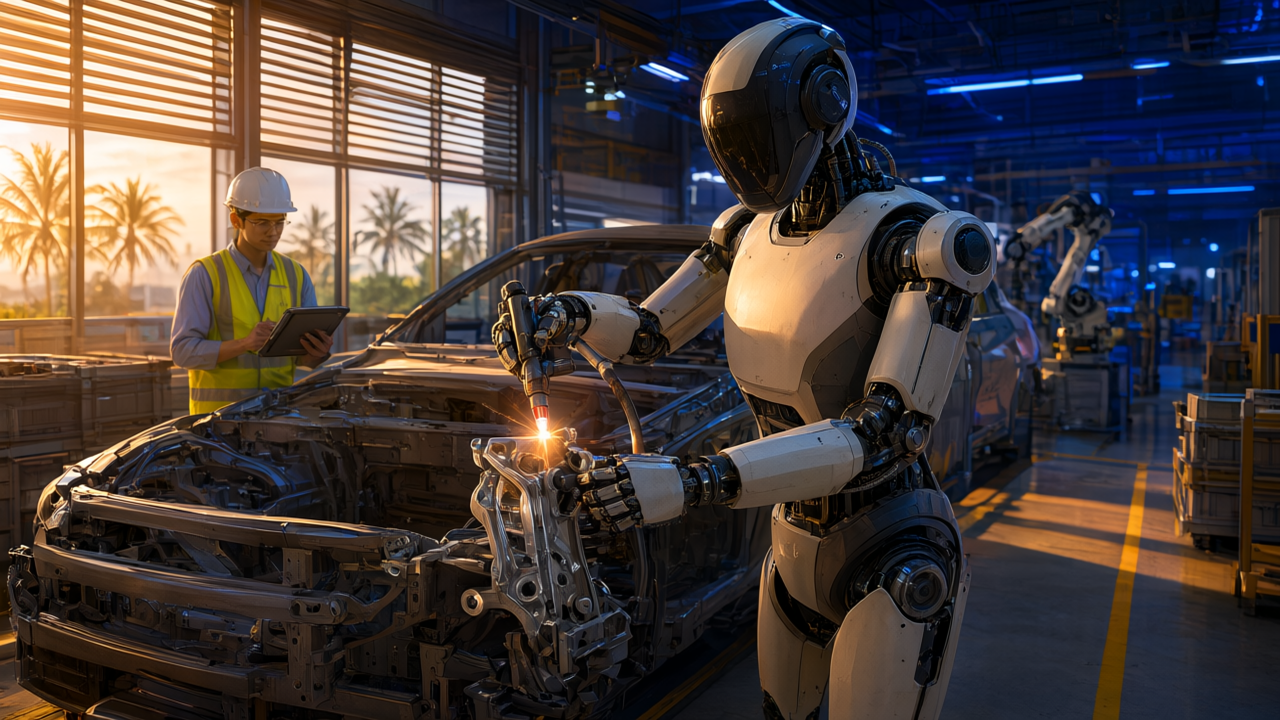
Here is what the terminology means. "Egocentric" refers to a first-person viewpoint — the camera sees the task the way the person doing it sees it, hands and workpiece in view, rather than from a fixed overhead or third-person angle. "Learning from demonstration" means the robot acquires a skill by watching a human perform it, instead of being programmed line by line. Think of the difference between handing a new factory worker a 200-page manual versus letting them shadow an experienced operator for a week. The second approach is how humans actually learn most jobs. This research direction asks whether machines can do the same.
Why It Matters
The expensive part of industrial robotics has never really been the arm. A mid-range collaborative robot is a five-figure purchase. What inflates project costs into six or seven figures is everything around it: process analysis, programming, integration with existing lines, and reprogramming every time the product changes. This is why automation has historically favoured giant multinationals running the same product for years, and why the average Malaysian SME with high-mix, low-volume production has stayed on the sidelines.
Learning from demonstration attacks that cost structure directly. If a robot can watch a skilled worker assemble a cable harness or pack a box of mixed SKUs and then imitate that behaviour, the programming line item shrinks from engineer-weeks to recording-hours. It also changes the economics of change. A learned robot can, in principle, be retaught a new variant the same cheap way — by showing it again — rather than waiting for a specialist to fly in.
There is a familiar pattern here worth recognising. Large language models did the same thing to software: instead of writing explicit code, you describe the outcome and the model produces it. Learned robot skills are the physical-world version of that shift. This is analysis, not a claim from the source — but it explains why a conference talk on "foundations and challenges" deserves attention from business planners rather than only researchers. The technical challenges Larson will address are the known hard problems in the field: the gap between a human hand and a robot gripper (the "embodiment gap"), the tendency of learned skills to fail when lighting, parts, or layout change slightly,
Sources & References
AIBlog summarises and analyses published information. We do not reproduce full source text. Analysis is editorial and not financial or legal advice.