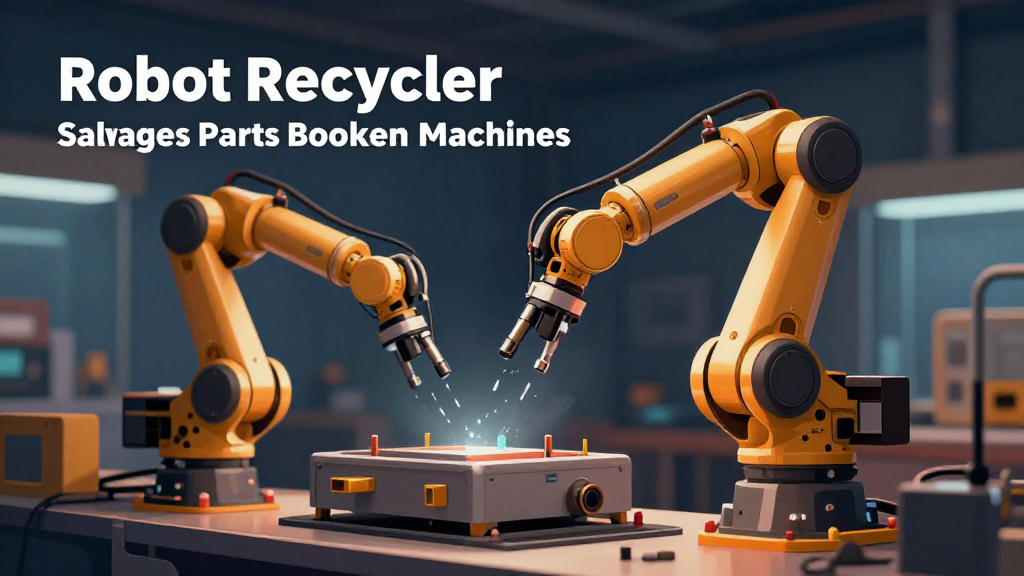
Robot Recycler Salvages Parts from Broken Machines
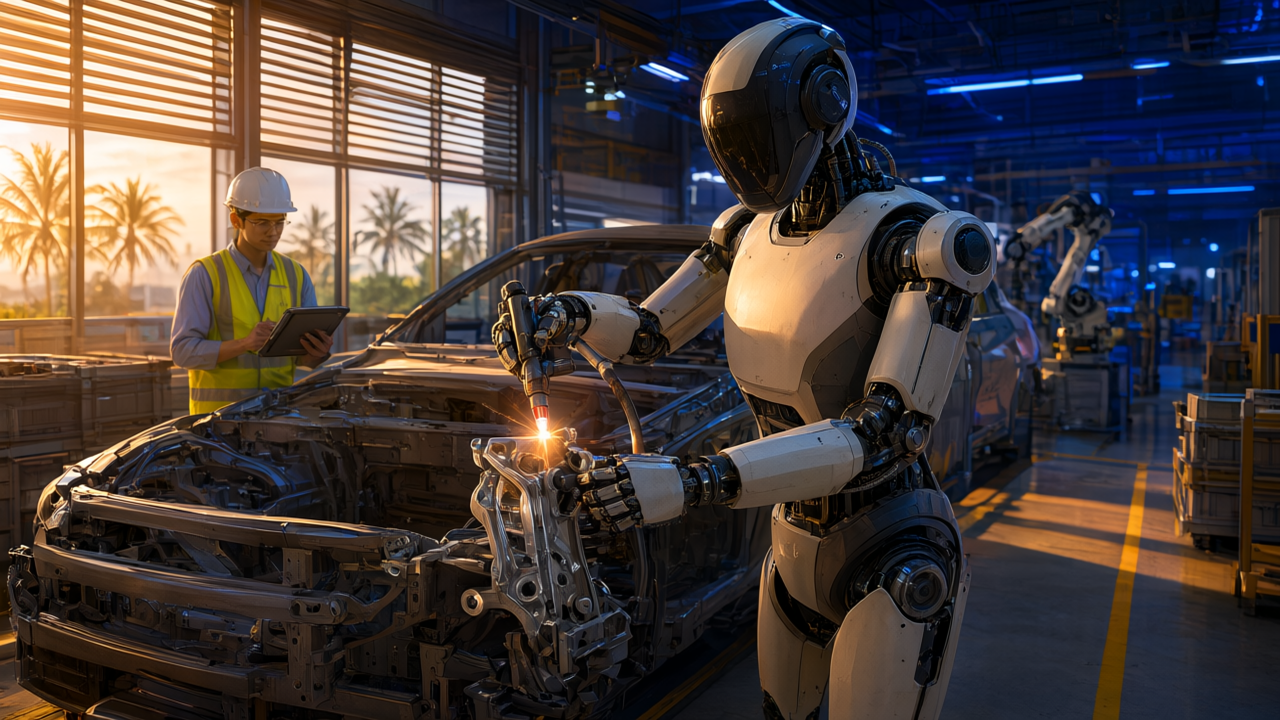
Engineers have developed a robotic system designed to disassemble broken machines and salvage reusable components — essentially applying industrial automation in reverse. Where factory robots have spent decades assembling products, this technology tackles the opposite problem: taking them apart to recover valuable parts. With over 4 million industrial robots already deployed worldwide for manufacturing, the logical next step is automating the end-of-life stage of products. For Malaysian businesses — particularly in electronics manufacturing, e-waste management, and circular economy initiatives — this development signals a shift toward automated reverse logistics that could reduce material costs and create new service revenue streams.
Robot Recycler Salvages Parts from Broken Machines
AI Summary
Engineers have developed a robotic system designed to disassemble broken machines and salvage reusable components — essentially applying industrial automation in reverse. Where factory robots have spent decades assembling products, this technology tackles the opposite problem: taking them apart to recover valuable parts. With over 4 million industrial robots already deployed worldwide for manufacturing, the logical next step is automating the end-of-life stage of products. For Malaysian businesses — particularly in electronics manufacturing, e-waste management, and circular economy initiatives — this development signals a shift toward automated reverse logistics that could reduce material costs and create new service revenue streams.
Key Takeaways
- A new robotic system can identify and extract reusable parts from discarded or broken machines, automating a task that has traditionally been labour-intensive and economically marginal
- This technology inverts the conventional robotic workflow — instead of assembling products, the robot disassembles them, which requires fundamentally different sensing, reasoning, and manipulation capabilities
- Over 4 million industrial robots operate worldwide in manufacturing, but end-of-life disassembly has remained almost entirely manual because every broken machine is different
- For Malaysia's electronics and semiconductor manufacturing hubs in Penang and Selangor, automated parts recovery could lower material sourcing costs and support ESG compliance goals
- The technology is early-stage but points toward a circular manufacturing model where components get recovered, refurbished, and redeployed — with autonomous AI agents coordinating the sorting and triage workflow
What Happened
The IEEE Spectrum reported on a robotic recycling system engineered to salvage functional parts from broken or end-of-life machines. The core idea is straightforward in concept but difficult in execution: a robot must examine a discarded product, determine which components are still usable, and then carefully extract them without damage.
This is a meaningful departure from what industrial robots have done for decades. Since the 1960s, factory robots have been built for repetition. A robotic arm on a car assembly line performs the same weld, the same lift, the same insertion — thousands of times per day, in a controlled environment where every part arrives in a known position. The robot does not need to think. It follows pre-programmed instructions with sub-millimetre precision.
Disassembly is categorically different. A broken washing machine, a discarded smartphone, or a decommissioned industrial motor arrives in an unknown state. Screws may be corroded. Components may be cracked. Internal layout may vary by model year or manufacturer. The robot must adapt to what it finds — identifying parts, assessing condition, and choosing a removal strategy in real time.
The technology arrives against a backdrop of massive global industrial robot adoption. According to the International Federation of Robotics, over 4 million industrial robots are now in use worldwide. These robots build the cars we drive, the appliances we use, and the smartphones we carry. But when those products break or reach end-of-life, the disassembly process has remained stubbornly manual — typically done by workers in scrap yards, recycling facilities, or informal waste sectors, often at low wages and with significant safety risks.
The robotic recycler attempts to close that loop. By bringing automation to the disassembly stage, the system could make component recovery economically viable at a scale that manual processes cannot achieve.
Why It Matters
This development matters because it addresses one of the most stubborn inefficiencies in modern manufacturing: the linear "take-make-dispose" model. Raw materials are extracted, components are manufactured, products are assembled and sold, and eventually those products are discarded. The recovery of valuable materials and components from end-of-life products has been limited by the cost and difficulty of disassembly.
Consider the economics. A discarded industrial motor contains copper wiring, steel housing, rare earth magnets, and potentially functional bearings or capacitors. Manually extracting these components requires skilled labour and time. In many cases, the cost of recovery exceeds the value of the materials — so the product gets shredded, incinerated, or landfilled, and the materials are lost.
A robotic system changes this calculation. If a robot can assess a broken machine in minutes and extract usable components with minimal human oversight, the economics of recovery shift. Components that were too expensive to salvage become viable. Materials that were too costly to separate become recoverable. The result is a partial closing of the manufacturing loop — what engineers call the "circular economy."
The broader signal here is that robotics is moving from structured environments to unstructured ones. For decades, robots thrived in factories because factories are predictable. The next frontier is robots that operate in messiness — sorting mixed waste, disassembling unknown products, navigating cluttered environments. This requires not just better hardware but better software: computer vision to identify objects, force sensors to handle delicate parts, and AI reasoning to decide how to proceed when something unexpected appears.
That shift has implications far beyond recycling. Any industry that deals with variable, unpredictable physical objects — construction, agriculture, maintenance, logistics — stands to benefit from robots that can adapt rather than just repeat.
What This Means for Malaysia
Malaysia occupies a relevant position in this story on multiple fronts.
First, Malaysia is a significant manufacturing hub. The country's electronics and electrical (E&E) sector — concentrated in Penang, Kulim, and the Klang Valley — produces semiconductors, consumer electronics, and industrial components for global brands. These manufacturing facilities already operate thousands of industrial robots. The technology to build products is well-established locally. The question is whether Malaysian firms can also build the capability to recover and refurbish components at end-of-life.
Second, Malaysia faces a growing e-waste challenge. The Department of Environment (DOE) has been strengthening regulations around scheduled waste management, and the informal e-waste sector remains significant. A robotic disassembly system could formalise parts of this sector — improving safety, increasing recovery rates, and creating a more traceable supply chain for refurbished components. Companies already operating in Malaysia's waste management and recycling sector — such as those licensed under the Environmental Quality Act — could evaluate this technology as a differentiator.
Third, the ESG angle is becoming financially material for Malaysian exporters. European Union regulations such as the Right to Repair directive and the Circular Economy Action Plan increasingly require manufacturers and importers to demonstrate end-of-life responsibility for their products. Malaysian firms exporting to the EU — and many do, particularly in E&E — may face pressure to show that their products can be disassembled, repaired, and recycled. Technologies like robotic recyclers could become part of that compliance story.
For Malaysia's policy landscape, this connects to the National Circular Economy Council's objectives and the broader MyDIGITAL framework. If the government wants to position Malaysia as a leader in green manufacturing and sustainable technology, supporting local development or adoption of robotic recycling systems would be a concrete step — not just a policy aspiration.
How Your Business Can Use This
For most Malaysian businesses, the immediate application is not buying a robotic recycler. The technology is early-stage and likely expensive. But there are practical steps you can take this quarter.
If you operate in manufacturing: Audit your end-of-life and warranty-return processes. How many defective or returned units do you scrap each month? What is the material value of what you discard? This baseline tells you whether automated disassembly is worth evaluating as the technology matures. Start tracking component recovery rates manually — you cannot improve what you do not measure.
If you operate in waste management or recycling: Begin evaluating partnerships with robotics vendors or local university research groups. Universiti Sains Malaysia in Penang, for example, has robotics and automation research programmes. A pilot project — even a small one — could position your company as an early mover in automated materials recovery.
If you are an SME in the repair or refurbishment space: The implications are more immediate. Robotic disassembly systems will eventually reduce the cost of sourcing used components. If your business refurbishes electronics, appliances, or industrial equipment, monitor this technology as a potential input cost reduction. Build relationships with recycling facilities now — the supply chain for salvaged components will likely flow through them.
If you are in government or policy: Consider how procurement standards could incentivise circular manufacturing. Public sector purchasing represents significant demand. Specifying that suppliers must demonstrate repairability or recyclability — and providing a pathway for robotic recycling to count toward that requirement — could accelerate local adoption.
The Agentic AI Angle
The robotic recycler is not just a mechanical system. It is a platform for agentic AI — autonomous software agents that can perceive, reason, and act.
Here is how the workflow could work in practice. An AI agent receives a broken machine — say, a defunct industrial pump from a Penang semiconductor fab. The agent uses computer vision to scan the unit, identifies the make and model, and retrieves the original design specifications from a manufacturer database. It then plans a disassembly sequence: which screws to remove first, which components to test, which to extract for refurbishment versus recycling.
This is fundamentally different from a chatbot answering questions. The agent is making decisions in a physical environment. It must handle uncertainty — a stripped screw, a corroded connector, a part that does not match the documentation. It must prioritise: is the motor worth saving? Is the control board still functional? Should it spend five minutes trying to extract a low-value bracket or move on?
For Malaysian businesses, the agentic layer is where the real value compounds. A single robot can disassemble one machine at a time. But an AI agent coordinating a fleet of robots — scheduling incoming waste, categorising components, routing recovered parts to refurbishment or resale channels, and learning from each disassembly to improve the next one — that is where scale happens. Malaysian logistics firms, warehouse operators, and manufacturing companies should be thinking about this orchestration layer, not just the physical robot.
The agent also handles the data dimension. Every disassembly generates a record: what was recovered, what condition it was in, what it is worth on the secondary market. This data feeds back into product design — manufacturers can learn which components fail most often and design future products for easier recovery. An agentic AI system can close that feedback loop automatically, flagging design weaknesses and recommending improvements.
Risks and Limitations
The technology is early-stage. The IEEE Spectrum report describes a proof of concept, not a commercial product ready for deployment. Real-world disassembly involves enormous variability across product types, ages, and conditions. A robot trained on washing machines will not necessarily handle smartphones or industrial turbines. Each product category may require separate training, calibration, and tooling — which raises costs and limits scalability in the near term.
There are also regulatory considerations specific to Malaysia. Handling e-waste requires licensing under the Environmental Quality (Scheduled Wastes) Regulations. Any company deploying robotic disassembly must ensure compliance with DOE requirements, including proper handling and disposal of hazardous components like batteries and circuit boards containing heavy metals. The technology does not exempt the operator from these obligations.
Workforce displacement is a genuine concern. Malaysia's informal recycling sector employs a significant number of workers, many of them in low-income communities. Automation could improve safety and efficiency but may also eliminate jobs. Any deployment strategy should consider reskilling and transition support.
The Bottom Line
Robotic recycling is the logical next step in industrial automation — applying machine precision to the messy, variable world of product disassembly. For Malaysian businesses, the technology is not yet ready for mainstream adoption, but the strategic direction is clear. Companies that begin tracking their end-of-life material flows now, and that build relationships with robotics and recycling partners, will be positioned to capitalise when the economics cross the viability threshold.
The action to take this quarter: audit what you discard. Understand the material and component value in your waste stream. That data is the foundation for every future decision about automated recovery.
FAQ
Is robotic recycling technology available commercially in Malaysia today? No. The technology reported by IEEE Spectrum is at the research and early development stage. Malaysian businesses should monitor progress but focus now on baseline tracking of their waste and returns.
Which Malaysian industries would benefit first from robotic disassembly? Electronics manufacturing, e-waste recycling, and industrial equipment refurbishment are the most natural early adopters, given the high value of recoverable components and existing regulatory pressure around waste management.
How does this connect to Malaysia's ESG and sustainability reporting requirements? Bursa Malaysia has been expanding sustainability reporting requirements for listed companies. Automated component recovery could provide verifiable data on waste reduction and circular economy performance, directly supporting ESG disclosures.
Sources / References
- IEEE Spectrum — "Robot Recycler Salvages Parts from Broken Machines" (https://spectrum.ieee.org/recycling-robot): Primary source for the robotic recycling system development and global industrial robot deployment statistics (over 4 million units worldwide per the International Federation of Robotics).
Sources & References
AIBlog summarises and analyses published information. We do not reproduce full source text. Analysis is editorial and not financial or legal advice.