Reimagine Robotics emerges from stealth with robots that 'learn on the job'
Reimagine Robotics, a new company founded by former leaders of Google DeepMind's Applied Robotics division, has emerged from stealth mode with a bold proposition: robots that learn tasks through on-the-job experience rather than requiring specialised programmers to code every movement. If this approach scales commercially, it could significantly reduce the cost and complexity of deploying robotics in environments like warehouses, factories, and logistics hubs — sectors where Malaysia has deep infrastructure and strong growth ambitions. The core innovation is shifting robotics from a model where every action must be painstakingly programmed in advance to one where machines adapt and improve through demonstration and repetition. For Malaysian businesses, particularly manufacturers in Penang and Selangor and logistics operators across the Klang Valley, this development signals a future where automation adoption may no longer require a team of robotics engineers on staff. ---
Reimagine Robotics Emerges From Stealth: Robots That Learn On The Job, No Programmers Required
A new robotics company founded by ex-Google DeepMind robotics leaders promises systems that adapt through real-world experience rather than requiring specialist coding — potentially lowering the deployment barrier for businesses that have traditionally found industrial robotics too complex and costly.
AI Summary
Reimagine Robotics, a new company founded by former leaders of Google DeepMind's Applied Robotics division, has emerged from stealth mode with a bold proposition: robots that learn tasks through on-the-job experience rather than requiring specialised programmers to code every movement. If this approach scales commercially, it could significantly reduce the cost and complexity of deploying robotics in environments like warehouses, factories, and logistics hubs — sectors where Malaysia has deep infrastructure and strong growth ambitions. The core innovation is shifting robotics from a model where every action must be painstakingly programmed in advance to one where machines adapt and improve through demonstration and repetition. For Malaysian businesses, particularly manufacturers in Penang and Selangor and logistics operators across the Klang Valley, this development signals a future where automation adoption may no longer require a team of robotics engineers on staff.
Key Takeaways
- DeepMind pedigree matters. Founders come from Google DeepMind's Applied Robotics team, meaning this is not a speculative startup but a venture built on some of the most advanced AI robotics research in the world. That lineage lends credibility to their "learn on the job" claim.
- The bottleneck being solved is programming, not hardware. Industrial robots have been physically capable for years. What has slowed adoption — especially for SMEs — is the cost and scarcity of specialised programmers needed to deploy and reconfigure them for each new task.
- "Learning on the job" implies adaptive behaviour. Rather than following rigid pre-coded scripts, these systems are designed to observe, practise, and refine their performance through real-world interaction, meaning they could handle variability that traditional robots cannot.
- This directly addresses Malaysia's automation gap. Malaysian manufacturers, particularly in Penang's semiconductor and electronics corridors, face labour shortages and rising wage pressures but often lack the in-house engineering talent to deploy complex robotics.
- The agentic AI parallel is strong. A robot that learns autonomously through observation and trial-and-error is effectively a physical AI agent — and the same architectural concepts transforming software workflows are now reaching the physical world.
What Happened
Reimagine Robotics has officially emerged from stealth mode, announcing its approach to building robotic systems that do not require specialised programmers to deploy or operate. The company was founded by former leaders of Google DeepMind's Applied Robotics division, a unit within one of the world's most prominent AI research organisations. While specific product details, pricing, and commercial availability have not yet been disclosed in the public announcement, the company's core positioning is clear: it aims to remove the traditional programming bottleneck that has constrained robotics adoption across industries.
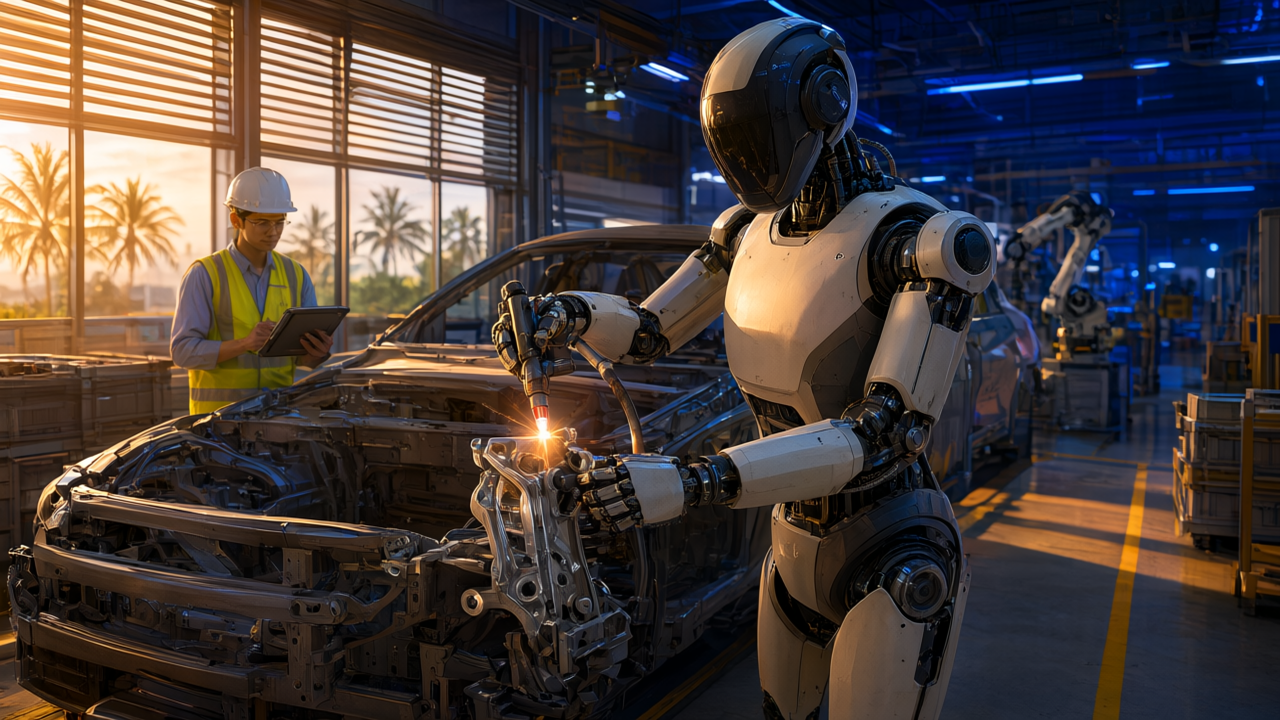
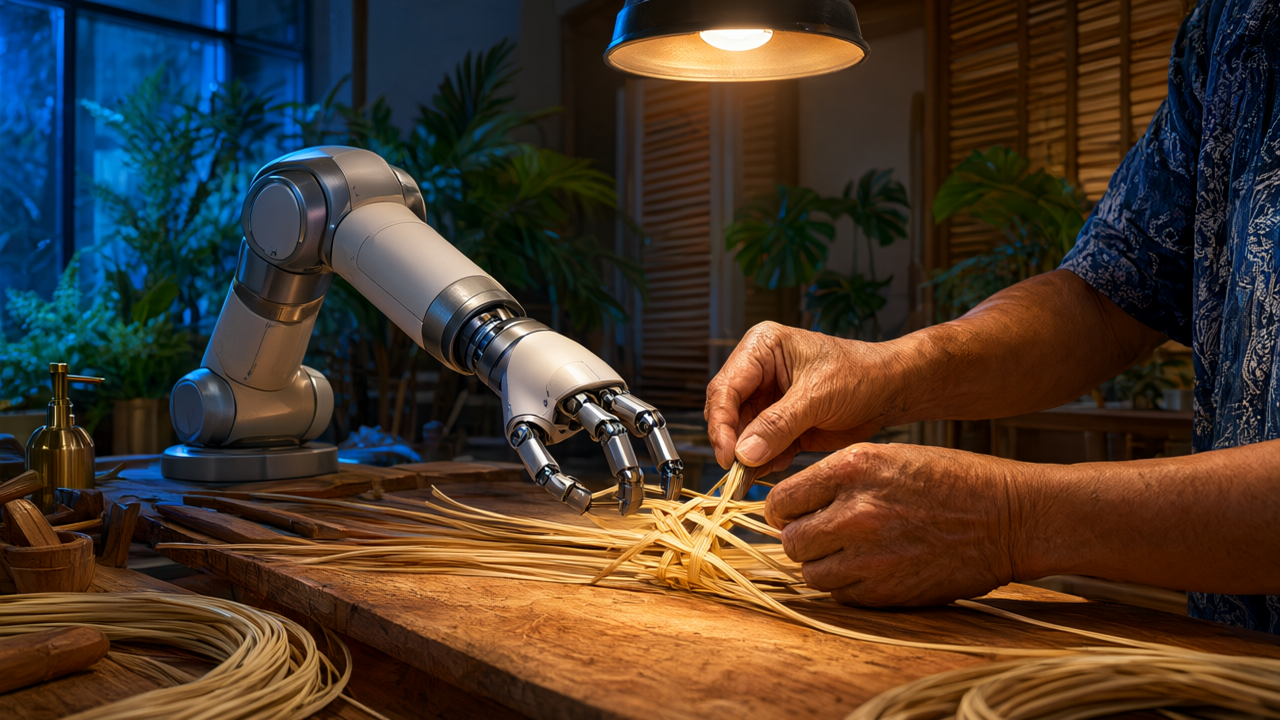
The central technical claim is that Reimagine Robotics' systems are designed to "learn on the job." In conventional industrial robotics, deploying a robot arm to perform a task — say, picking items from a conveyor belt or packing boxes — requires a skilled programmer to write precise code defining every joint movement, grip position, speed, and error-handling routine. If the task changes, the programmer must return, recode, and re-test. This makes robotics economically viable only for high-volume, repetitive tasks that remain unchanged for months or years. Reimagine Robotics is proposing a fundamentally different model: robots that can be shown a task, attempt it, receive feedback, and gradually improve their performance through real-world practice — much like a human worker learning a new role.
The company's emergence from stealth signals that this approach has matured beyond pure research into something the founders believe is commercially viable. Given their DeepMind background, the announcement carries significant weight within the robotics and AI communities, even before specific products have been demonstrated publicly.
Why It Matters
The global robotics market has long faced a paradox. The hardware is increasingly capable and affordable, yet adoption remains concentrated among large enterprises with dedicated engineering teams. The barrier is not the robot itself but the software layer — the expertise required to make a robot do something useful. According to industry analysis, this programming bottleneck is the single largest factor keeping SMEs out of the automation market. Reimagine Robotics is directly targeting this bottleneck.
If robots can genuinely learn through demonstration and practice rather than line-by-line coding, the economic equation changes dramatically. A warehouse manager could potentially teach a robot to handle a new product line in hours rather than waiting weeks for a programming contractor. A factory could reconfigure its robotic cells for a new production run without bringing in external engineers. The total cost of ownership falls, the time-to-value shrinks, and the range of tasks worth automating expands considerably.
This also signals a broader convergence between AI and robotics. The machine learning techniques that power large language models — the ability to learn patterns from vast datasets and generalise to new situations — are now being applied to physical systems. Robots have historically been dumb actuators executing smart code. Reimagine Robotics represents a shift toward robots that are themselves intelligent systems, capable of reasoning about their environment and adapting their behaviour accordingly. This is the same architectural shift from rule-based software to learning-based AI that transformed the software industry over the past decade, now arriving in the physical world.
What This Means for Malaysia
Malaysia occupies a strategically significant position in this shift. The country is a major manufacturing hub — particularly in Penang's semiconductor and electronics corridor, the Klang Valley's consumer goods and automotive parts sector, and Johor's fast-growing industrial parks. These industries face a dual challenge: persistent labour shortages, partly addressed through reliance on foreign workers whose availability fluctuates with policy changes, and rising wage expectations as Malaysia moves toward high-income status. Automation is not optional for these sectors; it is an existential necessity.
Yet Malaysian SMEs, which make up the vast majority of the manufacturing ecosystem, have historically struggled with robotics adoption. The cost of hardware is one factor, but the bigger issue is the scarcity of robotics programming talent in the local market. Malaysia simply does not produce enough robotics engineers to support widespread deployment across thousands of factories. A system that eliminates or dramatically reduces the need for specialist programmers could be transformative — it would allow a factory supervisor or operations manager to deploy and reconfigure robots without an engineering degree.
This development also aligns closely with national policy direction. Malaysia's Industry4WRD initiative, the MyDIGITAL blueprint, and MDEC's digital economy programmes all emphasise accelerating automation and smart manufacturing adoption. The government has offered grants, tax incentives, and training programmes to encourage SMEs to digitalise. However, the skills gap remains a structural impediment. If companies like Reimagine Robotics succeed in making robotics genuinely accessible to non-specialists, it would accelerate the realisation of these policy goals far more effectively than any single grant programme. Malaysian industry associations, investment bodies, and trade agencies should be watching this space closely and engaging with such companies early to position Malaysia as a regional early adopter.
How Your Business Can Use This
For Malaysian operations leaders and business owners, the practical implication is that you should begin planning for a robotics adoption model that does not assume you need to hire a robotics engineer. Start by auditing your current manual workflows — particularly repetitive physical tasks like picking, packing, sorting, machine tending, or quality inspection. Document how long these tasks take, how much labour they consume, and what the error rates are. This establishes the baseline you will need to evaluate any future "learn on the job" robotics system.
Next, begin tracking Reimagine Robotics and similar companies entering this space. While specific products are not yet commercially available from this particular company, the category of "no-code robotics" or "learning-based robotics" is growing. Competitors and adjacent players are developing similar capabilities. The key evaluation criteria when these systems reach the Malaysian market will be: how quickly can the system be trained on a new task, what level of supervision is required during the learning phase, and how reliably does the system perform once trained.
Consider also engaging with local robotics integrators and MDEC-aligned automation providers. Even if Reimagine Robotics' specific products are not yet available locally, Malaysian systems integrators will be the channel through which such technology reaches your factory floor. Building relationships with these integrators now means you will be positioned to pilot new approaches as they become available rather than starting from scratch when competitors have already moved.
The Agentic AI Angle
The concept of a robot that "learns on the job" is, in essence, an agentic AI system embodied in physical hardware. A software AI agent can plan a sequence of actions, execute them, observe the results, and adjust its approach. A learning-based robot does exactly the same thing but in the physical world — it attempts a grasp, observes whether it succeeded, and refines its strategy. This is the same architectural principle, extended from digital workflows to physical ones.
For Malaysian businesses, the agentic implications extend beyond the robot itself. Consider a warehouse operation where an agentic AI system coordinates multiple learning-based robots. The software agent receives an order, determines which items need to be picked, dispatches the appropriate robots, monitors their progress, handles exceptions, and updates the inventory system — all without human intervention. The robots handle the physical manipulation; the software agent handles the orchestration. This combined model is where the industry is heading within the next two to three years, and Malaysian logistics operators, e-commerce fulfilment centres, and manufacturing facilities should be designing their digital infrastructure with this future architecture in mind.
Risks and Limitations
Several important caveats apply. First, Reimagine Robotics has only just emerged from stealth. No specific products, performance benchmarks, pricing, or commercial timelines have been publicly confirmed. The "learn on the job" capability, while grounded in legitimate DeepMind research heritage, has not yet been independently validated in real-world commercial deployments at scale. Businesses should treat the current announcement as a signal of where the technology is heading, not a procurement-ready solution.
Second, learning-based robotics introduces its own challenges. A system that learns through trial and error will inevitably make mistakes during the learning phase — which could mean dropped products, damaged materials, or safety incidents in a factory environment. Regulatory compliance under Malaysia's Occupational Safety and Health Act, insurance considerations, and workplace safety protocols all need careful attention before deploying any adaptive robotic system. Data privacy is also relevant: if robots learn from observing real operations, they may inadvertently capture proprietary process data or sensitive information, raising intellectual property and PDPA considerations.
The Bottom Line
Reimagine Robotics represents an early but credible signal that the programming barrier — the single biggest obstacle to widespread robotics adoption — is being seriously addressed by world-class talent. For Malaysian businesses, the strategic takeaway is not to wait for this specific company's products but to begin preparing your operations, your workforce planning, and your digital infrastructure for a near future where robotics deployment no longer requires specialist engineering. The companies that start auditing their workflows, building integrator relationships, and designing for human-robot collaboration now will be the ones that capture the productivity gains when this technology matures. Track this space quarterly.
FAQ
Is Reimagine Robotics available in Malaysia yet? No. The company has just emerged from stealth with no announced commercial products, pricing, or international availability. Malaysian businesses should monitor developments and prepare operationally.
How is "learning on the job" different from normal robot programming? Traditional robots require a programmer to code every movement precisely. Learning-based robots observe tasks, attempt them, and improve through practice — similar to how a human worker learns, reducing or eliminating the need for specialist coding.
Should Malaysian SMEs invest in robotics now or wait for this technology? Neither extreme is ideal. Begin by auditing your manual workflows and building relationships with local automation integrators now, so you are positioned to pilot accessible robotics solutions as they reach the Malaysian market within the next one to two years.
Sources / References
- The Robot Report — "Reimagine Robotics emerges from stealth with robots that 'learn on the job'" — Primary source confirming the company's emergence from stealth, founder backgrounds at Google DeepMind Applied Robotics, and the core technical proposition of no-programmer-required robotic systems. (therobotreport.com)
Sources & References
AIBlog summarises and analyses published information. We do not reproduce full source text. Analysis is editorial and not financial or legal advice.