Redmi Note 10 Arrives in Malaysia: Why Budget Phone Specs Drive AI Strategy
High-end cameras and displays at entry-level prices turn everyday smartphones into powerful edge-computing tools for Malaysian businesses.
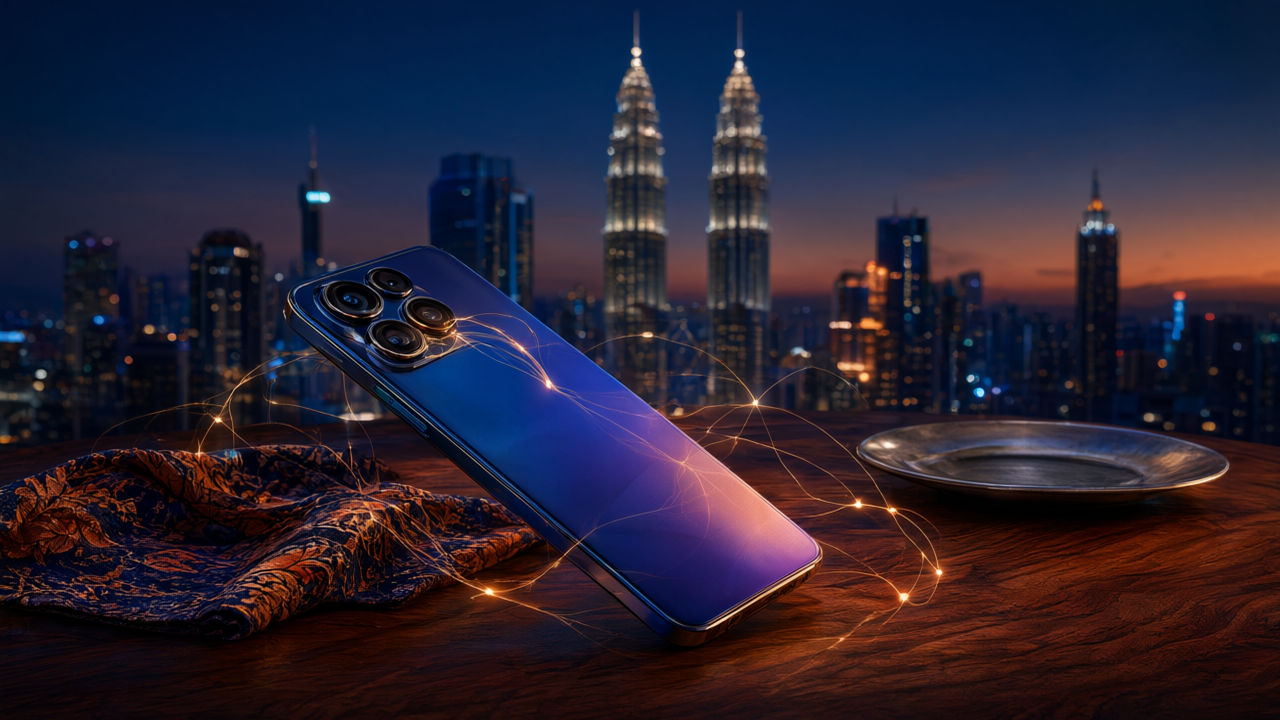
Xiaomi has launched its mid-range Redmi Note 10 series in Malaysia, with devices available starting March 8 and prices beginning at an accessible US$196 (approximately RM800 based on historical exchange rates). The higher-end Redmi Note 10 Pro includes a 108MP quad-camera system and a 120Hz display. While tech reviewers focus on consumer gaming and photography, Malaysian business leaders should view this launch as a critical infrastructure upgrade. When affordable devices carry flagship-level sensors and processing power, they become highly capable edge-computing endpoints. This hardware democratization allows SMEs and enterprises to deploy advanced computer vision and autonomous AI workflows directly into the hands of frontline workers without breaking their technology budgets.
AI Summary
Xiaomi has launched its mid-range Redmi Note 10 series in Malaysia, with devices available starting March 8 and prices beginning at an accessible US$196 (approximately RM800 based on historical exchange rates). The higher-end Redmi Note 10 Pro includes a 108MP quad-camera system and a 120Hz display. While tech reviewers focus on consumer gaming and photography, Malaysian business leaders should view this launch as a critical infrastructure upgrade. When affordable devices carry flagship-level sensors and processing power, they become highly capable edge-computing endpoints. This hardware democratization allows SMEs and enterprises to deploy advanced computer vision and autonomous AI workflows directly into the hands of frontline workers without breaking their technology budgets.
Key Takeaways
- The Redmi Note 10 series launched in Malaysia on March 8, with entry-level pricing starting at US$196.
- The Pro model features a 108MP quad-camera and a 120Hz display, specifications previously reserved for premium, expensive smartphones.
- High-resolution mobile cameras act as primary data collection endpoints for AI computer vision applications.
- Sub-RM1,000 hardware costs make it financially viable for Malaysian SMEs to equip entire operational teams with AI-capable devices.
- These devices serve as the physical interface for autonomous AI agents to read, see, and interact with the physical world.
What Happened
Shortly after releasing its flagship Mi 11 smartphone, Xiaomi announced the expansion of its mid-range lineup in Malaysia: the Redmi Note 10 Pro and the standard Redmi Note 10. The base Redmi Note 10 arrived on the Malaysian market on March 8, priced accessibly from US$196.
The standout device in this launch is the Redmi Note 10 Pro. Xiaomi has pushed premium specifications into a mid-tier price bracket. The device includes a 108MP quad-camera system and a 120Hz display. A 108MP camera captures massive amounts of visual data, allowing users to zoom into specific details of a photo without the image becoming blurry. A 120Hz display refreshes the screen twice as fast as a standard smartphone, resulting in exceptionally smooth scrolling and highly responsive touch inputs. These are not just consumer perks. They represent a significant leap in mobile processing power and sensor quality for the mass market.
Why It Matters
For business leaders, the relevance of a budget smartphone launch lies in hardware democratization. Artificial intelligence requires physical infrastructure to function. While companies spend heavily on cloud computing and large language models (LLMs), the actual data feeding these systems often comes from the physical world. The gateway for that data is the smartphone.
When a US$196 device includes a 108MP camera, the cost of data collection plummets. A 108MP sensor captures enough pixel density to read tiny serial numbers on circuit boards, identify microscopic cracks in manufacturing materials, or scan complex inventory barcodes from across a large warehouse. Previously, capturing this level of detail required specialized, expensive industrial equipment or thousand-ringgit flagship phones.
Furthermore, a 120Hz display points to a more powerful internal processor. To push graphics at 120 frames per second, a phone needs substantial computing power. For businesses, this means cheaper phones can finally run complex, processor-heavy applications. Field workers can operate real-time video analysis tools, interactive mapping software, and localized AI models without experiencing device lag. The baseline for what a "cheap" work phone can achieve has permanently shifted.
What This Means for Malaysia
Malaysian businesses operate in a highly mobile-first environment. From logistics riders in the Klang Valley to quality control inspectors in Penang's semiconductor factories, operations happen on the ground, not behind desktop computers. The arrival of highly capable, low-cost devices directly impacts how local companies can execute their digital transformation strategies under the national MyDIGITAL blueprint.
For Malaysian Small and Medium Enterprises (SMEs), hardware budget is often the primary barrier to adopting new technology. Equipping a fleet of 20 delivery drivers with high-end smartphones to enable real-time package tracking and AI route optimization is cost-prohibitive. The Redmi Note 10 series changes this math. At roughly RM800 per device, local logistics companies, retailers, and agricultural firms can deploy powerful computers to their entire workforce.
This hardware rollout also supports the local expansion of the gig economy and micro-entrepreneurs. Small online sellers operating out of homes in Johor or Sabah can use the 108MP camera to capture professional-grade product photography. They can run AI-driven e-commerce applications smoothly. It lowers the barrier to entry for digital commerce, allowing more Malaysians to participate in the digital economy using highly capable tools that do not require financing plans to afford.
How Your Business Can Use This
Business leaders should stop viewing company phones as simple communication tools and start treating them as operational sensors. The Redmi Note 10 series provides an opportunity to upgrade your physical data-collection infrastructure.
If you run a logistics, delivery, or retail business, you can issue these devices to your frontline staff to automate inventory management. The 108MP camera allows workers to scan entire shelves of products quickly. If you operate in manufacturing or property management, maintenance teams can take high-resolution photos of machinery or building infrastructure.
Start by auditing your current manual data entry processes. Identify areas where your staff uses pen and paper to record physical assets, damage reports, or inventory counts. Next, update your Bring Your Own Device (BYOD) policies. If your employees are already buying these devices for personal use, your company can build enterprise applications that utilize their phone's advanced camera to automate their workloads.
The Agentic AI Angle
Agentic AI refers to autonomous systems that can plan, reason, and execute multi-step tasks without human hand-holding. For these systems to work in the physical world, they need "eyes" and "hands." The Redmi Note 10 acts as both.
Consider a Malaysian warehouse operation. A worker can use the Redmi Note 10 Pro to capture a wide shot of a receiving bay. An AI agent operating inside your enterprise app uses computer vision to identify the specific pallets arriving. The agent reads the shipping labels, cross-references the visual data against your digital inventory, and autonomously updates your accounting software. The worker does not need to type anything.
If the agent detects a damaged box in the 108MP image, it can autonomously trigger a specific workflow. It drafts an email to the supplier, attaches the high-resolution photo as proof, logs the incident in your quality assurance system, and alerts the warehouse manager. The cheap, high-spec hardware of the Redmi Note 10 provides the rich visual data the AI agent needs to make autonomous decisions.
Risks and Limitations
Upgrading hardware introduces software and security challenges. A 108MP image file is large. If your enterprise applications are not designed to compress and process these files efficiently, you will exhaust your mobile data plans and cloud storage limits rapidly. You must engineer your systems to process visual data on the "edge" (on the phone itself) before sending it to the cloud.
Additionally, Malaysia's Personal Data Protection Act (PDPA) strictly governs how companies handle personal information. A 108MP camera captures immense detail. If your employees use these devices to take photos of customers, ID cards, or private documents, your company assumes a massive data security responsibility. You must implement mobile device management (MDM) software to ensure work photos are encrypted and isolated from personal data.
The Bottom Line
The launch of the Redmi Note 10 series in Malaysia is not just consumer electronics news. It is a signal that the physical infrastructure required for advanced AI and automation is now cheap enough for mass deployment. High-end sensors and fast processors are in the hands of everyday workers.
Your action item this quarter is to evaluate your frontline hardware. Identify manual processes where high-resolution cameras and autonomous AI agents can eliminate paperwork, and begin planning a pilot program using lower-cost devices to power your company's digital workflows.
FAQ
How does a 108MP camera on a budget phone help my business? It acts as a high-precision sensor, allowing your staff to capture extreme detail for computer vision tasks like automated inventory counting, damage inspection, and document reading without buying expensive specialized equipment.
Are budget smartphones like the Redmi Note 10 secure enough for enterprise data? The hardware is highly capable, but security depends on your company's IT policies. You must use Mobile Device Management (MDM) software to separate and encrypt work data, ensuring compliance with Malaysian PDPA regulations.
What is the connection between cheap smartphones and Agentic AI? Autonomous AI agents need high-quality data from the physical world to make decisions. Cheap, powerful smartphones provide the cameras and processing power required to feed these agents the visual data they need to execute workflows automatically.
Sources / References
- Digital News Asia: Provided the factual details regarding the Xiaomi Redmi Note 10 Malaysia launch date (March 8), the starting price (US$196), and the Pro model specifications (108MP quad-cam, 120Hz display).
Sources & References
AIBlog summarises and analyses published information. We do not reproduce full source text. Analysis is editorial and not financial or legal advice.