Open-Source Coding AI Just Got Cheaper to Build — and Malaysian Businesses Should Pay Attention
Nous Research's NousCoder-14B, trained in four days on 48 GPUs, signals that capable coding models are no longer the exclusive domain of big tech.
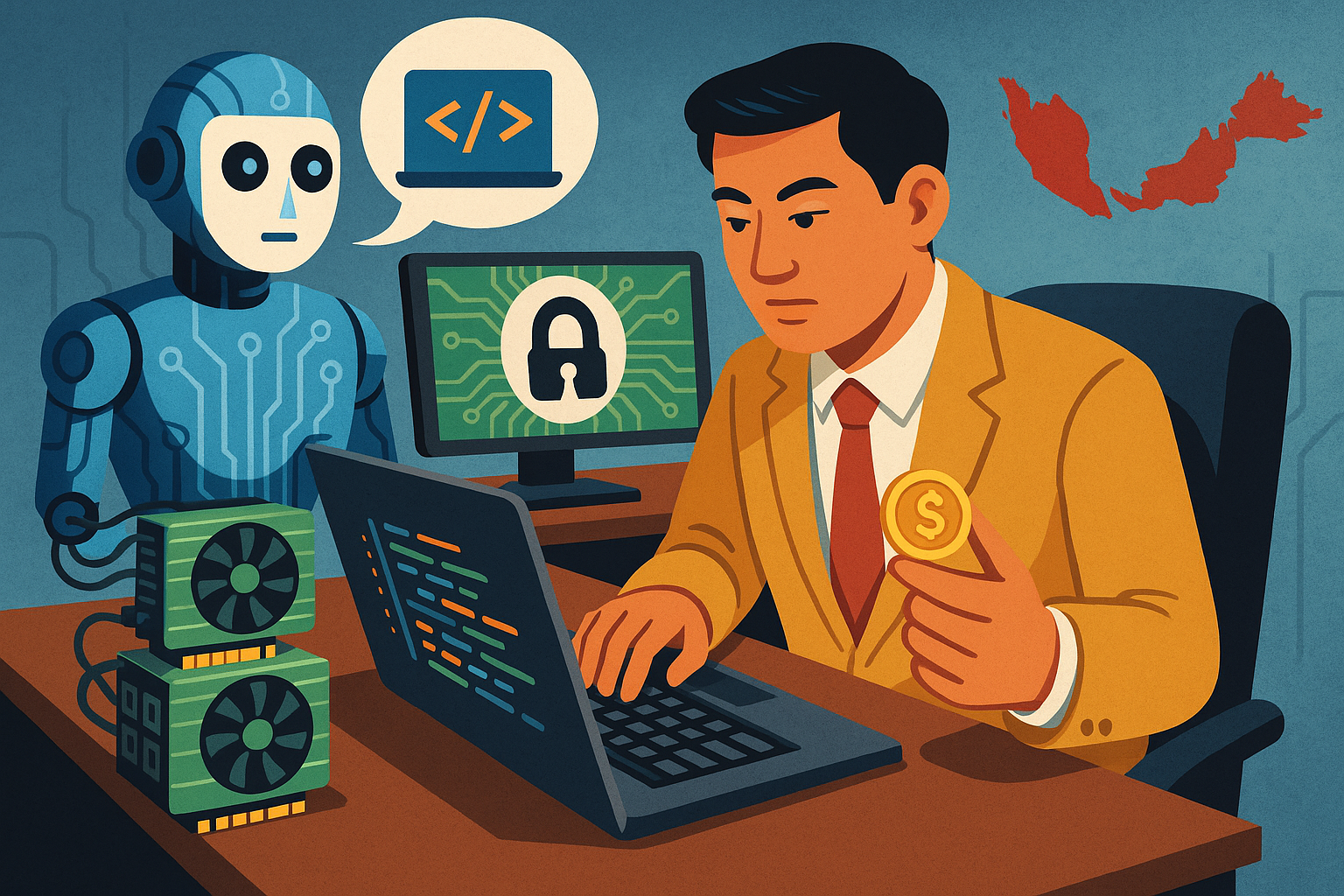
Nous Research, an open-source AI startup backed by crypto venture firm Paradigm, has released NousCoder-14B — a 14-billion-parameter coding model trained in just four days using 48 of Nvidia's latest B200 graphics processors. The company claims the model matches or exceeds several larger proprietary systems in competitive programming tasks. For Malaysian businesses, this matters because it demonstrates that high-performing coding AI is becoming cheaper, faster, and more accessible to build, which puts pressure on proprietary tool pricing and opens the door to locally-deployable, privacy-preserving AI coding assistants. The release arrives at what the source describes as the "Claude Code moment" — a period where AI coding tools are shifting from autocomplete novelties to autonomous agents that can plan, write, debug, and ship software with minimal human supervision.
AI Summary
Nous Research, an open-source AI startup backed by crypto venture firm Paradigm, has released NousCoder-14B — a 14-billion-parameter coding model trained in just four days using 48 of Nvidia's latest B200 graphics processors. The company claims the model matches or exceeds several larger proprietary systems in competitive programming tasks. For Malaysian businesses, this matters because it demonstrates that high-performing coding AI is becoming cheaper, faster, and more accessible to build, which puts pressure on proprietary tool pricing and opens the door to locally-deployable, privacy-preserving AI coding assistants. The release arrives at what the source describes as the "Claude Code moment" — a period where AI coding tools are shifting from autocomplete novelties to autonomous agents that can plan, write, debug, and ship software with minimal human supervision.
Key Takeaways
- NousCoder-14B was trained in four days on 48 Nvidia B200 GPUs, a strikingly small compute footprint compared to the resources typically associated with frontier model training.
- The model is open-source and has 14 billion parameters, meaning it is potentially small enough to run on high-end local hardware rather than requiring cloud API calls for every interaction.
- Nous Research claims the model matches or exceeds "several larger proprietary systems" in competitive programming — though the company has not yet specified which benchmarks or competitors it measured against, so this claim warrants independent verification.
- The backing from Paradigm, a crypto-focused venture firm, signals continued cross-industry investment in open-source AI from non-traditional tech players.
- For Malaysian software houses, IT departments, and SMEs building internal tools, the trend behind this release — capable open coding models trained cheaply — directly affects build-vs-buy decisions for AI-powered development workflows.
What Happened
On Monday, Nous Research publicly released NousCoder-14B, a new open-source AI model specifically designed for programming and coding tasks. The startup, which has gained visibility in the open-source AI community for releasing models that compete with proprietary alternatives, backed the project with funding from Paradigm — a venture capital firm primarily known for its investments in cryptocurrency and blockchain companies.
The technical details that Nous Research disclosed are notable for their efficiency. The company states that it trained NousCoder-14B in four days using 48 of Nvidia's B200 graphics processors. The B200 is Nvidia's latest data-center GPU, part of the Blackwell architecture announced in 2024. Using 48 of these chips for four days represents a fraction of the compute budget that companies like OpenAI, Google, or Anthropic typically deploy for their frontier models, which often involve thousands of GPUs running for weeks or months.
Nous Research claims that despite this modest training budget, NousCoder-14B matches or exceeds several larger proprietary coding systems in competitive programming benchmarks. Competitive programming refers to the discipline of solving algorithmic problems under time and correctness constraints — a common way to evaluate whether an AI model can reason about code rather than simply memorise patterns. The specific benchmarks, comparison models, and full evaluation methodology were not detailed in the source material, so the performance claims should be treated as the company's own assertions until independently validated.
The model enters what the source describes as a "crowded field of AI coding assistants." That field includes GitHub Copilot, Anthropic's Claude (including its Claude Code product), OpenAI's Codex and GPT-based tools, Google's Gemini Code Assist, and numerous other open-source models such as DeepSeek-Coder, Code Llama, and StarCoder. NousCoder-14B is the latest entrant, but the pace of releases in this category has accelerated sharply over the past 12 months.
Why It Matters
The significance of this release is not necessarily that NousCoder-14B is definitively better than every alternative — independent benchmarks will determine that. The significance is the proof of concept it represents: a relatively small team, with crypto-sector funding and 48 GPUs, can produce a coding model in under a week that claims to compete with systems built by companies spending hundreds of millions of dollars.
This matters for three reasons. First, it suggests that the cost of producing capable coding AI is dropping rapidly. If four days on 48 B200 chips can yield a competitive model, then the moat around proprietary coding assistants is narrowing. Companies paying premium subscription fees for closed-source coding tools may soon have viable open-source alternatives that they can run, fine-tune, and control on their own infrastructure.
Second, the efficiency claim puts pressure on the narrative that only hyperscalers — the Microsofts, Googles, and Amazons of the world — can build useful AI. A broader ecosystem of smaller labs, academic groups, and even well-resourced enterprises can now realistically consider training or fine-tuning domain-specific coding models for their own use cases.
Third, this arrives at the "Claude Code moment" referenced in the source. That phrase captures the current shift in AI coding tools: from passive autocomplete (suggesting the next line of code) to agentic systems that can take a high-level instruction, plan an implementation, write the code, run tests, debug failures, and iterate — all with minimal human intervention. When open-source models reach the quality threshold needed for these agentic workflows, the implications for software development productivity are substantial. NousCoder-14B is one data point in that trajectory.
What This Means for Malaysia
Malaysia's technology sector sits in a position to benefit from this trend, but also faces competitive pressure from it. The country has been building its AI and digital economy credentials through initiatives like MyDIGITAL, the National AI Roadmap, and MDEC's efforts to position Malaysia as a regional digital hub. Penang, in particular, hosts a significant semiconductor and electronics manufacturing ecosystem that includes companies in Nvidia's supply chain — the same supply chain producing the B200 chips that made NousCoder-14B possible.
For Malaysian software houses and IT services firms — particularly those in the Klang Valley and Penang tech corridors — the proliferation of capable open-source coding models creates an opportunity to reduce costs and increase margins. Instead of paying per-seat licensing for proprietary coding assistants, firms can evaluate whether self-hosted open models deliver comparable value for their specific codebases, particularly when data sensitivity is a concern under the Personal Data Protection Act (PDPA).
For Malaysian SMEs that are not software companies but still build internal tools, websites, or automation scripts, cheaper and more capable coding AI means lower barriers to digital transformation. A small logistics company in Johor or a manufacturing firm in Selangor that previously could not afford dedicated development resources may find that AI-assisted coding tools let their existing staff build and maintain useful software.
There is also a talent angle. Malaysia has been working to grow its pool of AI engineers and developers. When open-source models like NousCoder-14B become available, local universities, coding bootcamps, and training providers under initiatives like HRD Corp can incorporate them into curricula without licensing constraints, giving students hands-on experience with models they can inspect, modify, and deploy.
The competitive pressure cuts the other way too. If coding AI makes developers more productive globally, Malaysian firms that fail to adopt these tools will find themselves outpaced by competitors — both locally and in lower-cost markets like Vietnam, Indonesia, and the Philippines — that do. The cost of not integrating AI coding workflows into standard development practice is rising.
How Your Business Can Use This
For Malaysian businesses evaluating AI coding tools, the practical starting point is a structured comparison. Identify three to five common coding tasks your team performs regularly — for example, writing API endpoints, generating database queries, creating unit tests, or debugging existing code. Run those same tasks through your current tool (whether that is GitHub Copilot, ChatGPT, or nothing at all) and through an open-source model you can self-host, such as a quantised version of a model in this category. Compare output quality, time to completion, and cost per task.
If your firm handles sensitive data — customer records, financial data, proprietary business logic — prioritise testing self-hosted open-source models. Running a coding assistant on your own server or cloud instance within Malaysia means your code never leaves your infrastructure, which simplifies PDPA compliance and reduces exposure to data residency concerns. Cloud providers operating in Malaysia, such as AWS (via the upcoming AWS Asia Pacific region), Microsoft Azure, and Google Cloud, offer GPU instances that can run models in this parameter range.
For teams that are not yet using any AI coding tool, start small. Pick one developer, one project, and one tool. Measure their productivity over two weeks — lines of code shipped, bugs resolved, time saved on repetitive tasks. Then decide whether to roll out more broadly. The goal is evidence-based adoption, not trend-chasing.
Budget-wise, this is a good time to negotiate. The coding AI market is crowded and getting more competitive. Vendors of proprietary tools know that open-source alternatives are improving, and pricing flexibility is likely to increase. Malaysian firms procuring these tools should ask for pilot periods, education discounts, or volume pricing tied to MDEC-recognised digital status where applicable.
The Agentic AI Angle
The real shift hinted at by the "Claude Code moment" is not better autocomplete. It is autonomous coding agents — AI systems that can take a feature request like "add a password reset flow to our customer portal," break it into steps, write the frontend code, update the backend API, modify the database schema, write and run tests, and report back what they did.
Open-source models like NousCoder-14B are the building blocks for these agents. A Malaysian development team could deploy a model like this alongside an agentic framework — tools such as SWE-agent, OpenHands, or similar open-source agent runners — to create a coding assistant that works through multi-step tasks rather than just suggesting the next line.
The workflow looks like this: a developer writes a natural-language task description. The agent reads the codebase, plans changes, writes code across multiple files, runs tests in a sandboxed environment, identifies failures, and iterates until tests pass. The developer reviews the final output rather than writing each line. For routine work — bug fixes, test generation, boilerplate API creation, documentation — this can compress hours of work into minutes.
For Malaysian firms, the advantage of running this on an open-source model is control. You can fine-tune the model on your own codebase so it understands your naming conventions, architecture patterns, and internal libraries. You can restrict it from touching certain files or systems. You can audit exactly what it does because the model weights, the agent logic, and the execution environment all sit inside your infrastructure.
This is not theoretical. The components exist today. What is changing is that the underlying models are becoming good enough and cheap enough that mid-sized Malaysian firms — not just multinational giants — can assemble these workflows.
Risks and Limitations
The performance claims for NousCoder-14B come from Nous Research itself. Independent benchmarking has not yet confirmed that the model genuinely matches proprietary systems across diverse, real-world coding tasks — competitive programming benchmarks are a narrow proxy for production software development. Models that score well on algorithmic puzzles sometimes struggle with the messier realities of large codebases, legacy systems, and ambiguous requirements.
Running a 14-billion-parameter model locally requires serious hardware — typically a GPU with significant VRAM, or a multi-GPU setup. Malaysian SMEs without existing GPU infrastructure will face upfront costs that may offset the licensing savings from avoiding proprietary tools. Fine-tuning adds further complexity and requires ML engineering skills that many Malaysian firms do not currently have in-house.
There are also security considerations. AI-generated code can introduce vulnerabilities, and agentic systems that autonomously modify codebases can cause real damage if not properly sandboxed. Any Malaysian firm deploying these tools needs code review processes, automated security scanning, and clear policies about what the agent can and cannot access.
The Bottom Line
NousCoder-14B is a single release, but it represents a clear trend: capable coding AI is getting cheaper and faster to build, and open-source alternatives to proprietary tools are closing the quality gap. Malaysian businesses that write or maintain software — whether they are software houses, corporate IT departments, or SMEs building internal tools — should begin evaluating open-source coding models now, starting with a small, measured pilot on real tasks.
The action for this quarter is simple: pick one coding task, test one open-source model against your current approach, and measure the difference. The firms that build AI-assisted development competency early will have a structural cost and speed advantage. Those that wait will be competing against teams that ship faster and cheaper.
FAQ
Can a Malaysian SME realistically run a model like NousCoder-14B locally? Yes, but you will need a GPU with sufficient VRAM (roughly 16–32GB for a quantised version) or a cloud GPU instance. The upfront hardware or cloud cost may be RM2,000–RM5,000 per month depending on your setup, which makes sense for teams writing code daily but not for occasional use.
Is NousCoder-14B better than GitHub Copilot or Claude? Nous Research claims it matches or exceeds several larger proprietary systems, but these are the company's own claims without full independent benchmarking. Treat it as a promising open-source option worth testing, not a proven replacement for established proprietary tools.
What is the PDPA implication of using AI coding tools? If you use a cloud-based proprietary tool, your code may be transmitted to servers outside Malaysia. Self-hosting an open-source model within your own infrastructure or a Malaysia-based cloud region keeps your data local, which reduces PDPA and data residency risk — particularly important for firms in regulated industries like finance and healthcare.
Sources / References
- VentureBeat — "Nous Research's NousCoder-14B is an open-source coding model landing right in the Claude Code moment" (https://venturebeat.com/technology/nous-researchs-nouscoder-14b-is-an-open-source-coding-model-landing-right-in). This source provided all factual details about the model release: the training duration (four days), hardware (48 Nvidia B200 GPUs), backer (Paradigm), parameter count (14 billion), and Nous Research's performance claims. No additional sources were provided, so performance comparisons and competitive context reflect analysis based solely on this report.
Sources & References
- Nous Research's NousCoder-14B is an open-source coding model landing right in the Claude Code moment
AIBlog summarises and analyses published information. We do not reproduce full source text. Analysis is editorial and not financial or legal advice.