MDEC Backs BAGFest 2026: Sarawak's Bid to Turn Borneo Creativity Into Global IP
Malaysia's creative sector has proven it has talent. The next fight is owning the intellectual property the world pays for — and Borneo is where MDEC is placing that bet.
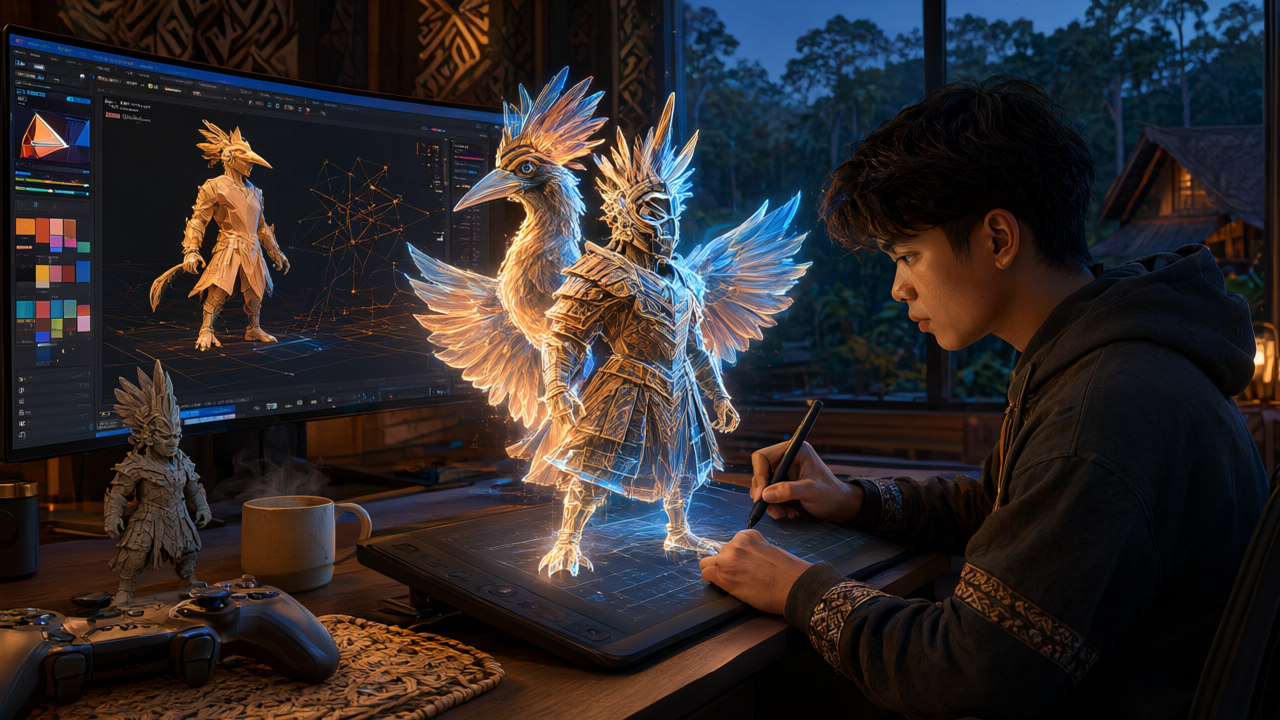
MDEC is backing BAGFest 2026 in Sarawak, a creative industry event that builds on the 2025 ASEAN Digital Content Summit with a sharper focus on three things: animation, gaming, and B2B access. MDEC's stated position is that Borneo is an untapped creative market, and that Sarawak's stories and talent can power Malaysia's next wave of digital content growth. The strategic story here is a shift in problem definition — Malaysia no longer needs to prove its creative talent exists; the challenge now is converting that talent into globally marketable intellectual property. For Malaysian businesses, this opens a deal-making channel into East Malaysia's content economy, and a window for studios and service firms to position themselves early.
AI Summary
MDEC is backing BAGFest 2026 in Sarawak, a creative industry event that builds on the 2025 ASEAN Digital Content Summit with a sharper focus on three things: animation, gaming, and B2B access. MDEC's stated position is that Borneo is an untapped creative market, and that Sarawak's stories and talent can power Malaysia's next wave of digital content growth. The strategic story here is a shift in problem definition — Malaysia no longer needs to prove its creative talent exists; the challenge now is converting that talent into globally marketable intellectual property. For Malaysian businesses, this opens a deal-making channel into East Malaysia's content economy, and a window for studios and service firms to position themselves early.
Key Takeaways
- BAGFest 2026 is set for Sarawak with MDEC backing, and deliberately narrows its scope from the 2025 ASEAN Digital Content Summit to animation, gaming, and B2B access.
- MDEC frames Borneo as an untapped creative market — Sarawak's cultural stories and talent pool are positioned as fuel for the next phase of digital content growth.
- The core shift: Malaysia's creative sector challenge is no longer proving talent exists, but converting talent into owned, exportable IP — moving from work-for-hire to owning characters, worlds, and formats.
- The B2B focus signals this is designed as a deal-making platform — a place for co-production, distribution, and publishing agreements — rather than a fan festival or general conference.
- For Malaysian companies outside animation and games, an East Malaysian content push creates adjacent demand: localisation, marketing, tooling, and AI-assisted production services.
What Happened
MDEC, Malaysia's national digital economy agency, is supporting BAGFest 2026 in Sarawak as a platform to turn Borneo's creative output into global intellectual property. The event builds on the 2025 ASEAN Digital Content Summit, but with a tighter focus on three pillars: animation, gaming, and B2B access.
The positioning, as reported by Digital News Asia, is explicit. MDEC sees Borneo as an untapped creative market. Sarawak's stories — the cultural raw material — and its talent base are viewed as the engine for the country's next wave of digital content growth.
The context matters. Malaysia has spent years building its animation, gaming, and wider digital creative sector through successive national programmes. That groundwork is done, or at least advanced enough that the conversation has moved on. The source article's framing is blunt on this point: the next challenge is less about proving creative talent exists, and more about turning that talent into assets that travel — IP that can be licensed, distributed, franchised, and sold internationally.
BAGFest 2026, in other words, is being positioned as a springboard: a structured attempt to move Borneo's creative economy from potential to product.
Why It Matters
The economics of creative industries come down to a simple split: you either sell your labour, or you sell what you own. A studio doing outsourced animation work for a foreign client gets paid once. A studio that owns a character, a game world, or a story format gets paid every time someone licenses, streams, adapts, or merchandises it. That is the difference between a service business and an IP business — think of it as the difference between being a factory and being the brand the factory produces for.
For years, Malaysia's creative sector has sat mostly on the wrong side of that split. Competent, cost-competitive, hired by global players — but rarely owning the property. When the source article says the challenge is no longer proving talent exists, it is describing a sector that has outgrown its original problem and now faces a harder one: commercialisation and ownership. This is the same transition South Korea made in drama and music, and it took deliberate industrial policy, not just talent, to get there. (This comparison is my analysis, not a claim from the source.)
The second signal worth reading is the B2B access pillar. General summits produce panels; B2B-focused events are built to produce meetings, contracts, and co-production agreements. By narrowing from a broad digital content summit to animation and gaming specifically, the organisers are trading breadth for depth — fewer topics, more deal infrastructure. For a regional creative economy trying to break into global value chains, that is the right trade.
Third, the choice of Sarawak itself. Creative investment in Malaysia has historically concentrated in the Klang Valley and, for tech manufacturing, Penang. Directing a national-backed content push at Borneo changes where opportunity lives — and that has knock-on effects for talent distribution, service demand, and regional development that go well beyond animation.
What This Means for Malaysia
For East Malaysia, this is a rare alignment of national agency support with local creative ambition. Sarawak's cultural material — its folklore, languages, histories, and settings — is exactly the kind of differentiated content that crowded global streaming and gaming markets reward. Generic content competes on price; culturally specific content competes on identity. If Malaysian studios can package Borneo stories with production quality that meets international standards, they are selling something Vietnam, Thailand, and Indonesia cannot replicate directly, because the source material is ours. (Again, analysis, not source claims.)
For the national picture, this fits a consistent thread in Malaysia's digital economy direction — MDEC's involvement signals that creative content is treated as an export industry, not a cultural side project. Success here would mean high-value creative jobs that don't require migration to Kuala Lumpur, which matters for East Malaysian talent retention and for spreading digital economy gains beyond the west coast.
There are also regulatory and commercial implications. IP ownership sharpens questions Malaysia has already been working through: copyright protection, contract standards for creative work, and — as generative AI enters production pipelines — questions about what counts as human authorship under Malaysian IP law. Businesses building on Borneo IP will want clean ownership documentation from day one, because international buyers and co-producers will demand it during due diligence.
How Your Business Can Use This
If you run an animation studio, game developer, or content production house, treat BAGFest 2026 as a deadline. Here is a practical sequence for this quarter:
- Audit your IP position. List what you currently own outright versus what you produced for clients. Identify one or two properties with international potential — a character, a game concept, a story world rooted in Borneo material.
- Clean up ownership. Confirm contracts,
Sources & References
AIBlog summarises and analyses published information. We do not reproduce full source text. Analysis is editorial and not financial or legal advice.