Google reveals Gemini Robotics 2.0, promising improved dexterity and safety
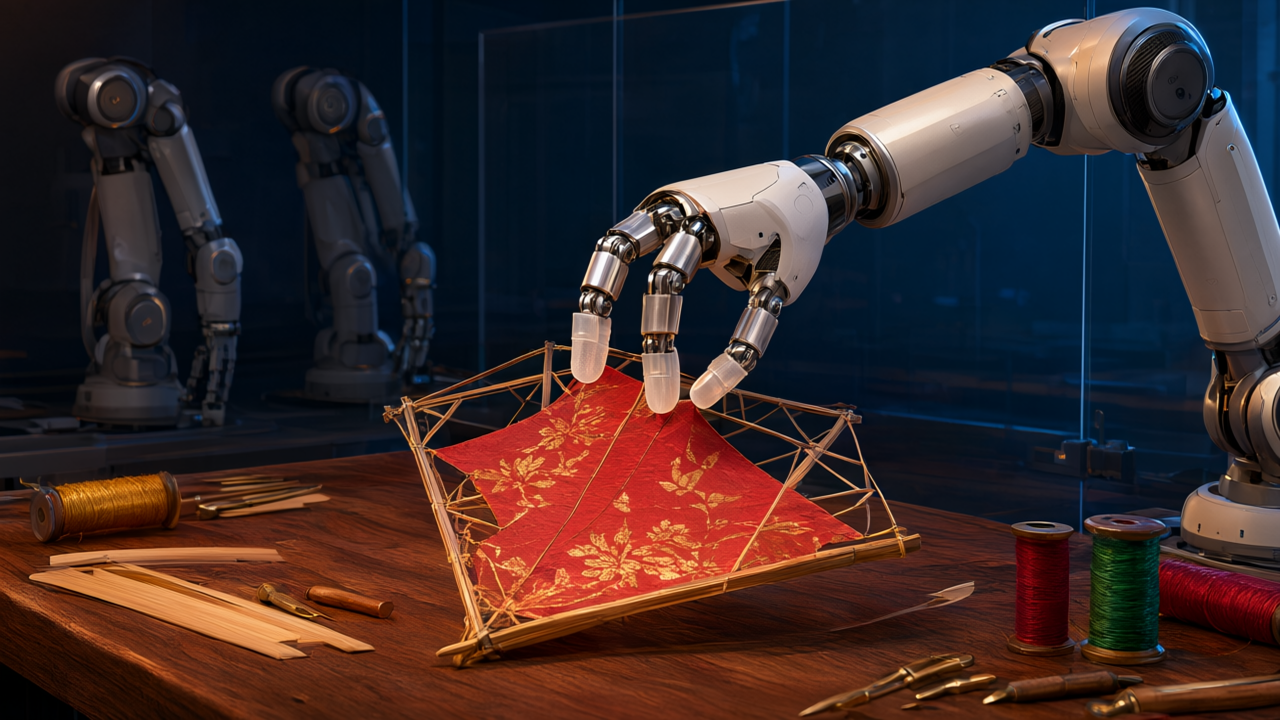
Google has unveiled Gemini Robotics 2.0, the latest iteration of its AI models designed specifically for physical robotics applications. The release comprises three models, though only one is publicly available at launch, with the remaining two held back for further development or controlled access. The system promises meaningful improvements in two areas that have historically held back commercial robotics: dexterity (the ability to handle objects precisely and adaptively) and safety (the ability to operate around humans without causing harm). For Malaysian businesses, this signals that the world's largest AI companies are now investing seriously in bringing large language model intelligence into physical machines, a trend that will eventually reshape manufacturing, logistics, and service robotics across Southeast Asia. ---
Google Reveals Gemini Robotics 2.0, Promising Improved Dexterity and Safety
AI Summary
Google has unveiled Gemini Robotics 2.0, the latest iteration of its AI models designed specifically for physical robotics applications. The release comprises three models, though only one is publicly available at launch, with the remaining two held back for further development or controlled access. The system promises meaningful improvements in two areas that have historically held back commercial robotics: dexterity (the ability to handle objects precisely and adaptively) and safety (the ability to operate around humans without causing harm). For Malaysian businesses, this signals that the world's largest AI companies are now investing seriously in bringing large language model intelligence into physical machines, a trend that will eventually reshape manufacturing, logistics, and service robotics across Southeast Asia.
Key Takeaways
- Gemini Robotics 2.0 is a family of three models, not a single product. Google is taking a portfolio approach, suggesting different models for different robotic tasks or deployment scenarios.
- Only one of the three models is publicly available now. This indicates Google is being cautious about releasing robotics AI that controls physical hardware, where mistakes carry real-world consequences unlike text generation.
- Dexterity and safety are the headline improvements. These are the two bottlenecks that have prevented robots from moving beyond cages on factory floors into shared human workspaces.
- This represents a major AI player moving from digital to physical AI. Google applying its Gemini LLM foundation to robotics validates the thesis that the next frontier of AI is not just chatbots but embodied agents.
- Malaysian manufacturers and logistics operators should begin tracking this now. While commercial deployment in Malaysia may be 12–24 months away, the planning cycle for automation investments starts well before procurement.
What Happened
Google has publicly revealed Gemini Robotics 2.0, the second generation of its robotics-focused AI model family. The announcement confirms that the Gemini Robotics platform now consists of three distinct models, each presumably targeting different aspects of robotic control, perception, or planning. However, only one of these three models is available to external users or developers at this time. The other two remain under Google's control.
The two capabilities Google is emphasising in this release are dexterity and safety. Dexterity in robotics refers to a machine's ability to manipulate objects with human-like or near-human-like skill — gripping fragile items without breaking them, adjusting grip when an object slips, or handling irregularly shaped materials that traditional robotic arms struggle with. Safety refers to the ability of a robot powered by AI to operate in close proximity to humans without posing injury risk, which requires real-time environmental awareness, predictive movement planning, and fail-safe behaviour.
The fact that Google has structured this as a three-model release but is only opening one to the public is itself a significant data point. It suggests the company is differentiating between models that are robust enough for external experimentation and models that require further internal validation. In robotics, unlike text generation, an error does not produce a wrong sentence — it can produce a broken product, a damaged machine, or an injured person. Google's cautious rollout reflects that reality.
This is also notable because it represents Google's Gemini model family — originally built as a large language model to compete with OpenAI's GPT series — expanding into physical world applications. The same underlying AI capabilities that allow a chatbot to understand language and reason about problems are now being directed at helping machines understand physical environments and control mechanical actions.
Why It Matters
The significance of this announcement lies in what it signals about the direction of the AI industry. For the past two years, the dominant narrative has been about digital AI: chatbots, code generators, image creators, and content tools. Companies like OpenAI, Anthropic, and Google built enormous businesses applying AI to software tasks. Gemini Robotics 2.0 represents a clear acceleration into physical AI — systems that do not just generate text or images but control machines that move through and act upon the real world.
Dexterity has been one of the hardest problems in robotics for decades. Traditional industrial robots are excellent at repeating the exact same motion thousands of times — welding a car frame in exactly the same spot, for example. But they fail when confronted with variation: a product in a slightly different position, an object with an unusual texture, or a task that requires fine finger-level manipulation. If Gemini Robotics 2.0 genuinely improves dexterity through AI reasoning rather than pre-programmed routines, it opens the door to robots that can handle tasks currently done by human hands — picking and packing varied e-commerce orders, assembling small electronics components, or preparing food.
Safety is equally critical. The reason most industrial robots operate inside cages or behind light curtains is that they cannot safely detect and avoid humans in their operating area. Collaborative robots, or cobots, have made some progress here, but AI-driven safety — where a robot can predict human movement, understand intent, and adjust its behaviour in real time — would be a qualitative leap forward. This matters enormously for any industry where humans and machines share workspace, which includes most small and medium manufacturing operations.
The three-model approach also tells us something about Google's strategy. Rather than building one general-purpose robotics AI, Google appears to be creating specialised models for different robotic functions. This is analogous to how the broader AI market has evolved — from general-purpose chatbots to specialised agents for coding, legal analysis, or customer service.
What This Means for Malaysia
Malaysia occupies a position in the global manufacturing supply chain where robotics adoption directly affects competitiveness. Penang's electronics manufacturing cluster, Selangor's industrial corridors, and Johor's growing advanced manufacturing base all depend on cost-effective, high-quality production. As wages rise and labour shortages intensify across the sector, automation is no longer a competitive advantage — it is becoming a competitive necessity.
Gemini Robotics 2.0, and the broader trend of AI-driven robotics it represents, matters for Malaysia in several concrete ways. First, the Malaysian semiconductor and electronics manufacturing sector in Penang involves many tasks that require fine dexterity — inspecting components, handling delicate materials, assembling small parts. If AI models like Gemini Robotics can make robots more dexterous, these tasks become automation candidates. This could help Malaysian fabs and EMS (electronics manufacturing services) companies reduce dependency on manual labour for precision tasks while improving consistency.
Second, Malaysia's e-commerce and logistics sector has grown substantially, driven by domestic platforms and regional fulfilment centres. Warehouses run by companies across the Klang Valley and beyond still rely heavily on human pickers and packers. Improved robotic dexterity could accelerate the adoption of automated picking systems in Malaysian warehouses, which to date have been limited because robots struggle with the sheer variety of product shapes, sizes, and packaging types.
Third, from a policy perspective, this reinforces the importance of Malaysia's MyDIGITAL framework and the work of agencies like MDEC in preparing the workforce for an AI-and-robotics-intensive economy. The conversation needs to shift from "will AI replace workers" to "how do we upskill workers to operate alongside AI-driven robotics." Companies that invest in training programmes now — teaching workers to program, monitor, and maintain robotic systems — will be better positioned than those that delay.
It is worth noting that Malaysian adoption of Gemini Robotics specifically will likely lag behind the United States and Europe by 12 to 24 months, given that only one of three models is currently available even in Google's home market. But the strategic planning should begin now.
How Your Business Can Use This
For Malaysian SMEs and mid-sized manufacturers, the practical implication of Gemini Robotics 2.0 is not that you should rush to buy Google-powered robots tomorrow. Rather, it is that the cost curve and capability curve of AI-driven robotics is bending in a direction that makes automation accessible to smaller players within the next one to two years.
Here is what you should do this quarter. First, conduct an internal audit of repetitive physical tasks in your operations that involve dexterity — tasks where workers handle varied objects, make small adjustments, or perform fine manipulation. Document these tasks with video and time studies. This creates a baseline that will help you evaluate robotics solutions when they become commercially viable for your scale.
Second, begin engaging with the local robotics and automation integrator ecosystem in Malaysia. Companies in Penang and the Klang Valley specialise in helping manufacturers deploy automation solutions. Understanding what is available today — and what these integrators say is coming — will help you plan your capital expenditure roadmap.
Third, if you operate in e-commerce fulfilment, food processing, electronics assembly, or warehousing, start a small-scale pilot of existing collaborative robots (cobots) from established vendors. The goal is not to achieve immediate ROI but to build internal capability — training your staff to work with, program, and maintain robotic systems. When AI-driven systems like Gemini Robotics become available, your team will be ready to adopt them faster.
The Agentic AI Angle
Gemini Robotics 2.0 represents something important for the agentic AI trend: it moves AI agents from the digital world into the physical world. An AI agent today can browse the web, send emails, and manipulate data. An embodied AI agent — one powered by a robotics model — can perceive its environment through cameras and sensors, reason about what actions to take, and physically execute those actions through robotic hardware.
Consider a warehouse scenario. A traditional automated system requires a human to specify exactly which item to pick, from which shelf, and place it in which bin. An agentic robotic system powered by something like Gemini Robotics could receive a higher-level instruction — "fulfil order number 4471" — and then autonomously navigate the warehouse, identify the correct items even if they have been moved or are partially obscured, adjust its grip based on the object's weight and fragility, and place them in the correct packaging. The agent plans, reasons, and acts across multiple steps without human intervention at each stage.
For Malaysian businesses, this means that the agentic AI conversation is not just about digital workflows like customer service or data analysis. It extends to physical operations. A manufacturing SME could eventually deploy agentic robotic systems that handle entire production sequences — receiving raw materials, adjusting processes based on real-time quality data, and packaging finished goods — all coordinated by an AI agent that reasons about the full workflow.
Risks and Limitations
The most obvious limitation is that only one of three models is publicly available, which means Google itself is signalling that the technology is not fully baked. Robotics AI deployed in real manufacturing environments must achieve extremely high reliability — a 99% success rate still means one failure per hundred operations, which in a high-volume production line is unacceptable. The gap between laboratory demonstrations and industrial-grade reliability is significant.
There are also data privacy and cybersecurity considerations. AI-driven robots that perceive their environments through cameras are constantly collecting visual data. In a Malaysian context, this intersects with PDPA obligations if any personal data is captured. Businesses must think carefully about data governance before deploying perception-based robotic systems.
The Bottom Line
Google's Gemini Robotics 2.0 is a signal that the next major phase of AI will be physical, not just digital. The improvements in dexterity and safety address the exact bottlenecks that have kept robots in cages and out of human workspaces. Malaysian businesses in manufacturing, logistics, and e-commerce should treat this as a planning trigger: conduct your task audits, engage with integrators, and begin pilot programmes now. The companies that build robotics readiness into their operations over the next 12 months will be the ones who benefit when this technology matures into commercial availability.
FAQ
When will Gemini Robotics 2.0 be available for Malaysian businesses to use? Google has not announced specific international availability timelines. With only one of three models currently public even in the US, Malaysian commercial deployment is likely 12–24 months away, though businesses should begin planning now.
Is this relevant for small Malaysian manufacturers or only for large MNCs? The technology will likely reach large multinationals first, but the trend toward AI-driven robotics is making automation cheaper and more flexible over time. SMEs should start with audits and small cobot pilots to build readiness.
How is this different from the industrial robots already used in Malaysian factories? Traditional industrial robots follow pre-programmed routines and cannot adapt to variation. Gemini Robotics applies AI reasoning so robots can handle varied objects, adjust to changing conditions, and operate more safely alongside humans.
Sources / References
- Ars Technica — "Google reveals Gemini Robotics 2.0, promising improved dexterity and safety" — Provided the core facts of the announcement, including the three-model structure and limited public availability. (Link)
Sources & References
AIBlog summarises and analyses published information. We do not reproduce full source text. Analysis is editorial and not financial or legal advice.