Digit Maker Agility Robotics Eyes Wheeled Robots — What It Means for Malaysia
The company behind the Digit humanoid is studying wheeled form factors, a signal that robot buyers want the right shape for the job, not the most human one.
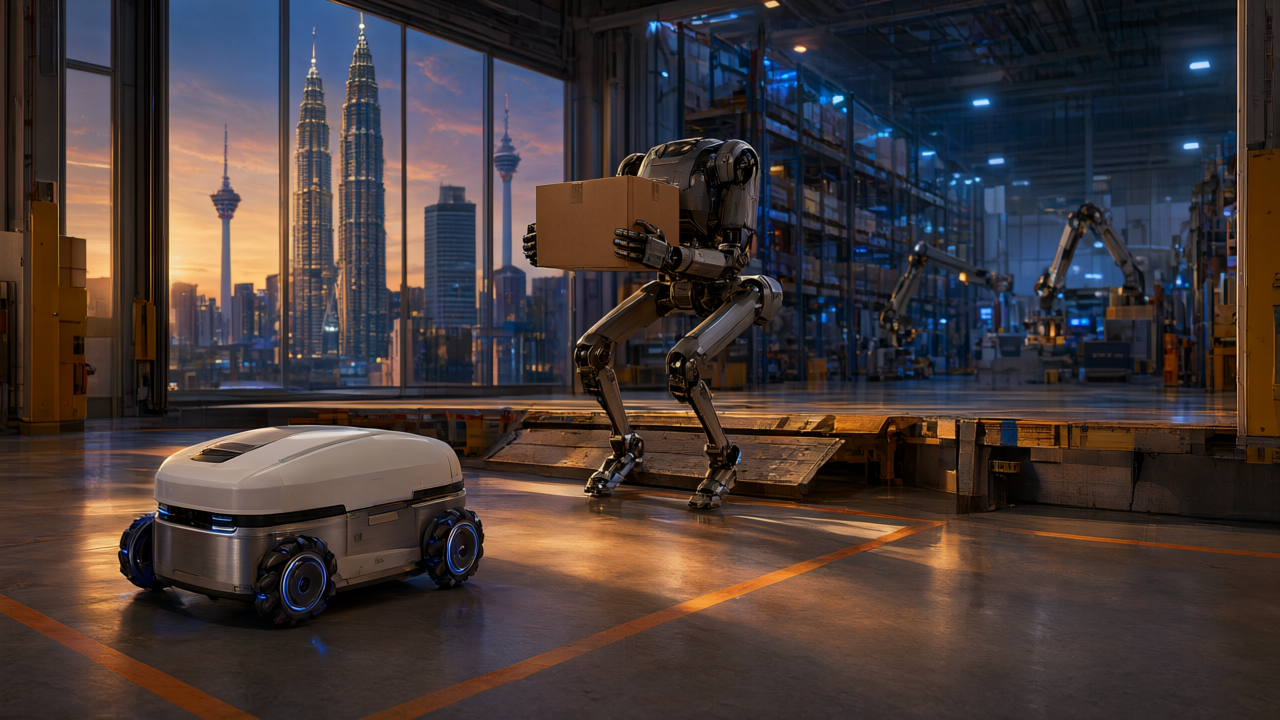
Agility Robotics, the US company behind the Digit humanoid robot, is exploring a range of new robot designs including wheeled form factors, The Robot Report has revealed. The stated goal is to match hardware to different operating environments and customer needs rather than forcing one body type onto every workplace. For Malaysian warehouse, logistics and factory operators, this is a meaningful signal: the commercial robotics market is maturing from "humanoid hype" toward practical form-factor selection. On the flat concrete floors of most Malaysian facilities, wheeled platforms often make more economic sense than legs — and your automation roadmap should reflect that.
AI Summary
Agility Robotics, the US company behind the Digit humanoid robot, is exploring a range of new robot designs including wheeled form factors, The Robot Report has revealed. The stated goal is to match hardware to different operating environments and customer needs rather than forcing one body type onto every workplace. For Malaysian warehouse, logistics and factory operators, this is a meaningful signal: the commercial robotics market is maturing from "humanoid hype" toward practical form-factor selection. On the flat concrete floors of most Malaysian facilities, wheeled platforms often make more economic sense than legs — and your automation roadmap should reflect that.
Key Takeaways
- Agility Robotics has confirmed it is exploring multiple robot designs, including wheels — a shift from a single-humanoid strategy to a portfolio approach shaped by customer environments.
- Wheels versus legs is an engineering trade-off, not a fashion choice: wheeled robots generally have fewer moving parts, lower power draw and simpler maintenance than bipedal humanoids on flat ground.
- The move signals that robotics buyers are asking "what is the cheapest reliable way to move this item?" rather than "how do I get a humanoid?" — procurement logic is winning over novelty logic.
- Malaysian flat-floor environments — Shah Alam e-commerce fulfilment centres, Port Klang logistics sheds, Penang electronics plants — are exactly the terrain where wheeled robots tend to deliver faster returns.
- Watch the software, not just the hardware: agentic AI orchestration layers will increasingly decide which robot handles which task, making the form factor an execution detail rather than a buying decision in isolation.
What Happened
According to a report from The Robot Report, Agility Robotics is exploring a range of robot designs and form factors — including wheels — as it looks to serve different operating environments and customer needs. That is the core fact, and it comes straight from the source. Everything beyond it in this article is our analysis.
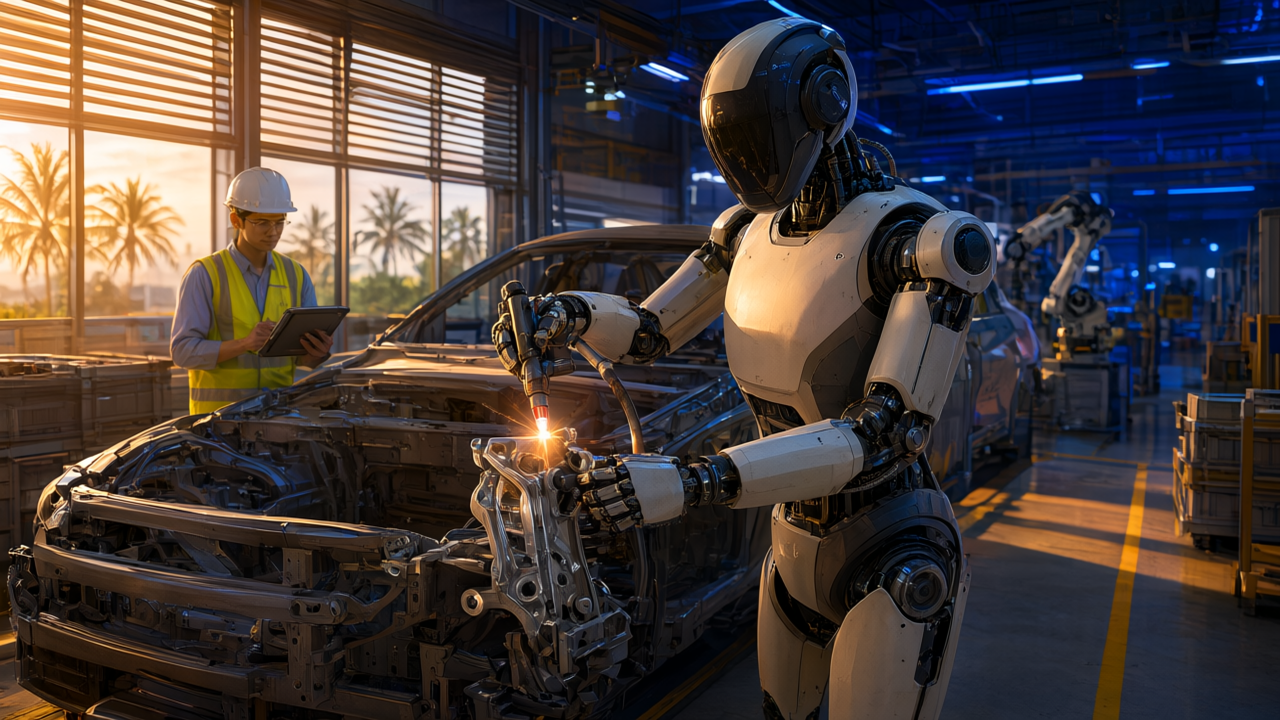
The context matters. Agility is the company behind Digit, its flagship humanoid: a two-legged robot designed to work in spaces built for people — walking, reaching, and carrying items such as totes in environments like warehouses. Digit has been one of the most visible faces of the humanoid robotics wave, and Agility has been one of the category's most watched companies.
Exploring wheeled designs is therefore notable. It does not mean Digit is being shelved. It means Agility is widening its hardware bets. The company appears to be reasoning that a robot's body should follow the job site: legs where terrain is mixed, wheels where floors are flat. For a firm so closely identified with bipedal robotics, even studying wheels tells you where it thinks customer demand actually sits.
Why It Matters
Here is the read: this is what a maturing market looks like. The humanoid robotics category has been dominated by spectacle — viral demo videos, funding rounds, bold predictions. But buyers do not pay for spectacle. They pay for throughput, uptime and cost per move. A two-legged robot that costs more, consumes more power and requires more maintenance than a wheeled one doing the same tote-transfer job on flat concrete is a hard sell, however impressive it looks.
Wheels versus legs is one of the oldest debates in robotics, and the engineering reality is well understood. Legs buy you access: stairs, ramps, cluttered floors, outdoor terrain, anywhere a trolley cannot roll. Wheels buy you efficiency: simpler mechanics, better battery life, lower purchase cost, easier servicing. Most of the world's industrial and logistics floors are flat and smooth by design. When Agility — a humanoid specialist — starts studying wheels, it is effectively confirming that a large slice of customer environments do not actually need legs.
There is also a portfolio-strategy signal here. A single-form-factor company sells one answer. A multi-form-factor company sells outcomes: "we will deploy whatever shape solves your workflow." That is how industrial automation giants have always operated — you buy the conveyor, the arm or the mobile robot that fits the line, not a single universal machine. Agility's exploration suggests the humanoid sector is converging on the same sober logic. Compare that with the past two years of humanoid marketing, which promised one robot for everything. The gap between those two positions is the real story.
What This Means for Malaysia
Malaysia's logistics and manufacturing base runs on flat concrete. The e-commerce fulfilment centres clustered around Shah Alam and the Port Klang corridor, the electronics plants in Penang and Kulim, the food processing facilities in Johor — these are precisely the environments where wheeled platforms tend to outperform bipedal ones on cost and reliability. If Agility's exploration turns into wheeled products, Malaysian operators get more options at likely lower price points than humanoids.
The labour angle is local and pressing. Malaysian warehousing and manufacturing have long depended on manual handling, with foreign worker quotas, levies and wage floors as recurring cost and policy risks. Automation that reduces dependence on repetitive manual movement — without demanding the capital outlay of a full humanoid fleet — fits the risk profile of Malaysian SMEs far better. National digitalisation pushes under MyDIGITAL and MDEC's industry programmes have been nudging SMEs in this direction for years; a diversifying global robot catalogue gives those initiatives more practical hardware to work with.
For the local AI ecosystem, this is also a talent and integration opportunity. Robots still need mapping, fleet management, maintenance and workflow redesign. Malaysian systems integrators and automation engineers in the Klang Valley and Penang corridors should
Sources & References
AIBlog summarises and analyses published information. We do not reproduce full source text. Analysis is editorial and not financial or legal advice.