Claude Code vs Goose: The Free AI Coding Agent That Challenges a US$200/Month Giant
Anthropic's premium autonomous coding tool now has a zero-cost rival — and it changes the economics of AI-assisted software development for Malaysian teams.

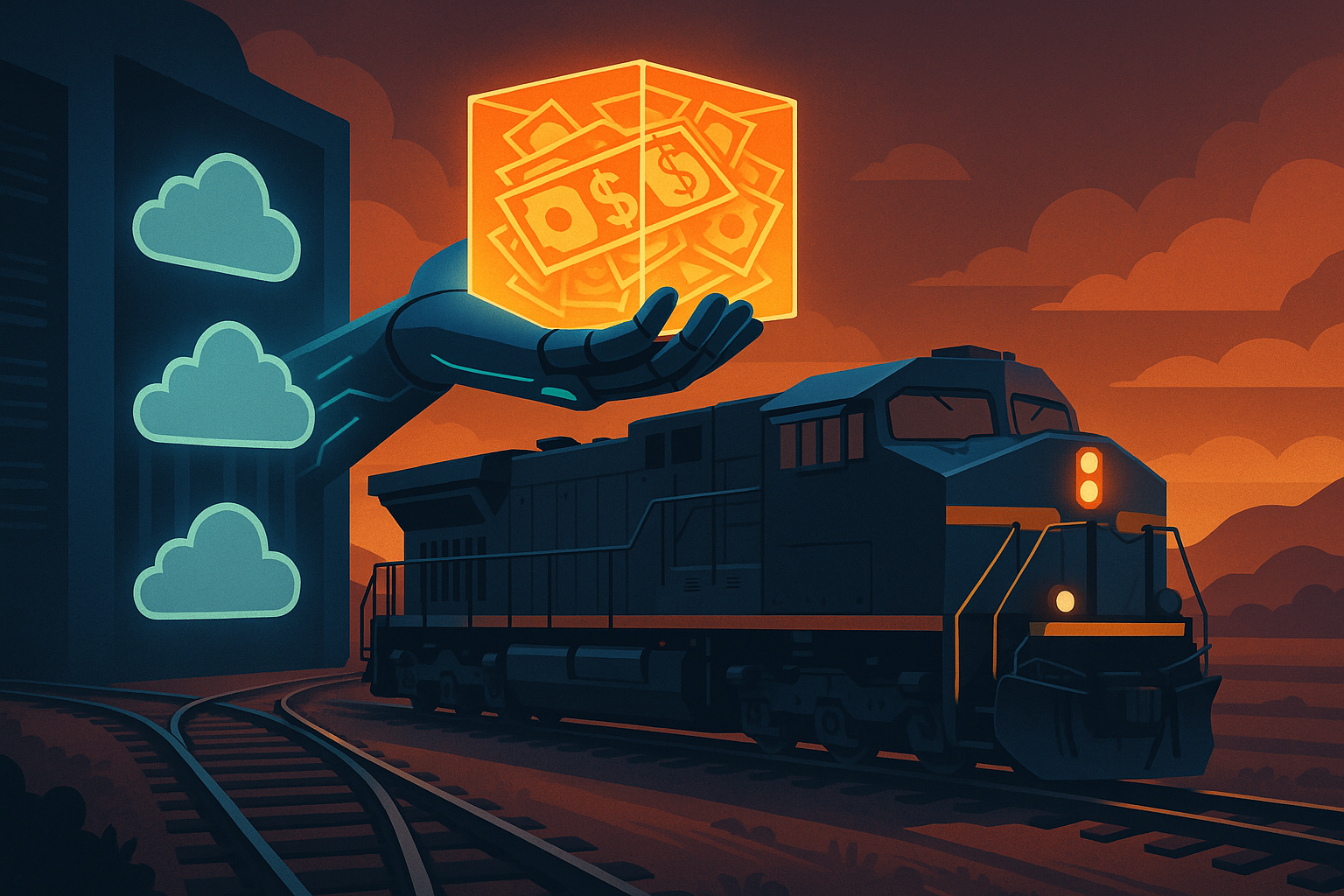
Anthropic's Claude Code — a terminal-based AI agent that can write, debug, and deploy code with significant autonomy — costs between US$20 and US$200 per month depending on usage, pricing that has triggered pushback from developers globally. A free alternative called Goose now offers comparable autonomous coding capabilities at no cost, fundamentally challenging the paid model. For Malaysian businesses — from Klang Valley startups to Penang semiconductor firms building internal tools — this shifts the conversation from "can we afford AI coding agents?" to "which free or low-cost option fits our workflow?" The implication is clear: agentic AI for software development is becoming commoditised faster than expected, and the premium pricing window for coding agents may be closing. ---
AI Summary
Anthropic's Claude Code — a terminal-based AI agent that can write, debug, and deploy code with significant autonomy — costs between US$20 and US$200 per month depending on usage, pricing that has triggered pushback from developers globally. A free alternative called Goose now offers comparable autonomous coding capabilities at no cost, fundamentally challenging the paid model. For Malaysian businesses — from Klang Valley startups to Penang semiconductor firms building internal tools — this shifts the conversation from "can we afford AI coding agents?" to "which free or low-cost option fits our workflow?" The implication is clear: agentic AI for software development is becoming commoditised faster than expected, and the premium pricing window for coding agents may be closing.
Key Takeaways
- Claude Code charges US$20–US$200/month for autonomous coding capabilities, creating real cost pressure for teams that want to deploy AI agents across multiple developers.
- Goose offers similar functionality for free, meaning businesses can now pilot agentic coding workflows without any subscription budget.
- Developer pushback on Claude Code pricing signals broader market resistance — buyers are unwilling to accept open-ended per-developer costs for AI tools that still require supervision.
- The coding agent space is fragmenting fast, with free and low-cost alternatives eroding the pricing power of premium providers.
- For Malaysian SMEs, the cost difference is amplified — US$200/month equals roughly RM940, a significant sum when stretched across a small dev team.
What Happened
Anthropic launched Claude Code as a terminal-based AI agent — meaning it runs in the command-line interface where developers already work, not in a separate browser window or chat panel. Unlike a typical AI chatbot that simply suggests code snippets when you ask a question, Claude Code can plan multi-step coding tasks, navigate an existing codebase, write new code, debug errors, and even deploy what it builds with a degree of autonomy. It functions as a coding partner that can take initiative rather than simply respond to prompts. This is what distinguishes it as an "agentic" tool.
However, its pricing structure — scaling from US$20 per month at the entry level up to US$200 per month for heavier usage — has generated significant friction. For individual developers, the upper tier approaches the cost of a full software subscription suite. For companies running teams of five, ten, or twenty developers, the math becomes uncomfortable quickly. Twenty developers at US$200 each is US$4,000 per month — roughly RM18,800 — before any other tooling costs.
The source reports a "growing rebellion" among the very programmers Claude Code is designed to serve. This is not merely complaints on social media; it reflects a genuine market tension where the tool is recognised as powerful but is perceived as overpriced relative to the value it delivers in everyday use. Developers acknowledge Claude Code's capabilities but question whether autonomous coding assistance — which still requires human review, testing, and oversight — justifies premium subscription pricing.
Into this gap steps Goose, which the source describes as doing "the same thing for free." Goose offers comparable terminal-based, autonomous coding agent functionality without a subscription fee. Its emergence directly challenges the assumption that agentic AI coding tools must carry a significant monthly cost, and it gives developers and businesses a zero-budget entry point to test and adopt AI-assisted development workflows.
Why It Matters
This is not simply a story about two products competing. It marks a meaningful inflection point in the AI tools market: the commoditisation of agentic coding capabilities.
When Anthropic priced Claude Code at up to US$200/month, it was betting that developers and enterprises would pay a premium for a well-integrated, high-quality autonomous coding agent. That bet assumed limited competition and strong willingness to pay. The arrival of a free alternative with comparable core functionality undermines both assumptions. It signals that the capabilities underlying AI coding agents — code generation, debugging, file navigation, multi-step task execution — are becoming standardised and reproducible rather than unique, proprietary advantages.
This parallels patterns seen in other software categories. Consider how cloud storage started as a premium service before free tiers became table stakes, or how project management tools proliferated until free versions like Trello's basic plan set the floor for market entry. AI coding agents appear to be following a similar trajectory, but at a much faster pace. The gap between "premium paid tool" and "free equivalent" is closing in months, not years.
The developer pushback also reveals something important about how buyers perceive value in AI tools. Developers are not rejecting AI assistance — adoption rates for tools like GitHub Copilot remain strong. What they are rejecting is the specific pricing model where costs scale unpredictably with usage and can reach hundreds of dollars per person. This creates an opening for alternatives that offer predictable, transparent, or zero-cost access. For the broader AI industry, this is a warning: if your tool's core capabilities can be replicated by an open or free project, your pricing power has a limited shelf life.
What This Means for Malaysia
For Malaysian businesses, the cost dynamics are even more pronounced. At current exchange rates, US$200 is approximately RM940. For a Klang Valley startup with five developers, that is nearly RM4,700 per month — a sum that could instead fund a junior developer's salary or cover cloud infrastructure for an entire product line. Malaysian SMEs, which typically operate on tighter margins than their Silicon Valley counterparts, feel per-seat software pricing more acutely.
The availability of a free alternative like Goose is particularly relevant under the current MyDIGITAL push and MDEC's efforts to accelerate digital adoption among Malaysian SMEs. Companies that want to experiment with AI-assisted development but have been deterred by cost now have a risk-free entry point. A five-person dev team in Penang building internal tooling for a semiconductor supply chain workflow, for example, can pilot Goose without submitting a budget request or navigating procurement approval cycles.
There is also a talent and skills dimension. Malaysian developers who gain hands-on experience with agentic coding tools — whether Claude Code or Goose — build valuable skills in working alongside autonomous AI systems. This matters because the global demand for developers who can effectively direct, review, and supervise AI coding agents is rising rapidly. Teams in Kuala Lumpur, Cyberjaya, and Penang that adopt these tools now, regardless of which one they choose, position themselves ahead of competitors who are still writing every line of code manually.
From a governance perspective, Malaysian firms should also consider PDPA implications. Terminal-based AI agents that read and navigate codebases may interact with proprietary source code, configuration files containing credentials, or data structures tied to customer information. Companies should evaluate what data their chosen tool processes, where it is sent, and how it is stored — whether the tool is free or paid.
How Your Business Can Use This
If you lead a development team or run a business that builds software — whether a digital agency in Bangsar, a fintech startup in KL, or an internal IT team at a manufacturing firm in Johor — here is a practical approach.
Start with the free option. Pilot Goose with one or two developers on a non-critical internal project. This gives your team hands-on experience with an autonomous coding agent without any budget commitment. Set a two-week evaluation period with clear criteria: did the tool reduce development time? How much human review was required? Were there any errors or security concerns?
Benchmark against your current workflow. Track how long specific tasks — bug fixes, feature additions, test writing — take with and without the AI agent. The value of these tools is not theoretical; it should show up as measurable time savings. If Goose delivers, you have a cost-free productivity gain. If it falls short, you have data to justify evaluating Claude Code or other paid options.
Establish a code review protocol. Regardless of which tool you use, AI-generated code must go through the same review and testing process as human-written code. This is non-negotiable. Assign a senior developer to review AI-assisted output, and document which parts of your codebase were generated or modified by the agent.
Budget strategically if you choose paid tools. If your evaluation shows that Claude Code or another paid agent delivers materially better results — fewer errors, better integration with your stack, stronger security — then budget for specific developers or specific projects rather than rolling it out company-wide. US$200/month for one developer on a high-value project is justifiable; US$200/month for every developer on every task may not be.
The Agentic AI Angle
The distinction between Claude Code, Goose, and earlier AI coding tools like GitHub Copilot is the shift from suggestion to action. Copilot suggests code as you type. Claude Code and Goose are agents — they take a task description, plan the steps, navigate your files, write the code, run tests, and iterate. This is the difference between an autocomplete tool and a junior developer who can work semi-independently.
For Malaysian businesses, the agentic dimension matters because it changes which tasks can be delegated. A developer at a logistics company in Port Klang could instruct an agent to "write a script that reads yesterday's shipment CSV, identifies delayed deliveries, and sends a summary email to the operations team." The agent plans the steps, writes the code across multiple files, debugs errors, and produces a working script — all within the terminal. The human reviews, tests, and deploys.
This workflow applies across sectors. An e-commerce team could use an agent to build and maintain product data pipelines. A manufacturing firm could automate quality report generation. The free availability of Goose means these use cases can be prototyped and tested without procurement delays, making agentic AI accessible to companies that previously lacked the budget.
Risks and Limitations
Free tools carry their own costs. Goose's free model may mean less polished documentation, slower support response, or fewer integration options compared to a paid product like Claude Code. Open-source and free projects can also change direction, lose momentum, or introduce breaking changes with less warning than commercial software. Businesses adopting Goose should treat it as they would any open-source dependency — evaluate the community, the maintenance cadence, and the roadmap.
Data privacy requires careful attention. Terminal-based agents that read codebases may process proprietary logic, API keys, or customer data structures. Malaysian companies must ensure that whichever tool they choose — free or paid — complies with their internal data governance policies and PDPA requirements. The absence of a subscription fee does not eliminate the responsibility to understand where your code and data go.
Finally, AI-generated code quality remains variable. These tools are capable but not infallible. They can introduce subtle bugs, security vulnerabilities, or inefficient patterns that pass initial testing but cause problems later. Human review remains essential, and teams that skip this step do so at their peril.
The Bottom Line
The emergence of a free alternative to Claude Code signals that agentic coding tools are becoming accessible to everyone — not just companies with large tooling budgets. For Malaysian businesses, the practical message is simple: you no longer need a US$200/month subscription to start working with autonomous AI coding agents. Start with Goose, measure the results, and only pay for a premium tool if your evaluation proves the extra cost delivers extra value.
The one action to take this quarter: assign one developer to pilot a free agentic coding tool on a real internal project. The cost is zero. The learning is significant. In a market where AI capabilities are commoditising rapidly, the teams that gain experience now will be the ones best positioned to leverage the next wave of tools — whatever they cost.
FAQ
Is Goose really a complete replacement for Claude Code? The source describes Goose as doing "the same thing for free," but in practice, feature parity, reliability, and integration quality may vary. Treat it as a strong starting point and evaluate it against your specific workflow needs.
How much does Claude Code actually cost for a Malaysian dev team? Claude Code ranges from US$20 to US$200 per developer per month (roughly RM94 to RM940). For a five-person team at the top tier, that is approximately RM4,700 monthly.
Are free AI coding agents safe to use with proprietary code? They require the same data governance review as any tool that accesses your codebase. Evaluate what data the agent processes, where it is transmitted, and whether it complies with your company's security policies and PDPA obligations before deployment.
Sources / References
- VentureBeat — "Claude Code costs up to $200 a month. Goose does the same thing for free." Provided the core facts on Claude Code's pricing, its terminal-based agentic capabilities, developer pushback, and Goose as a free comparable alternative. (URL: https://venturebeat.com/infrastructure/claude-code-costs-up-to-usd200-a-month-goose-does-the-same-thing-for-free)
Sources & References
AIBlog summarises and analyses published information. We do not reproduce full source text. Analysis is editorial and not financial or legal advice.