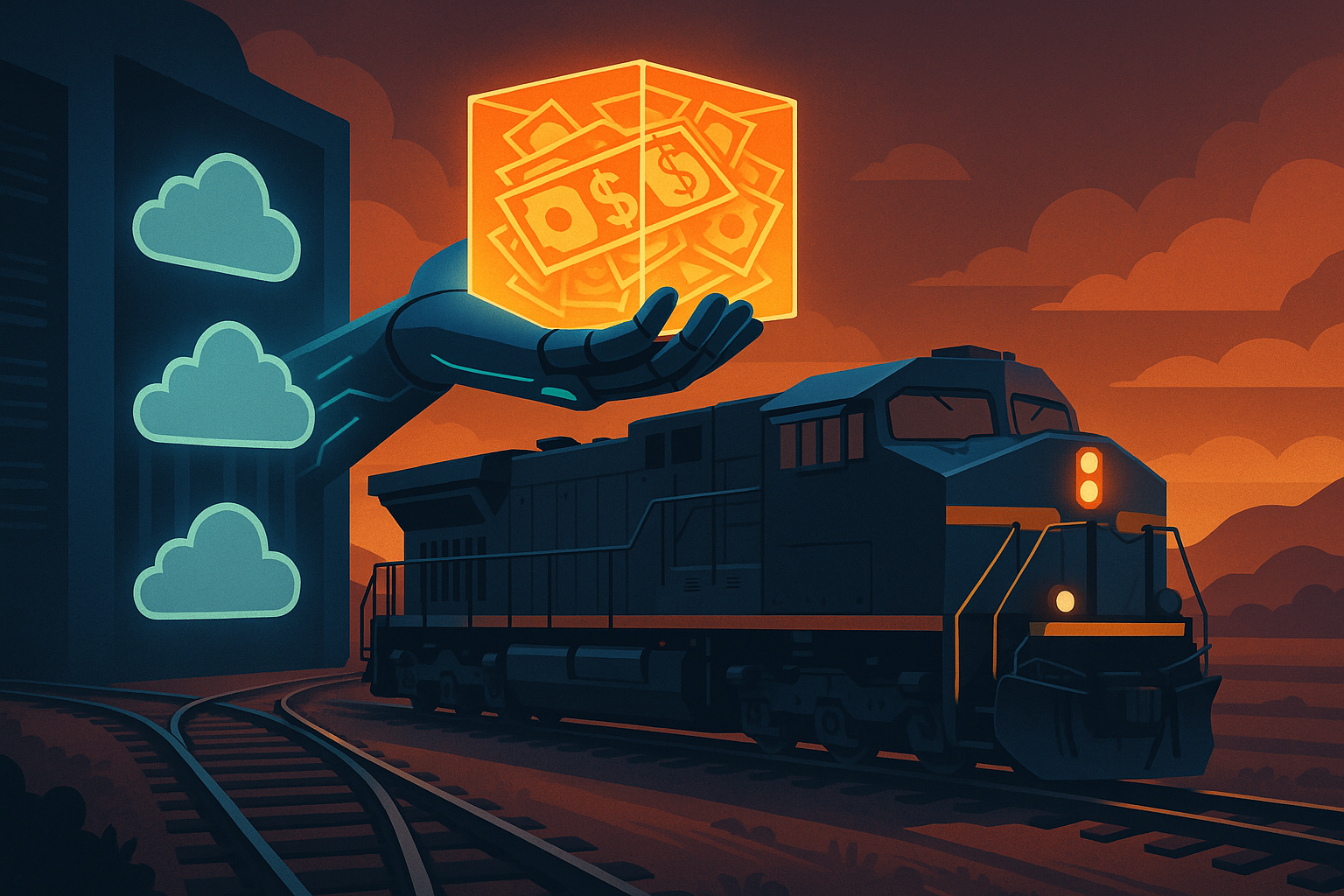
Claude Code costs up to $200 a month. Goose does the same thing for free.

Anthropic's Claude Code — a terminal-based AI agent that can autonomously write, debug, and deploy software — has become one of the most talked-about developer tools of 2025. But its pricing, which ranges from $20 to $200 per month depending on usage, is driving a backlash among developers who feel the cost is unsustainable for everyday coding work. A free, open-source alternative called Goose is emerging as a serious competitor, offering comparable agentic coding capabilities at no cost. For Malaysian businesses — particularly SMEs, startups, and tech teams in the Klang Valley and Penang corridors — this price gap matters enormously. At RM940-plus per month for a single top-tier Claude Code seat, the economics of AI-assisted development shift dramatically when a free alternative enters the picture.
Claude Code Costs Up to $200 a Month. Goose Does the Same Thing for Free.
AI Summary
Anthropic's Claude Code — a terminal-based AI agent that can autonomously write, debug, and deploy software — has become one of the most talked-about developer tools of 2025. But its pricing, which ranges from $20 to $200 per month depending on usage, is driving a backlash among developers who feel the cost is unsustainable for everyday coding work. A free, open-source alternative called Goose is emerging as a serious competitor, offering comparable agentic coding capabilities at no cost. For Malaysian businesses — particularly SMEs, startups, and tech teams in the Klang Valley and Penang corridors — this price gap matters enormously. At RM940-plus per month for a single top-tier Claude Code seat, the economics of AI-assisted development shift dramatically when a free alternative enters the picture.
Key Takeaways
- Claude Code is not a chatbot — it is a terminal-based agentic AI that can autonomously navigate codebases, write functions, fix bugs, and deploy code, which justifies some of its premium pricing for heavy users.
- The $20 to $200 monthly cost translates to roughly RM94 to RM940 per user per month at current exchange rates, a significant line item for Malaysian SMEs with multiple developers.
- Goose, a free open-source alternative, signals that the market for agentic coding tools is commoditising faster than many expected, following the same pattern we saw with LLM chatbot interfaces in 2023 and 2024.
- The developer community backlash against Claude Code's pricing reflects a broader tension: AI coding tools deliver real productivity gains, but vendors are pricing them as premium products while open-source competitors close the capability gap rapidly.
- Malaysian companies should evaluate both paid and free agentic coding tools in parallel, running controlled pilots to measure actual productivity gains against licensing costs before committing to enterprise-wide deployments.
What Happened
Anthropic launched Claude Code as a terminal-based AI agent designed to work directly within a developer's existing workflow. Unlike browser-based AI assistants where a developer copies and pastes code snippets, Claude Code operates inside the terminal — the command-line interface where developers already spend much of their time. It can read an entire codebase, understand the relationships between different files and functions, write new code, debug existing code, and even handle deployment steps autonomously. This makes it one of the most capable agentic AI coding tools currently available.
The pricing structure for Claude Code scales from $20 per month on the low end to $200 per month for heavy usage. The exact cost depends on factors such as the volume of code processed, the number of API calls made, and the complexity of tasks the agent handles. For a professional developer using the tool intensively throughout the workday, the realistic monthly cost sits closer to the $200 ceiling than the $20 floor. This has sparked what VentureBeat describes as a "growing rebellion" among developers who appreciate the tool's capabilities but balk at paying what amounts to a significant personal or business expense.
Into this gap steps Goose, a free alternative that offers comparable agentic coding functionality. While the source material does not detail Goose's specific architecture, the key point is clear: it provides terminal-based, autonomous coding capabilities without the monthly subscription fee. The emergence of a free competitor to a premium paid tool is a pattern we have seen repeatedly in the AI space — from the early days of paid GPT wrappers being displaced by free alternatives, to open-source large language models narrowing the gap with proprietary models from OpenAI and Anthropic.
Why It Matters
The pricing tension around Claude Code reveals something important about the current phase of the AI industry. We are moving from the "novelty phase" — where developers tried AI coding tools out of curiosity — to the "production phase," where these tools become embedded in daily workflows and their costs become a recurring business expense. When a tool is a novelty, people tolerate high prices. When it becomes infrastructure, every ringgit gets scrutinised.
Claude Code's $200 monthly ceiling is not trivial. For a Malaysian tech team of ten developers, that could mean RM9,400 per month — over RM112,000 annually — just for coding assistant licences. That is more than the salary of a junior developer in many Malaysian companies. The question every CTO and operations lead must ask is whether the productivity gain from the tool exceeds the cost of an additional team member. If the answer is yes, the price is justified. If the answer is uncertain, a free alternative like Goose becomes not just appealing but strategically necessary.
The broader signal here is that agentic AI tools — systems that do not merely answer questions but take multi-step actions — are proliferating fast. The capability that Anthropic charges $200 for today may well be available for free or near-free within six to twelve months. This mirrors the trajectory of language models themselves. In early 2023, access to a frontier LLM cost a premium subscription. By mid-2024, comparable models were available open-source. Agentic coding tools are on the same downward cost curve, and Goose is evidence that the curve is steepening.
What This Means for Malaysia
For Malaysian businesses, the Claude Code versus Goose dynamic hits close to home. Malaysia's tech sector — spanning software houses in Kuala Lumpur, semiconductor design firms in Penang, fintech startups regulated under Bank Negara, and e-commerce platforms serving the ASEAN market — runs largely on the work of small to mid-sized engineering teams. These teams are cost-conscious by necessity. A tool that costs RM940 per developer per month is a serious procurement decision, not an impulse purchase.
SMEs are particularly exposed. A ten-person software house in Bangsar or George Town operating on thin margins cannot easily absorb an additional RM100,000 in annual software costs without clear, measurable return on investment. The free alternative offered by Goose could be the difference between a Malaysian SME adopting agentic coding tools widely or relegating them to a single experimental licence for one senior developer. This matters because the productivity gap between companies that use agentic AI and those that do not is widening. If cost barriers keep Malaysian firms out, they fall behind regional competitors in Singapore, Vietnam, and Indonesia who may be subsidising adoption more aggressively.
The Malaysian government's MyDIGITAL framework and MDEC's various digital economy initiatives emphasise AI adoption as a national competitiveness priority. Yet there is limited public discussion about the recurring cost burden of premium AI tools. If agencies like MDEC, MOSTI, or the Ministry of Digital want to accelerate AI adoption among SMEs, highlighting and even certifying free or low-cost open-source alternatives could be more impactful than grants that subsidise expensive foreign SaaS subscriptions. This is a policy angle worth watching.
There is also a talent angle. Malaysian developers who gain hands-on experience with agentic coding tools — whether Claude Code or Goose — build skills that are directly transferable to higher-value work. The specific tool matters less than the workflow literacy: knowing how to collaborate with an AI agent that reads your codebase, proposes changes, and handles deployment. Companies that block adoption due to cost concerns may inadvertently slow the skill development of their engineering teams.
How Your Business Can Use This
If you run a Malaysian business with any software development function — whether an in-house team, a outsourced vendor, or a hybrid model — you should treat this moment as a procurement decision, not a technology curiosity. Start with a structured pilot. Select two or three developers, give one Claude Code and another Goose, and track their productivity over four to six weeks. Measure specific outcomes: number of bugs fixed, features shipped, time saved on routine tasks, and code quality as measured by review pass rates. Convert those gains into ringgit. Compare the productivity value against the subscription cost.
For businesses that cannot justify the Claude Code premium, Goose represents a zero-risk entry point. Deploy it with one or two developers, establish baseline productivity metrics before adoption, and measure the delta after thirty days. If the gains are meaningful, scale across the team. If they are marginal, you have lost nothing but time — far better than committing to RM9,400 per month and discovering the tool does not fit your workflow.
The decision framework is straightforward. If your engineering team builds complex, mission-critical software where reliability and support matter — for example, a fintech platform handling real financial transactions under Bank Negara regulation — the premium support and refinement of a paid tool like Claude Code may justify the cost. If your team handles more standard web development, internal tooling, or routine application maintenance, a free alternative like Goose likely delivers eighty percent of the value at zero percent of the cost.
The Agentic AI Angle
The key distinction in this story is that Claude Code and Goose are not chatbots. They are agentic AI systems — meaning they can plan a sequence of actions, execute them across multiple steps, handle errors, and complete a task that would normally require human judgement at each stage. A chatbot tells you how to fix a bug. An agentic coding tool reads your repository, identifies the bug, writes the fix, runs the tests, and submits the code for your review.
For Malaysian businesses, the agentic workflow works like this. A developer opens the terminal, types a natural language instruction such as "add a password reset function to the user authentication module and update the documentation." The agent reads the existing codebase, understands how authentication is currently handled, writes the new function in the same coding style, updates related files, runs any existing test suites, and presents the completed work. The developer reviews the output, approves or requests changes, and the agent handles the deployment.
This workflow applies beyond pure software houses. A Malaysian e-commerce company maintaining its own platform, a logistics firm with custom routing software, a manufacturing company with internal inventory systems — any business with code to maintain can benefit. The agent handles the repetitive, low-creative-effort work — bug fixes, documentation updates, test writing, dependency upgrades — freeing human developers to focus on architecture, business logic, and user experience.
Risks and Limitations
Free tools carry hidden costs. Goose, being open-source, may lack the polish, reliability, and security auditing that a paid product from a well-funded company like Anthropic provides. For Malaysian businesses handling personal data under the Personal Data Protection Act (PDPA), the security of any tool that reads your codebase is a genuine concern. Codebases often contain sensitive configuration data, API keys, and business logic that should not be exposed externally. Both Claude Code and Goose process code locally in different ways, but businesses must verify the data handling practices of whichever tool they choose before deployment.
There is also the sustainability question. Free open-source projects can lose maintainer interest, stall, or fragment into incompatible versions. A Malaysian business that builds its workflow around a free tool may find it unsupported in twelve months. The counter-argument is that paid tools also change pricing — Claude Code's own pricing could increase, and Anthropic could discontinue features. There is no risk-free option. The mitigation is to avoid over-dependence on any single tool and to maintain internal capability to switch.
The Bottom Line
The emergence of a free alternative to Claude Code is a signal, not just a product launch. It tells us that agentic AI coding capabilities — once a premium differentiator — are becoming commoditised. For Malaysian businesses, the practical path is clear: run a parallel pilot of paid and free tools, measure productivity in ringgit, and let data drive the procurement decision. Do not assume that the most expensive tool is the best, and do not assume that free means inferior. The next six to twelve months will see further price pressure as more open-source agentic tools enter the market, so avoid long-term lock-in to any single platform.
The one action to take this quarter: assign one developer to pilot Goose on a real project for four weeks. Measure what they ship. The data will tell you whether agentic coding tools belong in your business — and whether you need to pay for the privilege.
FAQ
Is Goose really as capable as Claude Code for professional software development? Based on current reporting, Goose offers comparable terminal-based agentic coding functionality for free, but real-world capability depends on your specific codebase and tasks — run a side-by-side pilot before deciding.
How much does Claude Code actually cost for a Malaysian development team? Pricing ranges from $20 to $200 per developer per month, which translates to approximately RM94 to RM940 per user monthly at current exchange rates, with heavy users likely landing near the top of that range.
Are there security risks in using free open-source AI coding tools for Malaysian businesses? Yes — any tool that reads your codebase must be vetted for data handling, especially under PDPA compliance requirements. Review the tool's architecture, verify it does not transmit sensitive code externally, and conduct a basic security assessment before deployment.
Sources / References
- VentureBeat — "Claude Code costs up to $200 a month. Goose does the same thing for free." Provided the core facts on Claude Code's pricing tiers, Goose as a free alternative, and the developer community backlash. (https://venturebeat.com/infrastructure/claude-code-costs-up-to-usd200-a-month-goose-does-the-same-thing-for-free)
Sources & References
AIBlog summarises and analyses published information. We do not reproduce full source text. Analysis is editorial and not financial or legal advice.