ChatGPT, Claude, Grok and Gemini All Went Down at Once — What It Exposes
The rare simultaneous outage of four rival AI platforms is a reminder that generative AI has become critical infrastructure that most businesses have no backup plan for.
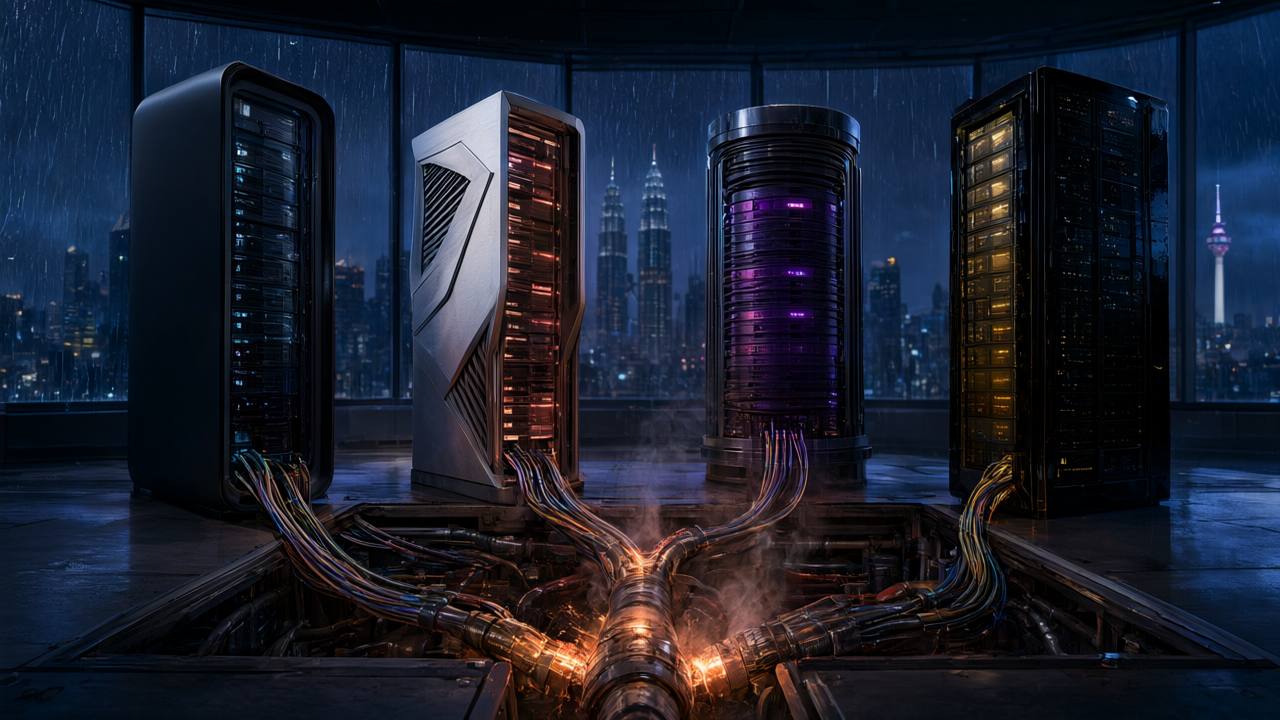
In September 2026, Ars Technica reported that service interruptions hit ChatGPT, Claude, Grok, and Gemini practically at the same time — four competing AI models from four different companies, all wobbling together. The reporting describes the event as rare, and that rarity is the story: these platforms are built on separate infrastructure and normally fail independently of one another. For businesses, the lesson is not about any single provider. It is that AI has quietly become a utility-grade dependency, and a large share of the working world now runs through a handful of companies with no fallback. This article breaks down what happened, why simultaneous failure matters, what it means for Malaysian firms, and how to build a practical multi-provider fallback — including for agentic AI workflows that have the most to lose.
AI Summary
In September 2026, Ars Technica reported that service interruptions hit ChatGPT, Claude, Grok, and Gemini practically at the same time — four competing AI models from four different companies, all wobbling together. The reporting describes the event as rare, and that rarity is the story: these platforms are built on separate infrastructure and normally fail independently of one another. For businesses, the lesson is not about any single provider. It is that AI has quietly become a utility-grade dependency, and a large share of the working world now runs through a handful of companies with no fallback. This article breaks down what happened, why simultaneous failure matters, what it means for Malaysian firms, and how to build a practical multi-provider fallback — including for agentic AI workflows that have the most to lose.
Key Takeaways
- Four rival platforms — OpenAI's ChatGPT, Anthropic's Claude, xAI's Grok, and Google's Gemini — suffered overlapping downtime, which is unusual because they run on independent infrastructure and normally fail separately.
- An outage of these models does not just close a chat window; it breaks every app, workflow, and automated process built on their APIs.
- The confirmed fact is the overlap itself. The cause and duration are not detailed in the reporting, so resist jumping to conclusions about a shared root cause.
- Malaysian businesses have direct exposure because there is no local model at this scale — local firms use the same four global platforms as everyone else.
- The practical fix is the same one companies adopted after major cloud outages: multi-provider architecture, a written fallback playbook, and quarterly failover tests.
What Happened
Ars Technica reported in September 2026 that service interruptions struck ChatGPT, Claude, Grok, and Gemini practically simultaneously. ChatGPT is OpenAI's assistant, Claude is Anthropic's, Grok is xAI's, and Gemini is Google's. These are four separate companies, four separate engineering organisations, and — importantly — largely separate infrastructure stacks.
That is what makes the event notable. Independent systems fail independently, most of the time. A single provider going down is routine; the industry has seen individual outages from each of these companies before. Four of them degrading in the same window is a low-probability event, which is exactly why it drew coverage.
It helps to understand what "downtime" means for these products. Each one is two things at once: a chat interface used by consumers and employees, and an API — the plumbing that lets other software send requests to the model and get answers back. Thousands of third-party apps, internal company tools, and automated workflows sit on top of those APIs. So when the models go dark, the blast radius is not just people staring at a spinning loader. It is every process a business has wired into that model.
One honest caveat: the source reporting documents the simultaneous interruption itself. It does not, in the material available, confirm a specific cause, an exact duration, or precise user impact numbers. That gap matters, and we flag it deliberately rather than fill it with speculation.
Why It Matters
Think about how quickly generative AI moved from novelty to load-bearing. Drafting contracts, summarising meetings, writing code, answering customer queries, screening CVs, generating reports — much of this now flows through four platforms. When a capability that essential concentrates in four companies, you have concentration risk, the same structural issue regulators worry about in banking and telecommunications.
Here is an analogy. If one bank's ATMs fail on a Tuesday, that bank has a problem. If the ATM networks of four rival banks fail on the same afternoon, customers start asking harder questions — is this bad luck at scale, or do these banks share something upstream? The AI industry does share upstream dependencies in ways people often forget: a small set of cloud providers, a tight supply of advanced AI chips, and similar architectural patterns across the sector. To be clear, this is analysis, not a confirmed cause — the reporting does not establish why the overlap happened. But the pattern forces the question, and boards should be asking it.
The deeper signal is about maturity. Cloud computing went through this exact cycle a decade ago: companies rushed onto AWS, a few high-profile outages hurt, and multi-cloud architecture became standard practice. AI is repeating that cycle on a compressed timeline. The reasonable assumption going forward is not that outages will become common, but that they will happen occasionally — which means treating model access the way you treat electricity or internet connectivity: as something that will fail once in a while, and that you design around.
What This Means for Malaysia
Malaysian exposure is direct. There is no Malaysian-built frontier model at this scale, so SMEs in the Klang Valley, banks running AI-assisted customer service, and manufacturing tech teams in Penang use the same
Sources & References
AIBlog summarises and analyses published information. We do not reproduce full source text. Analysis is editorial and not financial or legal advice.