Building robots that survive the warehouse
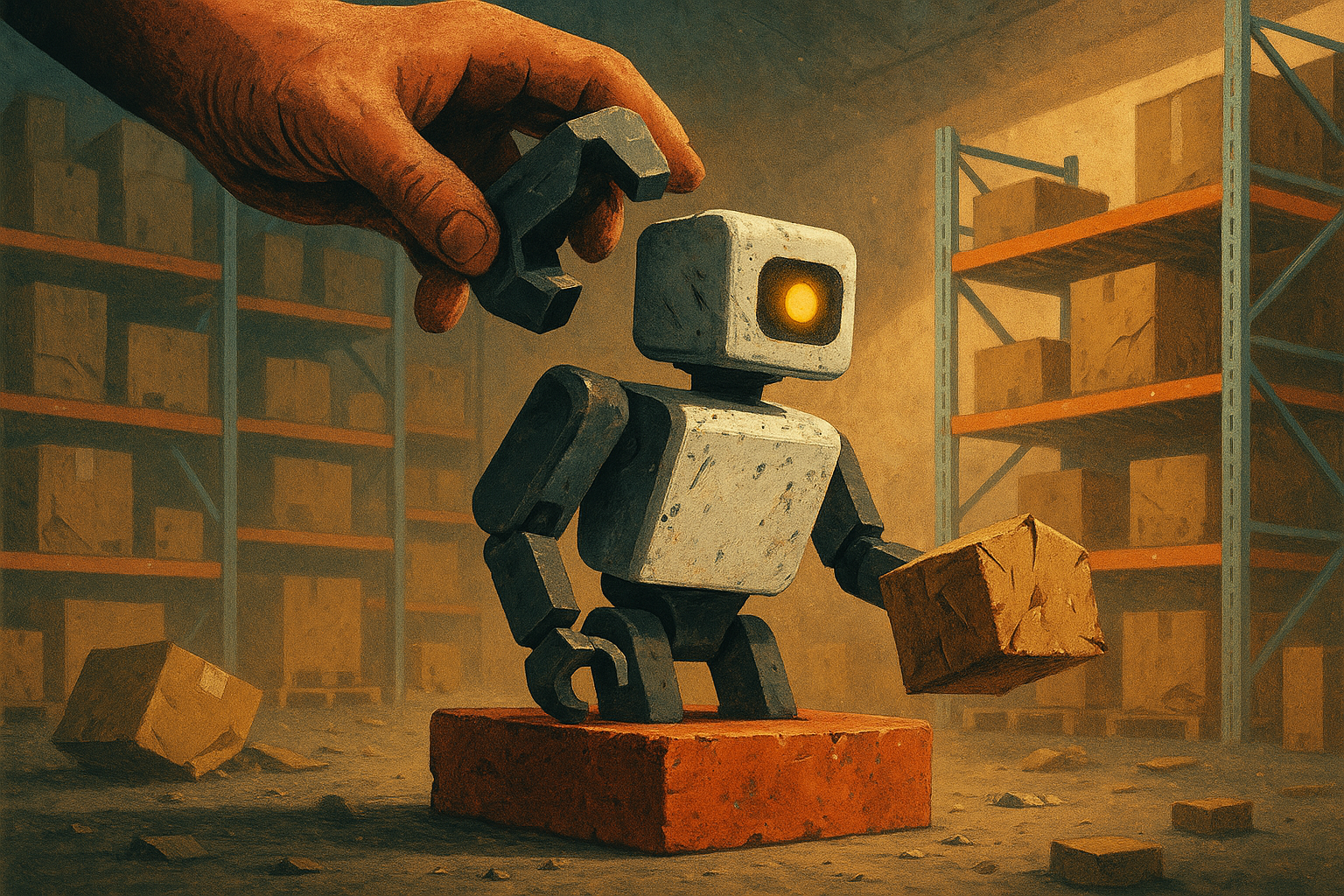
Warehouse robotics company Nomagic has made a pointed argument about where real competitive advantage sits in their industry: not in better hardware, not in slick demonstrations, but in production data. The accumulated knowledge from running robots in actual, messy warehouse environments is what separates systems that survive from those that stall. This matters because it exposes a gap that every Malaysian business considering automation should understand. A robot that performs flawlessly in a vendor's controlled demo can fail within hours of deployment in a real warehouse where packaging is damaged, lighting shifts throughout the day, and inventory arrives in shapes the system has never seen. For companies evaluating robotics, this shifts the critical question from "what can this robot do?" to "how many thousands of hours has it done it in conditions like mine?" ---
Your Robot Works in the Lab. Your Warehouse Will Break It.
Nomagic says production data from messy, real-world warehouses — not hardware specs — is what separates robots that last from robots that fail.
AI Summary
Warehouse robotics company Nomagic has made a pointed argument about where real competitive advantage sits in their industry: not in better hardware, not in slick demonstrations, but in production data. The accumulated knowledge from running robots in actual, messy warehouse environments is what separates systems that survive from those that stall. This matters because it exposes a gap that every Malaysian business considering automation should understand. A robot that performs flawlessly in a vendor's controlled demo can fail within hours of deployment in a real warehouse where packaging is damaged, lighting shifts throughout the day, and inventory arrives in shapes the system has never seen. For companies evaluating robotics, this shifts the critical question from "what can this robot do?" to "how many thousands of hours has it done it in conditions like mine?"
Key Takeaways
- Production data is the real moat. Every hour a robot runs in a real warehouse generates edge-case learning that cannot be simulated, replicated, or shortcut — and this data compounds over time.
- Demo performance is a poor predictor of deployment success. Controlled environments remove the exact variables — mess, damage, unpredictability — that determine whether a robot adds value or becomes a liability.
- Vendor evaluation criteria need to change. Malaysian businesses should demand evidence of sustained real-world deployment in comparable environments, not polished pitch videos.
- The gap between pilot and scale is where most automation budgets die. Understanding why robots fail in messy conditions helps companies budget for the integration work, not just the hardware.
- Agentic AI can compress the learning curve — but only if trained on sufficient real production data. Vendors with deeper deployment histories will produce more adaptable autonomous systems.
What Happened
Nomagic, a company that builds robotic systems for warehouse operations, has stated publicly that its genuine competitive advantage is not its hardware design, its AI models, or its software architecture. It is production data — the accumulated record of what happens when robots run inside real, working warehouses over long periods.
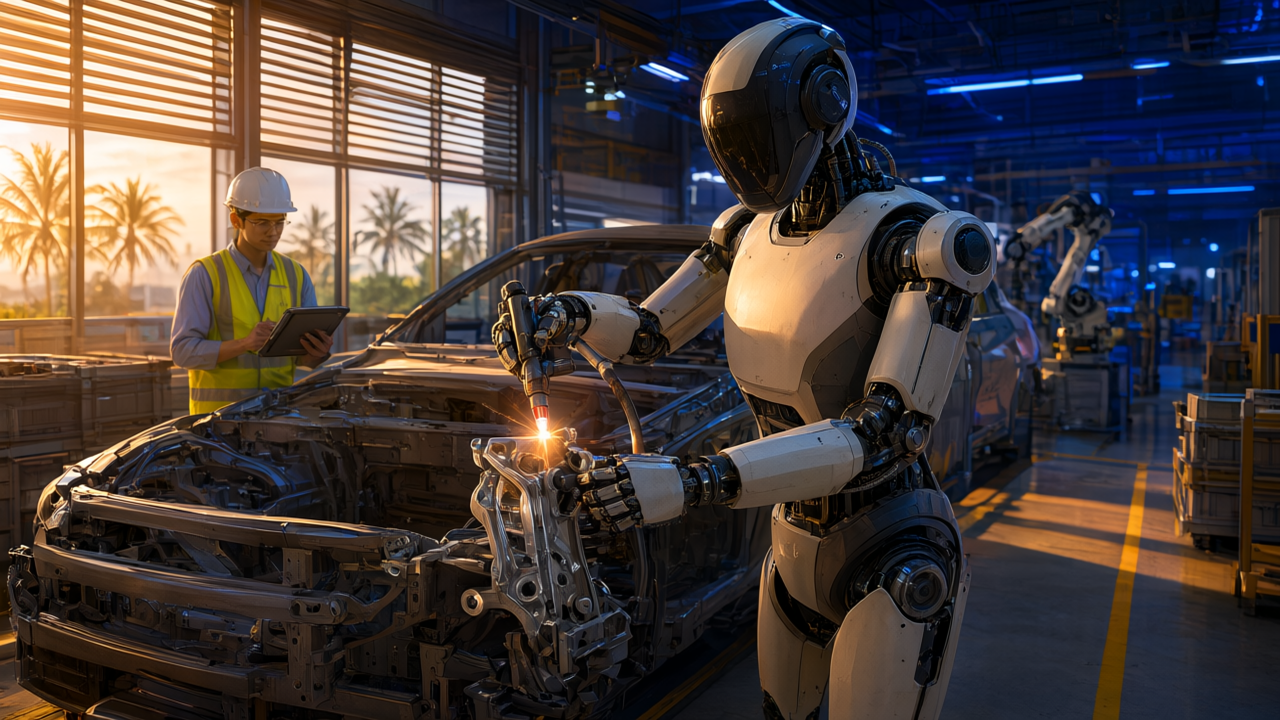
The argument, as reported by The Robot Report, rests on a specific observation: real warehouses are messy. That messiness is the variable that determines whether a robotics deployment succeeds or fails. A warehouse is not a laboratory. Products arrive damaged. Packaging deforms. Pallets sit at angles. Lighting changes between morning and afternoon shifts. Workers leave objects in places no system would predict. Floor surfaces vary. The list goes on.
Every one of these conditions generates a data point. A robot encountering a crushed carton for the first time may hesitate, fail to grip, or trigger an error that halts the line. A robot that has encountered ten thousand crushed cartons — across different product types, lighting conditions, and temperatures — has learned how to adapt. That learning, encoded in production data, is what Nomagic identifies as its true barrier to competition. New entrants can buy the same cameras, the same robotic arms, the same compute infrastructure. What they cannot buy is the years of recorded edge cases from real operations.
This is not a marketing claim unique to Nomagic. It reflects a structural reality across the robotics industry that is well understood by practitioners but frequently overlooked by buyers. The source report frames it plainly: the messiness of real warehouses is where robots either prove themselves or fail. That binary — prove or fail — is what makes production data so valuable. It is the only record of which side of that line a robot landed on, and why.
Why It Matters
This insight cuts against how most businesses evaluate technology. When a company buys software, the demo is usually a reasonable predictor of what the product does. A CRM that manages contacts in the sales pitch will manage contacts after purchase. The environment is controlled because the inputs — text, numbers, clicks — are predictable.
Robotics breaks that assumption. A pick-and-place robot that reliably grabs a pristine box from a fixed position in a vendor's demonstration booth is operating under ideal conditions. Those conditions almost never exist in a working warehouse. The box might be wet. The label might be torn. The position might be off by two centimetres because the upstream conveyor belt vibrated. Each of these deviations is trivial for a human worker and potentially catastrophic for a robot that has not been trained on that specific deviation.
This is why production data matters so much. It is the difference between a system that has been validated against reality and a system that has been validated against a showroom. Companies that understand this gap can make better purchasing decisions, set more realistic implementation timelines, and avoid the common failure pattern where a robotics pilot succeeds in a controlled corner of the warehouse but collapses when scaled to the main floor.
The broader signal here is that the robotics industry is maturing. The conversation is moving away from "can robots do this task?" — which is largely settled for standard warehouse operations like picking, sorting, and moving — toward "whose robot has survived this task long enough to be reliable?" That is a question about data, deployment history, and operational scars. It favours companies with years of production experience over companies with impressive specs but thin field records.
What This Means for Malaysia
Malaysia's logistics and warehousing sector is growing fast, driven by e-commerce expansion across the Klang Valley, Penang's electronics supply chain corridor, and Johor's increasing role as a regional distribution hub. Companies like Shopee, Lazada, and local fulfilment operators are running large warehouses that handle enormous SKU variety — exactly the kind of messy, high-mix environment where robotics either proves itself or fails.
For Malaysian SMEs running mid-sized warehouses in Selangor or Penang, the Nomagic insight is directly relevant. These businesses often operate in older industrial buildings with uneven floors, mixed lighting, and high worker turnover. They are precisely the environments where a robotics vendor's demo performance is least predictive of actual results. A robot calibrated in a clean European or American facility may struggle with the specific conditions of a Malaysian warehouse — humidity that affects packaging integrity, mixed SKU lots from regional suppliers, or conveyor systems that have been patched together over years of incremental upgrades.
The policy angle also matters. Malaysia's National Robotics Roadmap, aligned with MyDIGITAL and Industry4WRD, encourages automation adoption among local manufacturers and logistics operators. MDEC and related agencies have pushed robotics as a path to productivity gains. But if companies adopt robotics without understanding the production-data gap, they risk burning budgets on pilots that never scale. Government-supported automation programmes should consider including deployment-readiness assessments — evaluating not just whether a warehouse needs robots, but whether its physical environment and operational variability match what a vendor's robots have actually been tested against.
There is also an ASEAN competitive dimension. Singapore is already deploying robotics heavily in its logistics sector. Vietnam and Indonesia are investing in warehouse automation. Malaysia's cost advantage in labour is narrowing as robotics costs decline. The companies that adopt automation successfully — meaning robots that survive the warehouse, not just robots that look good in a procurement presentation — will be the ones that compete effectively on fulfilment speed and cost.
How Your Business Can Use This
If your company is evaluating warehouse robotics — whether robotic arms for picking, autonomous mobile robots for moving goods, or automated sorting systems — restructure your evaluation process around the production-data question.
Step 1: Ask vendors for deployment hours, not capability lists. The critical metric is not what the robot can theoretically do. It is how many production hours the system has logged in environments similar to yours. Ask for specifics: What types of products? What packaging conditions? What temperature ranges? What floor surfaces? A vendor who can answer these questions with real data has a genuine moat. A vendor who deflects to specs and feature lists may not.
Step 2: Run a structured pilot in your actual messiest zone. Do not test the robot in the cleanest, most organised part of your warehouse. Deliberately test it where conditions are worst — the inbound dock where damaged packaging accumulates, the aisle where lighting is poorest, the zone where SKU variety is highest. Document every failure. These failures tell you whether the vendor's production data covers conditions like yours or whether you are paying to generate that data for them.
Step 3: Negotiate data and improvement terms. If your deployment generates valuable edge-case data — and in a Malaysian warehouse with regional SKU variety, it likely will — that data has commercial value. Structure contracts so that improvements derived from your operational data flow back to you as performance updates, not just to the vendor's future sales pitch to other customers.
Step 4: Budget for integration, not just hardware. The robot is perhaps 40 percent of the total cost. The rest is integration work: adapting workflows, retraining staff, modifying physical infrastructure, and handling the long tail of edge cases during the first three to six months. Companies that budget only for hardware consistently underestimate what deployment actually costs.
The Agentic AI Angle
The production-data insight becomes especially powerful when combined with agentic AI — autonomous systems that do not just execute programmed routines but actively reason, plan, and adapt across multi-step workflows.
Consider a warehouse robot powered by an agentic AI framework. Instead of following a fixed sequence — scan shelf, identify item, calculate grip point, execute pick — the agent can handle exceptions autonomously. It encounters a box that has shifted. It recognises the shift, recalculates the approach, tests a grip, detects that the box is lighter than expected (suggesting damage or partial contents), and decides to flag it for quality inspection rather than placing it on the outbound conveyor. Each step involves reasoning, not just pattern matching.
This is only possible if the agent has been trained on enough real production data to recognise what "normal" looks like and what "exception" looks like. The messier the historical data, the better the agent handles novelty. A vendor like Nomagic, with years of accumulated warehouse data, is positioned to train more capable agents than a competitor with superior hardware but thin operational history.
For Malaysian businesses, the practical implication is this: when evaluating robotics vendors, ask about their AI agent capabilities specifically. Can the system handle multi-step exception logic? Does it learn from each encounter, or does it require manual reprogramming for every new edge case? The answer tells you whether you are buying a robot or buying an agent that happens to be embodied as a robot.
Risks and Limitations
The production-data moat is real, but it has limitations. Vendors with deep data histories may have that data concentrated in specific warehouse types — European e-commerce fulfilment, for instance — that do not transfer cleanly to Malaysian conditions. Production data is only as valuable as its relevance to your environment. A robot that has logged ten thousand hours in a climate-controlled German warehouse may still struggle with Kuala Lumpur humidity or the SKU mix of a regional Malaysian distributor.
There is also a competitive risk. Vendors may use their production-data advantage to lock customers into proprietary ecosystems, making it expensive to switch providers later. Malaysian businesses should evaluate data portability terms before committing to a long-term deployment.
The Bottom Line
Nomagic's argument is not really about Nomagic. It is about a truth that applies to every warehouse robotics decision: the environment wins. Hardware specs, demo videos, and feature lists tell you what a robot was designed to do. Production data tells you what a robot has actually survived. That distinction should drive every evaluation, every pilot design, and every contract negotiation.
For Malaysian businesses, the action this quarter is simple. Before signing any robotics procurement or pilot agreement, ask the vendor one question: how many production hours has this system logged in a warehouse that looks like mine? If the answer is vague, the price is too high regardless of the number on the quote.
FAQ
What should I ask a warehouse robotics vendor before signing a contract? Ask for documented production hours in environments comparable to yours — similar SKU variety, packaging types, and physical conditions. If the vendor cannot provide this
Sources & References
AIBlog summarises and analyses published information. We do not reproduce full source text. Analysis is editorial and not financial or legal advice.